








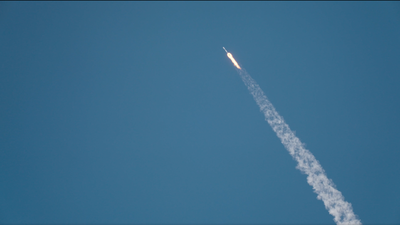
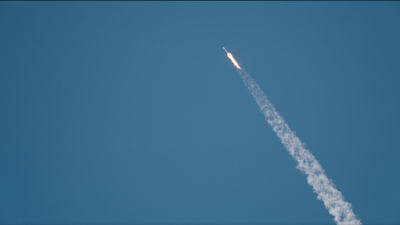
Google has sent its AI chips to space for the first time. A refrigerator-sized prototype satellite carrying four of the company’s Tensor Processing Units (TPUs) lifted off on Thursday aboard a SpaceX Falcon 9 rocket from Vandenberg, California. The launch marks the first in-orbit test of Project Suncatcher, Google’s long-term effort to find out whether AI data centres could one day run in space.Built with Planet Labs, the satellite flew on SpaceX’s Transporter-18 rideshare mission alongside more than 100 other payloads. Project Suncatcher lead Travis Beals later confirmed the team had made contact and the satellite was “operating as expected.” Once commissioned, the TPUs will run a version of Google’s open-weight Gemma model in 15-minute bursts, a limit set by heat and power constraints. Google wants the mission to last a year.Google CEO Sundar Pichai marked the moment on X. “I remember the first meeting where the team pitched the idea of putting compute in space – exciting idea!” he wrote, adding that the successful launch with Planet “shows how far we’ve come…and how far there is to go.” He also thanked SpaceX for the lift and pointed to “another spectacular booster landing.”
Google wants to run AI data centres on sunlight in orbit
The pitch comes down to power. In low Earth orbit, solar panels can generate up to eight times more energy than they would on the ground. This satellite sits in a sun-synchronous orbit where its panels are almost never in shade, so it skips heavy batteries altogether.That idea is gaining traction as AI’s electricity demands climb and data centre projects on Earth face growing local opposition. Startup Starcloud flew an Nvidia H100 chip into orbit last November, and SpaceX is building its own orbital compute satellites.Google is thinking bigger and slower. It envisions clusters of 81 satellites flying in tight formation, each carrying dozens of TPUs and talking to one another through lasers. Two satellites will test that laser link in 2027.
Radiation and heat are the real tests for Google’s TPUs in space
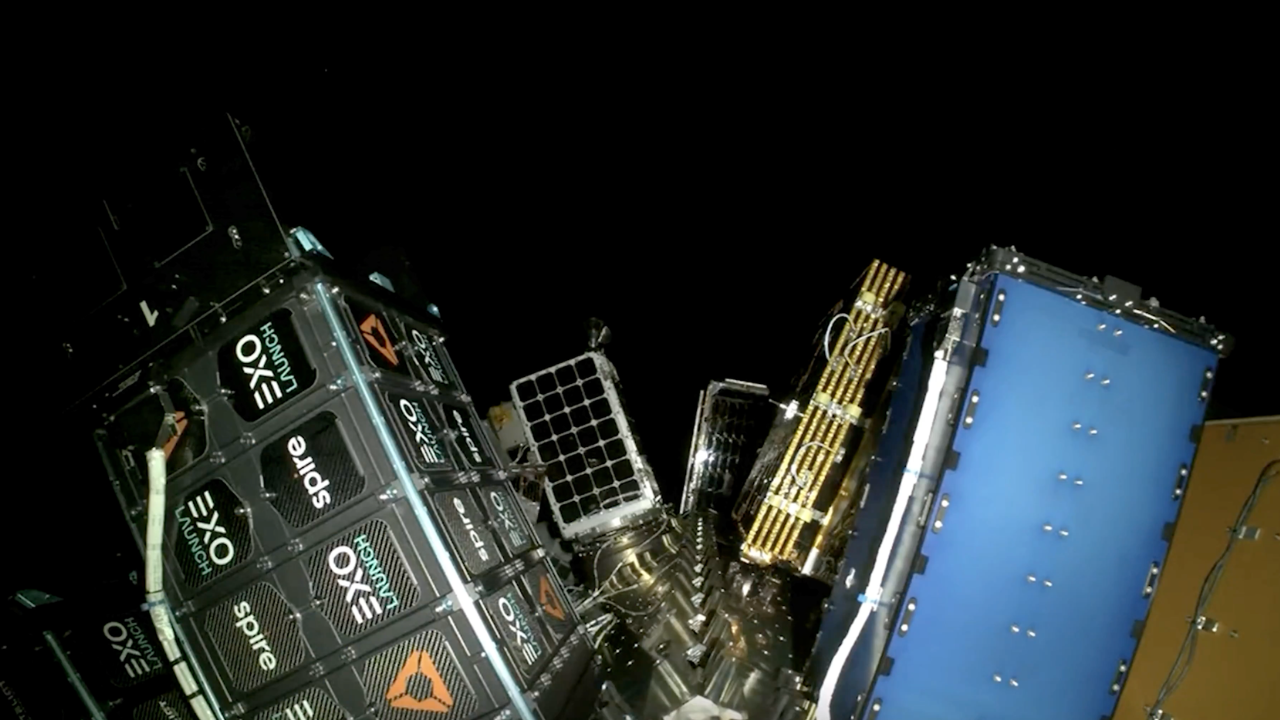
Google’s prototype satellite underwent thermal vacuum testing before its first trip to space.
Before launch, Google blasted its Trillium TPUs with a proton beam at UC Davis’s Crocker Nuclear Laboratory. The chips survived a radiation dose higher than a five-year mission would deliver. Google did have to redo the tests after finding its setup offered more shielding than space would. The repeat run threw up slightly more logic errors, which Beals pegged at roughly one in a million for typical inference. That works for answering queries, but becomes a problem for months-long training runs spread across thousands of chips.The ride up is rough too. The trip to orbit lasts about 10 minutes, and individual chips can face forces of 50 to 100 g.Cooling is the tougher puzzle. With no air in space, heat can only escape through radiators. Google pairs heat pipes with radiators, and those radiators are among the heaviest parts on board, which pushes launch costs up.
Space data centres are at least five years from making financial sense, says Google
Beals does not expect orbital compute to beat Earth on cost within the next five years. “I think it will take longer than that,” he said.A peer-reviewed Google paper, due in the journal Joule, shows why. It projects launch prices could fall to about $200 (roughly Rs 17,700) per kilogram by 2035. Getting there would take SpaceX’s Starship about 1,800 flights over a decade, each carrying 200 tonnes. Starship has never flown more than five times in a single year.So the four TPUs now circling Earth have a narrow brief: prove they can survive up there. Laser-linked clusters, cheaper rockets and orbiting data centres all hinge on what they report back.