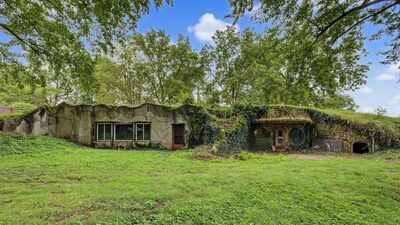











A dwelling completed in Caulfield South on 18 November 2014 later became the subject of a $176,297.76 County Court award. Mr Fall-Armytage became the registered proprietor in May 2018 and, between June and November 2018, noticed water damage, staining, mould and leaking after heavy rainfall. According to Cogent Legal, his domestic building insurance claim, made in August 2023, was refused. The County Court ordered indemnity for 11 defects, plus temporary accommodation and storage costs. In Victorian Building Authority v Fall-Armytage [2026] VSCA 32, the Court of Appeal allowed the appeal and dismissed the claim, except for the 11th defect, with that defect remitted to the County Court.
Why did the $176,297.76 insurance claim become a legal battle
Mr Fall-Armytage made a claim under the domestic building insurance policy in August 2023, and the claim was refused. The County Court ultimately found in his favour. It ordered that he be indemnified for the cost of rectifying 11 defects, together with temporary accommodation and storage costs. The amount ordered was $176,297.76.The Victorian Building Authority, which had been substituted for the Victorian Managed Insurance Authority by operation of statute, sought leave to appeal. The appeal was confined to a single issue of construction concerning clauses 34 and 35 of the policy. The policy covered the insured where the insured could not recover from the builder because of insolvency, death or disappearance. Clause 32 was the primary indemnity provision, covering loss or damage sustained by the insured in those circumstances. Clauses 34 and 35 dealt with the duration of cover, with clause 34 addressing non-structural defects and clause 35 addressing other causes.
What did the court decide about when building insurance coverage applies
The central question was whether clauses 34 and 35 required the loss or damage itself to occur within the relevant period, or whether it was enough that the underlying defect or cause arose within that period, even if the insured’s loss was suffered later. Mr Fall-Armytage acquired title well after the two years for non-structural defects had expired. At first instance, the County Court judge considered the point finely balanced. The judge concluded that the words “occurring during the period” in clause 34 were more naturally read as referring to the immediately preceding words, namely the non-structural defect. The judge accepted that this created a long-tail liability for the insurer but regarded the outcome as compelled by the text.Niall CJ, McLeish JA and Whelan JA rejected that construction. They held that clauses 34 and 35 are concerned with when the insured’s loss, damage or expense occurs, not merely when the underlying defect or cause arises. According to Cogent Legal, the Court found the answer in the policy’s text and structure: both clauses sat under the heading “How long are you covered for?” The punctuation and grammar of clause 35 showed that the temporal phrase referred to “loss, damage or expense” rather than the cause; and clause 32 indemnified loss or damage sustained by the insured. Cogent Legal adds that the Court treated broad appeals to commercial purpose and consumer protection as too general to resolve the question, and that the ministerial order made under section 135 of the Building Act 1993 (Vic) prescribed minimum cover only.
How did section 9 affect the homeowner’s building insurance claim
Mr Fall-Armytage also advanced a notice of contention. He argued that, even on the insurer’s construction, the loss had occurred within the period of cover because the original owner suffered loss when the defective work was completed. He relied on section 9 of the Domestic Building Contracts Act 1995 (Vic), under which warranties under section 8 run with the building and may be enforced by the owner for the time being as if that person were a party to the contract. The Court of Appeal rejected the argument. It held that sections 8 and 9 create statutory warranties and overcome privity, but do not authorise a successor in title to recover for loss or damage suffered by a previous owner. In the article’s words, “Section 9 gives standing.” A later owner must still prove their own loss, which the article describes as a question of fact that may depend on matters such as whether the defect was known at the time of purchase and whether the purchase price reflected it.On the outcome, the Court of Appeal granted leave to appeal and allowed the appeal. The trial judge’s orders were set aside and replaced with orders dismissing Mr Fall-Armytage’s claim, except in relation to the 11th defect. The Court still had to classify that defect as structural or non-structural, and it remitted the issue to the County Court for further hearing and determination, as it was not in a position to decide it on the record before it. The Court expressed the hope that, given the small amount involved, the issue might be resolved by agreement. The decision is Victorian Building Authority v Fall-Armytage [2026] VSCA 32.