







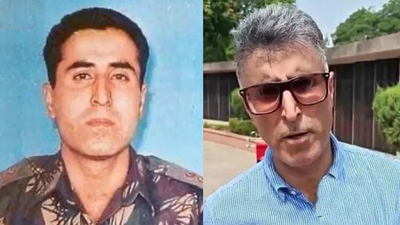
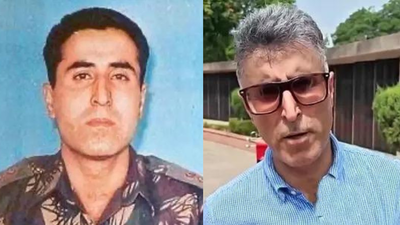
“Seva Parmo Dharma” – Service Before Self – is a phrase we often hear in war films, military stories, and patriotic speeches. But behind every uniform is a son, a brother, a friend, and a family that learns to live with an absence no medal can ever fill. The courage of a soldier is remembered on the battlefield; the courage of those he leaves behind often continues quietly, for decades.Captain Vikram Batra remains one of the most enduring symbols of that courage. During the Kargil War in 1999, after the successful capture of the strategically crucial Point 5140, his now-iconic radio message – ‘Yeh Dil Maange More’ – came to represent the confidence and fighting spirit of a generation of Indian soldiers. The young officer remembered as ‘Shershaah’ would go on to become a legend, but legends too begin as ordinary boys in ordinary homes.It is that other side of the story that his twin brother, Vishal Batra, brings alive in ‘Yeh Dil Maange More: Remembering Captain Vikram Batra, My Brother’. Beyond the battle honours and the stories of valour lies an empty chair at home, parents who lost a son, and a twin who shared not just childhood and memories, but even the months before birth with the brother he would one day have to mourn.Reading the book makes one pause before the word “martyrdom” and think about everything it contains – sacrifice on the frontlines, but also grief, pride, memory, and the lifelong responsibility of keeping a loved one’s story alive.That deeply personal perspective led to this conversation with Vishal Batra, not only about Captain Vikram Batra the soldier India reveres, but also Vikram the brother, the son and the young man behind the uniform.1. The book begins with your last meeting with your brother, Capt. Vikram Batra – the hug at Nizamuddin station on 09 March 1999. More than 27 years later, when you replay that morning in your head, what do you see now that you could not possibly have understood then?VISHAL BATRA: That hug would always be the freshest memory for me, it being the last meeting, and I have a crystal-clear image embedded in my heart and soul when we parted with that goodbye, not even having any premonition that it would be my last hug or seeing him alive physically.What I see now is the transformation he had in him post his Sopore days and commando course. He had become way too courageous, having experienced the counter-insurgency operations at Sopore and had lost the fear of death. (In the very first letter he wrote me from the battlefield on 16/June/1999, wherein he had mentioned that Life is at total risk and anything can happen here).When I look back now, all I see is the shared dream of him becoming a One Star General and travelling across all the critical formations of the Indian Army with him in his One Star Car, which was dreamt together (as I wasn’t recommended in the SSB thrice).2. India remembers Capt. Vikram Batra through extraordinary images – the Param Vir Chakra, ‘Shershaah’, Point 5140, Batra Top, and ‘Yeh Dil Maange More’. But this book seems almost determined to take the uniform off for a moment and give us Vikram – the human being. Is there a part of your brother that you feel the national legend has unintentionally hidden from us?VISHAL BATRA: The country knew him as Shershaah, the young bearded Captain who caught the fancy of Indians through his daredevil actions in Op Vijay and radioing the message “Yeh Dil Maange More”.There is nothing he had hidden, and the book talks about the Man behind the Uniform because for the nation, he was a legendary solider but back home, he was a doting brother, son, a friend and the book covers the journey of both of us as twin siblings who had knitted the dream of donning the Uniform together, shared dreams, our early childhood struggles and a journey that was weaved in a small town.The book talks about his last journey, wherein the Palampur city had a plan to welcome their son in an Open Jeep with the garlands post his first operation at Point 5140 (as everyone thought he would be back soon) but alas, it was coffin with wreath’s.3. When we speak about Kargil, we understandably celebrate victory and extraordinary courage. But your book also forces us to confront what victory costs – the empty chair at home, parents who lose a son, a twin who grows old alone. Do you think India talks enough about that second half of patriotism: the lifetime that families are asked to live after the soldier is gone?VISHAL BATRA: I personally believe that the trend is changing a bit now, wherein social media is really influencing the memories of our great soldiers who sacrifice their lives for the nation. The making of patriotic movies and Web series is adding colour to patriotism.But for family, it’s always the Unit/Paltan which stays in touch and ensures that the sacrifice is never forgotten and the soldier is revered. For the family, no amount of comfort can ever fill the deep loss, and the void that gets created stays until we die.4. There is something particularly haunting about the fact that Capt. Vikram Batra’s final letter reached you only after he was martyred. Has there ever been a moment in the last 27 years when you went back to Capt. Vikram’s final letter because you needed your brother’s advice?VISHAL BATRA: For me, life took a complete 360 turn when we heard of his martyrdom. It was like I lost the most important limb of my body. Being identical twins, we had numerous shared dreams of his Army life and my corporate life, which were shattered to a tee.But he had become such an inspiration that whenever I was in crisis or a catch situation, I logged onto his last interviews and asked myself, if he could be so daredevil and courageous in the thick of a bloody war, why should I not be moving forward.He always knew that I had all the talent (as I was ahead of him in studies) and competence to do well, so I always resort to his last letter dated 05 July,1999 (written just two days before he attained martyrdom) wherein he had written: “Aare Yaar! Don’t take tensions and keep doing your bit faithfully and sincerely. Definitely, God is looking at everyone, and he will definitely reward one day. You have all the potential to do anything, and I am sure you will definitely rise very high in your life. Take life in its stride; you will realise you are the happiest person.”I continue to believe that he is guiding me all through from the heavens above, as the twin bond never dies. We had the blessings of Almighty to spend those nine months extra in our mother’s womb wherein our bond would always be eternal.5. Regarding the letter, you received Capt. Vikram Batra’s final words when there was no longer any possibility of replying. If there was a chance, what would you have written back to him?VISHAL BATRA: Alas, I so bloody wish I had one more opportunity to write him back; all I would have written is that he has become a National Hero, and we all are so desperately waiting for him to come back and would love to hear the story of his courageous and daredevil actions from him.All I would have written him is that the day is not far when he would take the honour of participating every year in the 26th January Republic Day Parade at Rajpath and salute the honourable President in an Open Gypsy.6. Kargil came only months after the Lahore Declaration and barely a year after India and Pakistan had openly demonstrated their nuclear capabilities. Looking back as the brother of somebody who paid the ultimate price, what lesson do you think Kargil still holds for India about peace with Pakistan – about where dialogue must continue, but where trust must end?VISHAL BATRA: Kargil was just not the first incident, and we had seen the two earlier wars. So I believe that it would be naive to think that Pakistan can ever be trusted.The world also knows that Pakistan is a rogue nation and home to globally recognised terror groups, but at the same time, we also know that it is largely at their political leadership level. So efforts to reach a consensus must continue to find a peaceful solution to the lingering disputes in the larger interest of peace in the subcontinent.7. At a time when the youth feel increasingly disillusioned with the country, Captain Batra represented an extraordinary sense of ‘Seva Paramo Dharma,’ without expecting anything in return. As his brother, what message would you give the youth today?VISHAL BATRA: The message I have for the youth is that we don’t always have to don the uniform to become patriotic. We are all a part of this beautiful country, which has a rich legacy in its culture and diversity. And every step that you take, be it keeping the country clean and safe, respecting the elderly, respecting cultural diversity, maintaining brotherhood, or adding professional competence that can take this country ahead, do that within your Domain. Keep the nation in mind because any country is known by its citizens and its culture.