








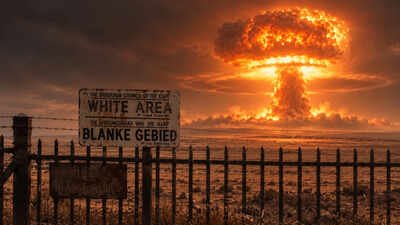
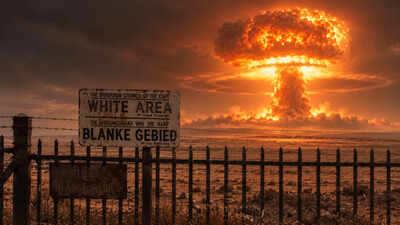
Last week, the leaders of the United States, Russia and China held a trilateral in Shenzhen and came to a common conclusion: Nuclear war “cannot be won and must never be fought”.The big three also agreed to hold a dialogue on reducing nuclear risks and preventing the proliferation of nuclear weapons. However, none of them announced specific commitments to reduce their arsenals.Turns out, the only country known to have independently developed nuclear weapons and subsequently dismantled its entire arsenal is South Africa.
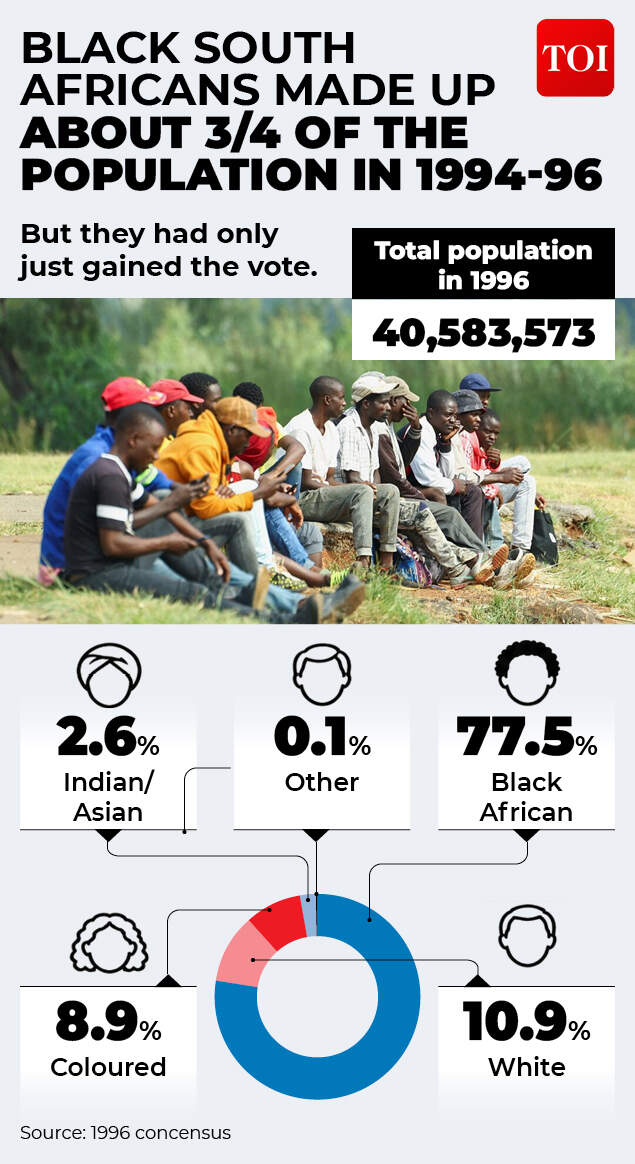
Contemporary demographic composition.
However, the decision wasn’t taken as a step to pursue global peace objectives.The denuclearisation came just before the country’s transition from white-minority rule to a black-majority-led democratic government, raising significant debates about the intent and reasons that led to the decision.Did the apartheid government dismantle its nuclear weapons because it did not want an incoming African National Congress (ANC)-led government to inherit them? Or had changing geopolitical circumstances made the arsenal unnecessary? The answer involves a combination of political, security and diplomatic considerations, with the precise weight of each factor still debated.
Nucleus of South African politics
Apartheid was a system of institutionalised racial segregation and white-minority rule in South Africa. It became official government policy after the National Party came to power in 1948.Under the system, the Black majority was denied meaningful political representation and subjected to racial discrimination in housing, education, employment, land ownership and access to public facilities. The government maintained white political control through discriminatory laws, restrictions on movement, forced removals and state repression.
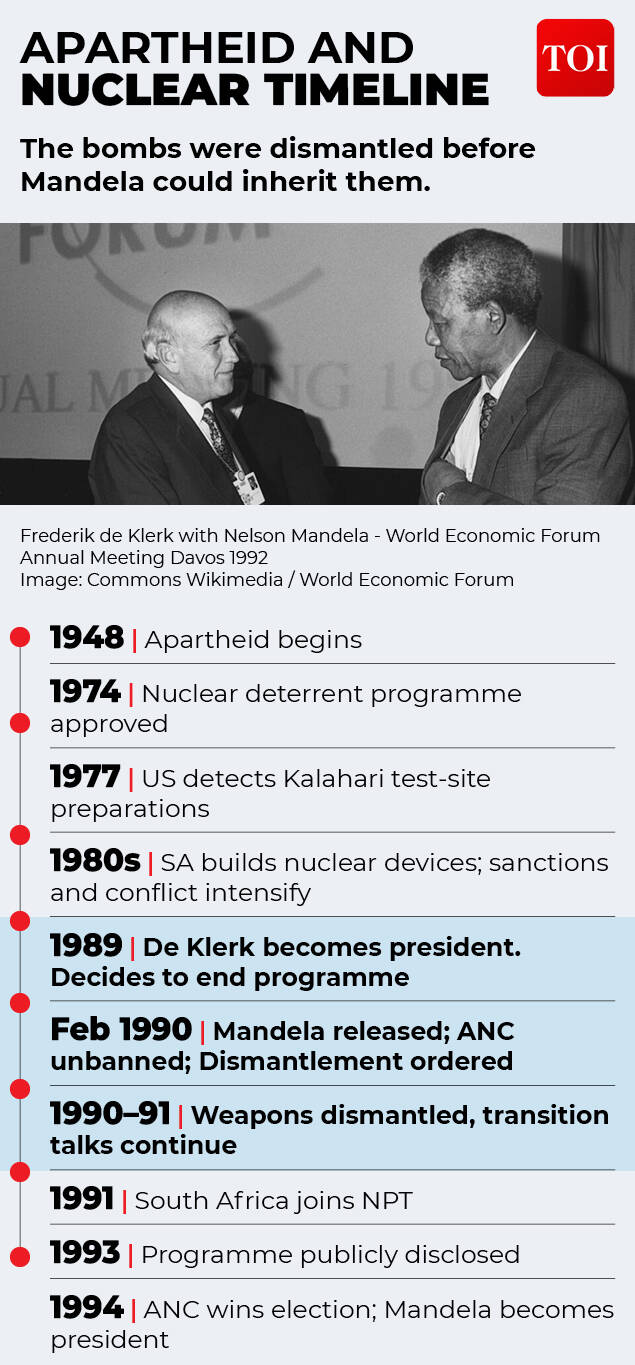
Nucleo-political timeline.
The African National Congress (ANC) emerged as the principal organisation opposing the system. Its leaders included Nelson Mandela, who spent 27 years in prison for his involvement in the anti-apartheid struggle.The political transition began under President F.W. de Klerk, who took office in September 1989. On February 2, 1990, he announced that the ANC and other banned organisations would be legalised. Mandela was released from prison nine days later.Negotiations between the government and anti-apartheid organisations eventually paved the way for South Africa’s first democratic elections on April 27, 1994. The ANC won the election, and Mandela became the country’s first Black president.But before the transfer of political power, the apartheid government had already taken a significant decision concerning South Africa’s nuclear capabilities.
A nuclear deterrent
South Africa’s nuclear weapons programme emerged during the Cold War, when the apartheid government feared the expansion of Soviet and communist influence in southern Africa.The independence of Angola and Mozambique in 1975, the civil war in Angola and the presence of Cuban troops in the region reinforced Pretoria’s security concerns. The government also feared that its growing international isolation could leave it without external military support in the event of a conflict.
In 1974, the government approved development of a limited nuclear deterrent. The programme eventually produced six completed nuclear devices, while a seventh remained under construction when the decision to terminate it was taken in November 1989.The weapons were relatively simple gun-assembled fission devices, rather than sophisticated thermonuclear weapons. Their intended role, according to de Klerk’s subsequent account, was primarily deterrence.The strategy was also unusual. Rather than planning to use the weapons in a conventional nuclear exchange, the government envisaged revealing its capability to a major power, such as the United States, in a severe regional crisis in the hope of prompting outside intervention.In a speech to Parliament on March 24, 1993, de Klerk said the programme had been initiated in response to the perceived Soviet threat and the build-up of Cuban forces in Angola.
Why did South Africa dismantle its nuclear weapons?
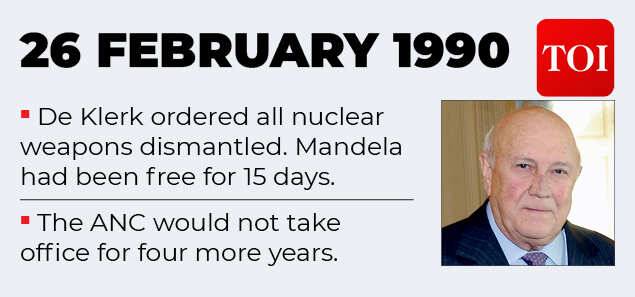
De Klerk took the decision to terminate the programme in November 1989, shortly after becoming president. On February 26, 1990, he issued a written instruction directing that all existing nuclear devices be dismantled and the nuclear material returned to the Atomic Energy Corporation (AEC).The timing is significant. The order came after the ANC had been unbanned and Mandela released, but more than four years before the first democratic elections.
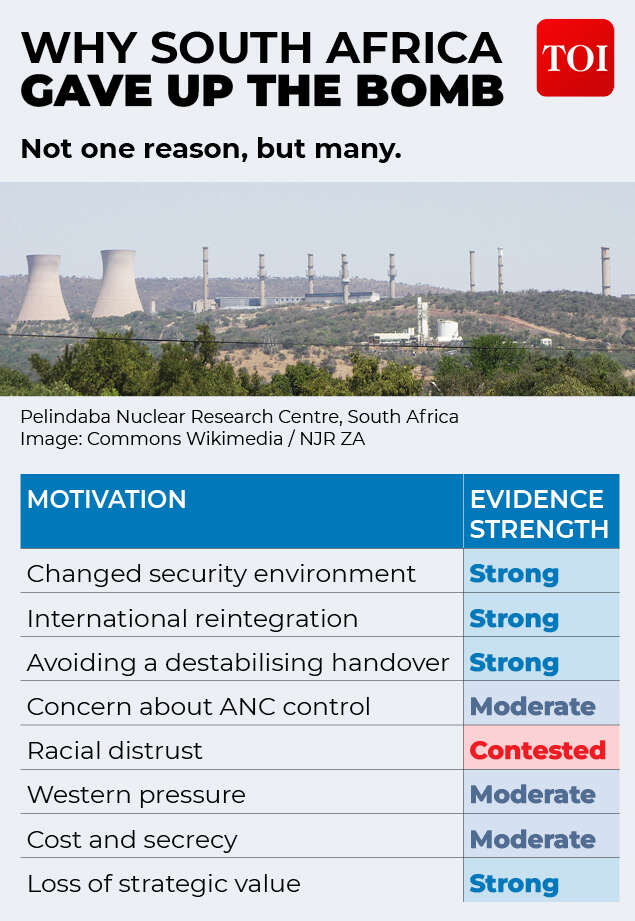
Independent anaysis.
The possibility that an incoming ANC-led government could inherit nuclear weapons has consequently remained one of the most debated explanations for the decision.Waldo Stumpf, former head of South Africa’s Atomic Energy Corporation, later recalled that de Klerk believed transferring nuclear weapons to an incoming government would complicate the handover of power because they would become a “hot potato”.A 2025 study by historian Robin E. Möser examined the political and diplomatic calculations behind South Africa’s disarmament using archival material and interviews with former officials.The study noted that the possibility of a future ANC government inheriting the arsenal had concerned international observers. However, it found little in the South African archival records to establish that this was a decisive consideration for de Klerk and his advisers.The study suggested that dismantling the arsenal also served the outgoing National Party government’s domestic political interests. By giving up nuclear weapons and embracing non-proliferation, the government could secure international goodwill and support for its political reform process before negotiations and democratic elections determined the country’s future.The concern about transferring the weapons therefore cannot be dismissed, but neither can it be established as the principal reason.
End of the Cold War and changing security environment
Another major explanation was the transformation of South Africa’s regional and international security environment.The withdrawal of Cuban troops from Angola, Namibia’s independence in 1990 and the weakening of Soviet influence reduced the perceived military threat that had helped justify the nuclear programme.De Klerk himself cited these developments in his March 1993 parliamentary address. He argued that the Cold War had effectively ended and that South Africa had an opportunity to move away from confrontation towards cooperation with its neighbours and the international community.Dr Rashmi Rani Anand, assistant professor at the Centre for African Studies, School of International Studies, Jawaharlal Nehru University, described the decision as involving both domestic political considerations and international non-proliferation pressures.“The dismantling of South Africa’s nuclear arsenal is a multifaceted issue involving both domestic transition concerns and international non-proliferation pressures,” she said.
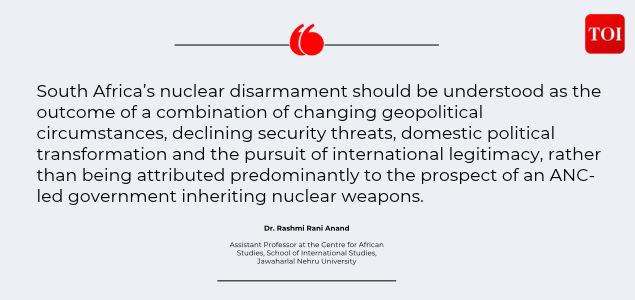
Dr Rashmi Rani Anand
Addressing the possibility of the ANC inheriting the weapons, Anand said: “The possibility of an ANC-led government inheriting nuclear weapons may have influenced the outgoing leadership’s calculations. However, one should be cautious about presenting this as the principal reason for South Africa’s nuclear disarmament.”She added that “an equally important strategic explanation lies in the transformation of its regional and global security environment”.“The end of the Cold War and the weakening of the Soviet Union significantly reduced the perceived communist threat,” Anand said.
Dr Ashok Sharma
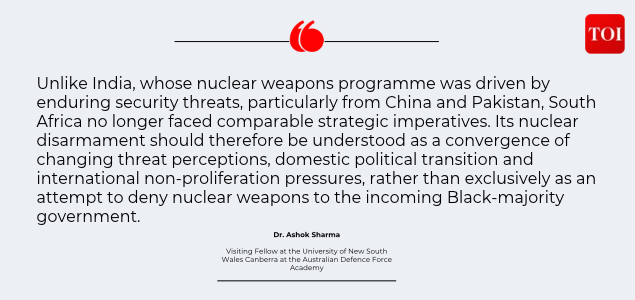
Dr Ashok Sharma, visiting fellow at the University of New South Wales Canberra at the Australian Defence Force Academy, similarly emphasised that multiple considerations shaped the decision.“South Africa’s nuclear disarmament was driven by a combination of strategic, domestic political and international considerations,” he said.Sharma added: “The end of the Cold War, Cuban military withdrawal from Angola and Namibia’s independence substantially diminished South Africa’s perceived external security threats.”
International rehabilitation and the NPT
South Africa’s international isolation was another important factor.The apartheid system had attracted international condemnation, sanctions and an arms embargo. Its secret nuclear weapons programme further complicated relations with other countries and limited access to international nuclear cooperation.De Klerk argued that abandoning the arsenal would help normalise South Africa’s international relations and allow it to participate more fully in international nuclear technology exchanges.South Africa acceded to the Nuclear Non-Proliferation Treaty (NPT) on July 10, 1991, as a non-nuclear-weapon state. It subsequently signed a comprehensive safeguards agreement with the International Atomic Energy Agency (IAEA) on September 16, 1991, placing its declared nuclear materials and facilities under international inspection.Anand said that when de Klerk assumed office in 1989, “nuclear weapons were increasingly seen as an obstacle to South Africa’s international rehabilitation, access to civilian nuclear technology and improved relations with African neighbours”.“The dismantling of apartheid, nuclear disarmament and accession to the NPT collectively facilitated South Africa’s reintegration into the international community and renewed access to global trade, investment and technological cooperation,” she said.Sharma also highlighted the importance of the international non-proliferation framework, saying that South Africa’s accession to the NPT in 1991 “facilitated its international rehabilitation and reintegration”.He argued that the decision should be understood “as a convergence of changing threat perceptions, domestic political transition and international non-proliferation pressures, rather than exclusively as an attempt to deny nuclear weapons to the incoming Black-majority government”.
Burning the bridge
South Africa’s denuclearisation involved considerably more than dismantling its six completed weapons.The government also dealt with the incomplete seventh device, recovered the highly enriched uranium (HEU) from the weapons and took steps to eliminate sensitive weapons-related equipment and documentation.According to an IAEA report submitted in September 1993, all the HEU had been removed from the weapons, melted down and returned from the Armscor weapons facilities to the AEC by September 6, 1991.The dismantlement procedures also included destroying sensitive weapons components and design information. By March 23, 1993, most classified documents had been destroyed and sensitive weapons components had either been destroyed or damaged beyond reuse.The destruction of documents was particularly significant because it made it harder for any future government to reconstruct the technical details of the weapons programme.However, dismantling the weapons did not mean that South Africa eliminated every stock of highly enriched uranium or all its civilian nuclear capabilities.Anand clarified that the nuclear material was not entirely converted into lower-enriched uranium.“To the best of my knowledge, the highly enriched uranium recovered from the dismantled nuclear weapons was subsequently placed under international safeguards. However, not all of it was blended down to lower enrichment levels during the dismantlement process,” she said.“South Africa continued to retain stocks of highly enriched uranium even after its democratic transition.”The IAEA began inspections in November 1991. Following de Klerk’s public disclosure in March 1993, its verification work expanded to examine the former weapons programme, its nuclear material and the dismantling of associated facilities.The agency subsequently confirmed that the six completed weapons and the incomplete seventh device had been dismantled and that it had found no indication that the declared programme had not been terminated.South Africa’s civilian nuclear research and technology capabilities, however, were not eliminated.
‘Bomb for Africa’
The ANC had opposed the apartheid government’s nuclear weapons programme, arguing that it had been developed without the consent of the country’s Black majority and posed a threat to regional security.But it was also critical of the secrecy surrounding the programme and the manner in which the dismantlement was conducted.The ANC was not consulted before the original decision was taken. Although reports about South Africa’s enriched uranium stocks and nuclear facilities had raised suspicions, the full extent of the programme was publicly disclosed only in March 1993.The ANC welcomed de Klerk’s announcement but questioned his explanation that the weapons had been developed to deter Soviet expansionism. In a statement reported by The Independent on March 25, 1993, the organisation described that explanation as “disingenuous, perhaps even cynical”, arguing that the weapons were intended to protect the apartheid system rather than deter an external threat.Mandela, meanwhile, supported nuclear non-proliferation and an African nuclear-weapon-free zone. The ANC’s broader policy under his leadership was to maintain South Africa’s commitment to the NPT rather than revive the arsenal.However, opinions within the liberation movement were not entirely uniform.A few ANC figures reportedly regretted the dismantlement. They included Joe Modise, a senior ANC leader and commander of its armed wing, Umkhonto we Sizwe, who later became defence minister under Mandela.Modise was among those who saw nuclear weapons as a potential source of African strategic influence. “We wanted a bomb for Africa,” he is reported to have said.The Mandela government did not reverse the decision. South Africa continued to support the NPT and subsequently backed the Treaty of Pelindaba, which established an African nuclear-weapon-free zone.
The gray zone
South Africa’s nuclear disarmament remains an exceptional case in the history of nuclear proliferation. The apartheid government dismantled its arsenal while still in power, before the ANC could take control of the state.The possibility of preventing an incoming Black-majority government from inheriting the weapons remains a legitimate historical question. Stumpf’s recollection and the concerns expressed by foreign officials suggest that the issue was part of the political calculations surrounding the transition.But the available evidence does not establish racial distrust as the principal motivation. The end of the Cold War, the decline of regional security threats, the pursuit of international rehabilitation and the political management of the transition all offer important explanations.South Africa’s experience was therefore not simply a story of a country giving up nuclear weapons. It was also a case of an outgoing minority government seeking to shape the strategic and diplomatic inheritance of a country on the verge of democratic transformation.