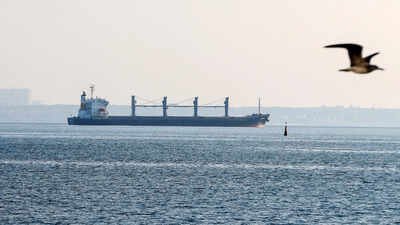


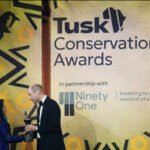





The politics around conservation is not isolated from the people living in the sensitive ecosystems and the people protecting them. The conservation activists work around areas that are often ignored by global conservation bodies and givernments. They fight for nature against big corporations, authorities and illegal exploiters. Raabia Hawa is one such conservationist from Kenya who has now received the 2026 Tusk Award for Conservation in Africa on November 11.Hawa is a former broadcast journalist and Montessori teacher who became an environmental defender working in politically difficult areas. She founded the Ulinzi Africa Foundation (“Ulinzi” means the defenders in Swahili) in 2014 to provide frontline ranger patrols against illegal elephant poaching and wildlife crime. Her work is not limited to anti-poaching but has extended to combating illegal industrial bottom-trawling. She has also empowered local communities to resist extractive mining agreements.Her main area of work lies on Kenya’s northern coastline, in Lamu and Tana River counties of Kenya. It is a biodiversity hotspot where protecting the marine and terrestrial habitats involves challenging industrial fishing and extractive industries. Moreover, working near the Somali border has increased the complications due to high political attention. Hawa’s activism against environmental destruction has brought her grave personal dangers. She has been designated as a target by the militant group al-Shabaab and has received death threats.These dangers during the fight for nature were acknowledged when she received the 2026 Tusk Award for Conservation in Africa in London. Additionally, her foundation, Ulinzi, will receive three years of critical funding. Raabia dedicated the award to her father, Abdul Kadir Hawa saying, “He really believed in allowing me to find my path and walk my path, and he just empowered me every day.”The award is especially crucial because of the funding it brings with it, as she stated to Mongabay that until now Ulinzi has been working on pro-bono services by her family members. While her brother provides GIS mapping skills, her sister is a lawyer who handles all the organization’s legalities. The award will provide Ulinzi a stable source of funding for the first time which will help them pay their rangers, whom she describes as the “beating heart of Ulinzi” to Mongabay.While discussing the day-to-day challenges and the threat presented by the militant group to Mongabay she highlighted that she was not scared by the intimidation but instead worked with the local community to gather stronger evidence. She explained how working in a high security area makes conservation different from any other area. After operating a successful anti-poaching team, her newest focus is against unreported and unregulated fishing near the Somali border. In the conversation, she said her investigations about the threat to marine species led her to a trawler carrying 48 endangered species. This was the incident that sparked threats against her and put her on the radar of the militant group, al-Shabaab.She made efforts to prosecute the trawler’s captain by collecting evidence, writing letters to the Director of Public Prosecutions (DPP) and working along with the Kenya Coast Guard to compile an investigative report. She told Mongabay that she taught the community members to collect more evidence to make a stronger petition instead of just marching to the chief’s office. Their actions led to a significant difference where they noted a decline in the death of turtles as a result of trawling between 2023 and 2025.While sharing her motivations for getting into the conservation side of loving wildlife with Mongabay, she highlighted her experience of working with rangers while teaching and working in radio. Her early initiatives included organising a cross-country trek, ‘Walk with Rangers’, from Arusha in Tanzania to Nairobi in Kenya. It brought together 71 people from across the world and raised enough money to buy a Land Cruiser. While she never intended to start an organisation, she could not ignore the assistance that the ecosystem required.