









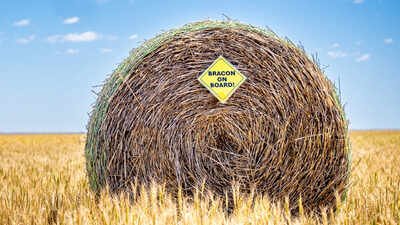
The failure of a crop is an incredibly distressing occurrence for farmers, especially those who depend on it for their livelihoods. But what if the answer to protecting a crop from an insect infestation was not another pesticide, but a little helper that could be brought into the field in a bale of hay? The wheat stem sawfly is notorious for damaging wheat plants by laying its eggs inside their stems. But researchers at Colorado State University are exploring just this possibility. In a fascinating investigation, researchers are trying to find out whether rolling out hay bales carrying tiny parasitic wasps into wheat fields could help keep these destructive sawflies under control.Colorado State University’s news report by Jayme DeLoss notes that the wheat stem sawfly has been responsible for an estimated $70 million in direct and indirect losses every year in Colorado. The insect has spread across the state’s Eastern Plains, affecting wheat farms and making it increasingly difficult for growers to protect their harvests. Researchers at Colorado State University, led by associate professor Punya Nachappa, are now investigating several ways to tackle the problem. Nachappa’s team has also been conducting annual surveys to study the sawfly infestation in Colorado.
The insect hiding inside the wheat
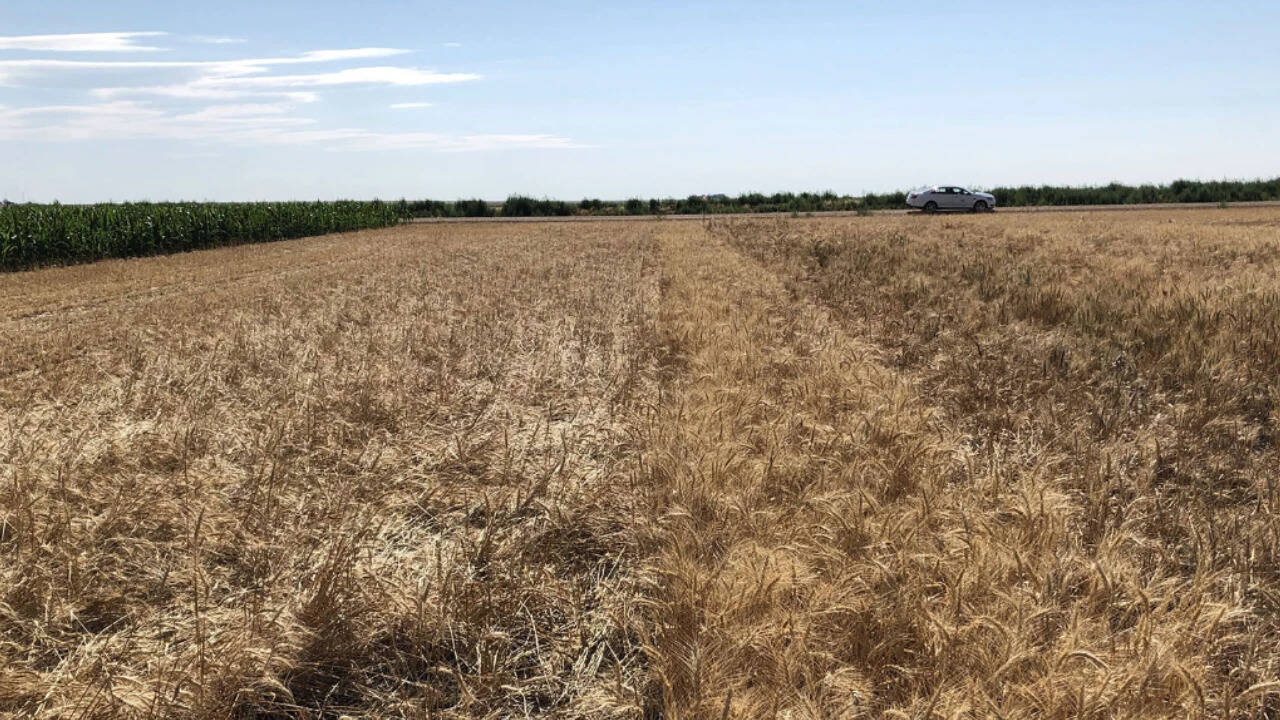
Interestingly, despite its name, the wheat stem sawfly is actually a primitive wasp. The problem begins when female sawflies lay their eggs inside wheat stems. Once the eggs hatch, the larvae feed on the soft tissue inside the stems, gradually making their way down towards the soil surface. As they prepare to spend the winter, they cut a notch inside the stem, weakening it.For farmers, the concern is greater given that this damage takes place inside the plant, making it incredibly difficult to tackle. The larvae remain hidden inside the wheat for most of their development, meaning a plant can appear perfectly healthy from the outside even when it has already been affected. By the time the stems weaken and fall over, the grain can become difficult or impossible to harvest.The insect has become a significant problem for Colorado’s wheat-growing communities, with some farms experiencing extensive damage. According to a Phys.org report, Alan Linnebur, a Colorado farmer who has been working with Nachappa’s team, shared that roughly two-thirds of his family’s wheat has suffered from sawfly damage since the infestation began affecting their farm 16 years ago.
(Image credit: source.colostate.edu)
Bringing in a natural enemy
This is where the tiny parasitic wasps enter the picture. Researchers are studying a group of wasps known as Bracon, which naturally prey on wheat stem sawfly larvae. Unlike the sawfly, which damages the wheat from within, these parasitoid wasps use the pest itself as a host. A female Bracon lays her eggs on a sawfly larva, and once the eggs hatch, the young wasps feed on the larva, eventually killing it.While these beneficial wasps are relatively abundant in Nebraska, their populations have been much smaller in Colorado. Researchers therefore began exploring whether they could introduce them into wheat-growing areas where sawfly infestations were already a problem.After checking that the parasitoid wasps from Nebraska were a suitable genetic match for the populations they wanted to establish in Colorado, Nachappa and her collaborators at the University of Nebraska and the US Department of Agriculture developed an unusual way of transporting them. They placed hay containing the parasitoids into bales and rolled these out across several Colorado wheat fields. The technique has been given the name ‘Beneficial Bug Baler’.The idea is to give the wasps an opportunity to emerge and establish themselves in areas where their natural presence has been limited. According to the research team, studies in Nebraska have indicated that parasitism needs to reach around 50% to improve yields in fields affected by the sawfly. Some of the Colorado sites where the wasps have been released are now approaching this threshold, although researchers are continuing to monitor how well the approach works.
When fungi become an unexpected ally
The wasps are not the only natural helpers that researchers have come across while studying the problem. In 2023, Nachappa’s team made another rather surprising observation when they found that a fungus had infected and killed some wheat stem sawfly larvae.The fungus reportedly belonged to the Fusarium group, which includes well-known pathogens capable of causing serious wheat diseases. However, the strains that the researchers identified appeared to infect the sawfly larvae without harming the wheat plant.The team has also identified six species of beneficial Fusarium associated with the infected larvae. Laboratory and greenhouse experiments have shown that some of these fungi can kill up to 90% of sawfly larvae. Researchers are now evaluating the most promising strains and exploring whether they could eventually be used to treat wheat stubble in fields.There are other approaches being explored as well. Colorado State University’s wheat breeding programme has developed varieties with semi-solid stems, which can crush sawfly larvae as they feed inside the plant. But while these varieties help curtail the damage, they can also produce lower grain yields than hollow-stem varieties, which is why researchers are looking for supplementary techniques that could work alongside them.
Can nature help protect the harvest?
Although the wheat stem sawfly continued expanding its range in Colorado between 2025 and 2026, the overall infestation rate across the state declined in 2026. Researchers believe that extreme drought conditions and several of the control methods being developed may have contributed to this change, although the exact reasons are still being investigated.The team has also observed an increase in naturally occurring parasitoid wasps in some Colorado wheat fields, including locations where they had not been released. But for now, the researchers are continuing to examine how these different approaches can work together, from introducing parasitoids and studying fungi to developing wheat varieties that are better prepared to tackle the infestations.