










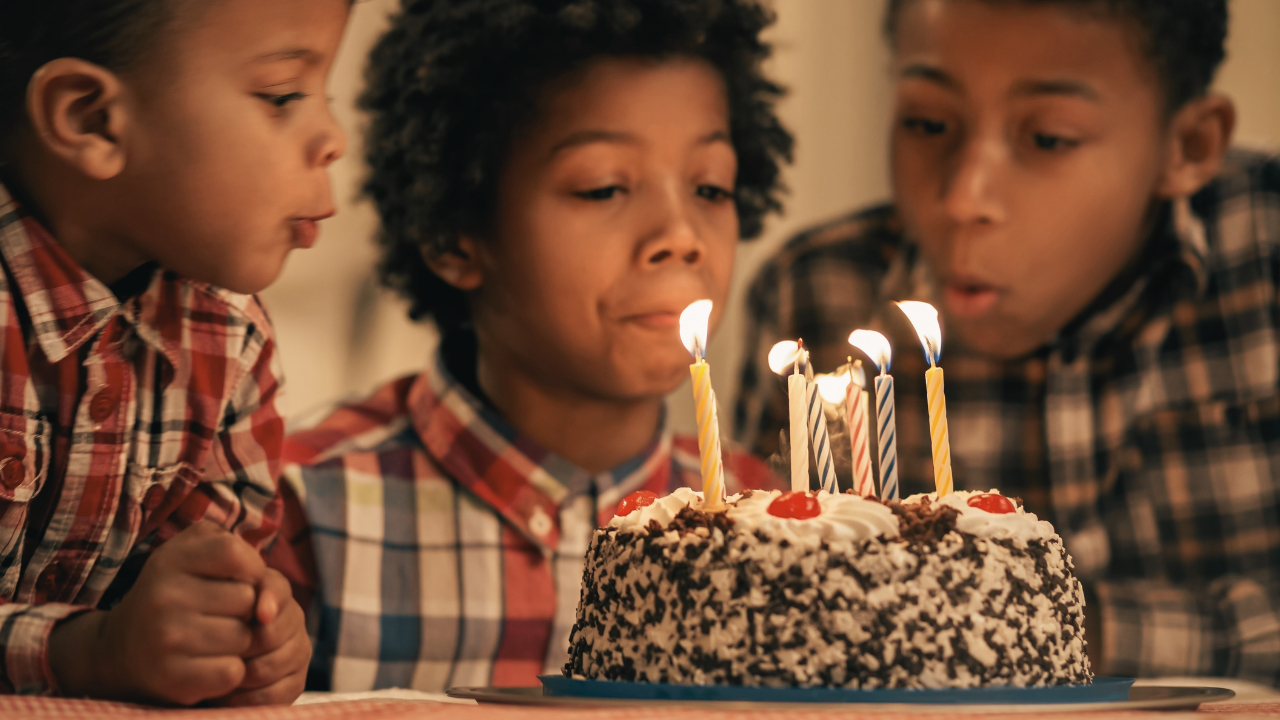
Every birthday seems to follow the same little script. The cake arrives, the candles are lit, everyone sings, the birthday person closes their eyes, makes a wish and blows out the flames. It feels so ordinary that it is easy to forget how strange the ritual actually is. Why candles? Why a cake? And why are we supposed to blow them out in the first place? The answer is not as simple as “the ancient Greeks started it”. That popular explanation contains a grain of truth, but the modern birthday-candle ritual appears to have developed through several traditions over centuries.
The ancient Greek connection is real, but not a birthday tradition
One of the oldest stories connecting candles and cakes comes from ancient Greece. Worshippers of Artemis, the goddess associated with the moon, offered round cakes at her temple. Some accounts describe these cakes as resembling the full moon, with flames or lamps adding to the effect. That has often been presented as the direct origin of birthday candles. Historians, however, urge caution. There is no clear ancient Greek record saying people placed candles on a cake specifically to celebrate someone’s birthday.
Then came Germany’s Kinderfest
The more convincing ancestor of the modern tradition appears in 18th-century Germany. German children’s birthday celebrations known as Kinderfest featured cakes decorated with candles. The number of candles could correspond to the child’s age, with an additional candle sometimes representing another year of life.

The symbolism was also more serious than today’s party ritual. Candles were associated with protection, life and good fortune. According to historical accounts, children were particularly vulnerable to misfortune on their birthdays, making the candlelight part of the protective symbolism surrounding the celebration. This is where the tradition begins to look recognisably modern: a child’s birthday, a cake, candles representing age and a special ritual surrounding the flames.
The candles were not always blown out immediately
There is another detail that makes the old custom particularly fascinating. Historical accounts of German birthday celebrations describe the candles being lit earlier in the day and remaining on the cake until the evening meal. The birthday child would then extinguish them. The idea that a wish could be fulfilled if all the candles were blown out in a single breath became part of the folklore surrounding the practice.But the exact origin of the “one breath, one wish” rule is difficult to pin down. A Swiss folkloric record from 1881 provides one of the early written references to birthday candles being blown out by the person celebrating. So, while the wish-making tradition is old, it is more accurate to say that its precise modern form developed gradually rather than arriving fully formed from ancient Greece.
An 18th-century birthday gives us a remarkable paper trail
One of the strongest historical records comes from Germany in 1746. At a birthday celebration for Count Ludwig von Zinzendorf, an account described a huge cake with candles corresponding to the person’s age, including one additional candle. The description is significant because it provides unusually clear evidence of candles being deliberately placed on a birthday cake.A few decades later, German writer Johann Wolfgang von Goethe also described a birthday cake covered with dozens of candles during his 52nd birthday celebration in 1801. By this point, the candle-on-cake tradition was clearly established among some European communities.
So why do we blow them out?
There isn’t one definitive answer. One strand of the tradition comes from the ancient symbolism surrounding fire and smoke. Across many cultures, rising smoke has been associated with prayers, offerings or messages travelling upwards. That helps explain why extinguishing a candle could become connected with making a wish.The German birthday tradition added another layer: the birthday person became the one responsible for extinguishing the candles, with the successful extinguishing of all the flames linked to good fortune and fulfilled wishes. Over time, the spiritual meaning faded and the ritual became playful.
How did it become a global birthday ritual?
The custom travelled beyond Germany, particularly through German migration to the United States during the 19th century. Birthday celebrations gradually became more common among ordinary families as social and economic conditions changed. By the early 20th century, birthday cakes with candles had become increasingly familiar in American and British middle-class households. Mass-produced candles and children’s birthday products helped turn the tradition into something accessible rather than an elaborate custom reserved for wealthy families. American popular culture then helped take it around the world.
A tiny ritual with centuries of history
Today, blowing out birthday candles has almost nothing to do with gods, protective spirits or ancient offerings. It is simply the moment when everyone pauses for the person whose birthday it is. Yet the basic idea has survived remarkably well: light a flame, mark another year of life, make a private wish and extinguish the fire.