









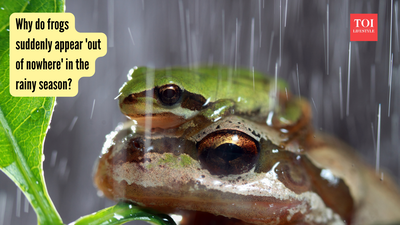
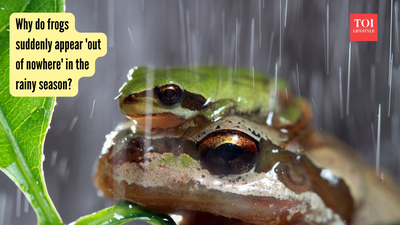
The rainy season is already here, and everything around is exuding green!There is something magical about the heavy monsoon shower when the air smells different, the ground turns soft, and within hours, a chorus of croaks fills the evening.For most of the year, frogs seem to vanish entirely. Then, suddenly, as if summoned by the rain itself, they can be spotted everywhere: on porches, in puddles, hopping across roads.But how does that happen, that suddenly out of nowhere they are suddenly everywhere?
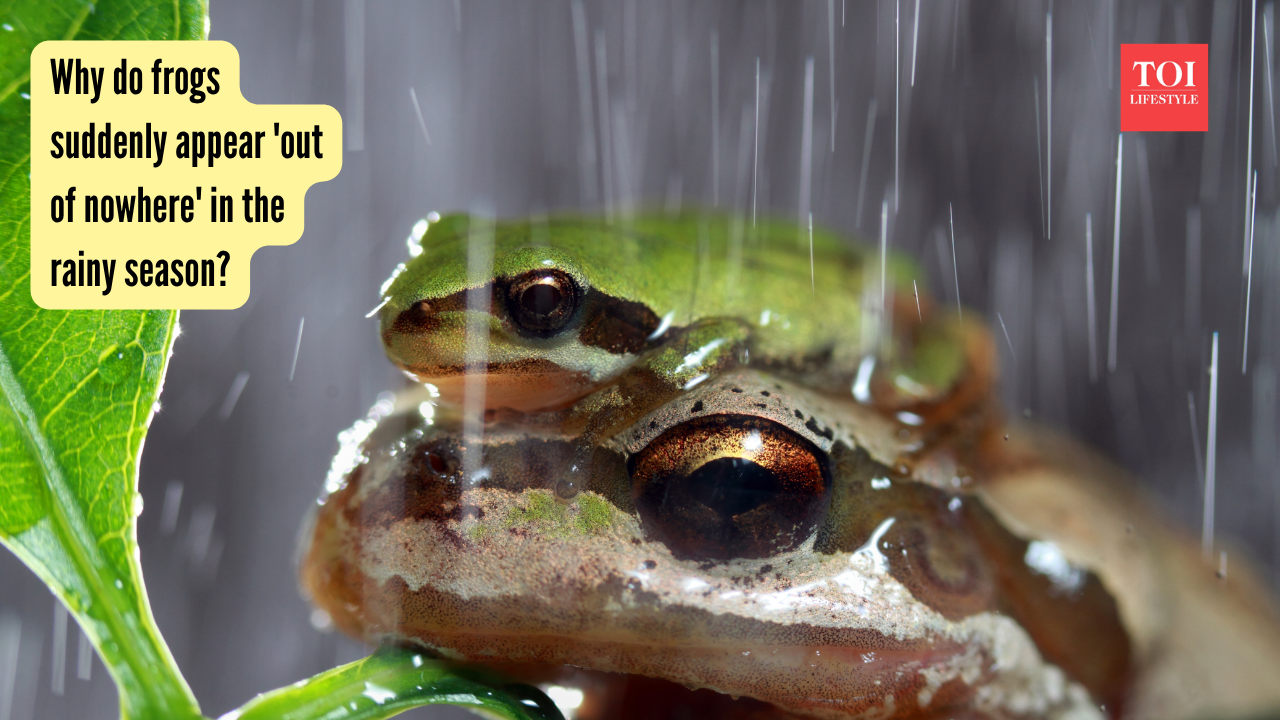
Representative Image
Why do frogs appear out of nowhere in monsoons?
Many frog species do not simply disappear when the weather turns dry; they go underground. This survival strategy, called aestivation, involves digging deep into moist soil and staying there for months at a time. Striped burrowing frogs in Australia can remain dormant without food or water for as long as nine or ten months of the year. Apart from this, India’s purple frog spends almost its entire life underground feeding on termites while buried.
Grog bodies build a protective cocoon
While buried, frogs do not just hide; their bodies are adapted to the surroundings, and many burrowing species shed several layers of skin, which form a waterproof cocoon around their body, leaving only the nostrils exposed for breathing, according to FrogPets.One among these is the African bullfrog, which takes it even further. Before burrowing, it gorges itself to build fat reserves, then secretes mucus that hardens into a protective shell, helping it to survive extreme drought for astonishingly long stretches underground, according to Animals Around The Globe.
Rain is the trigger that wakes them up
Frogs are quite sensitive to changes in moisture and vibration in the soil above them. The moment monsoon rains soak the ground, buried frogs sense the returning moisture and rapidly rehydrate, breaking out of their cocoons within hours; perhaps that is why they are all suddenly spotted in the wet season.So, that brings us to the fact that the frogs were never truly gone; they were simply waiting, sometimes just centimetres beneath the surface, for exactly this signal that they get from rains!
Monsoon rains are their small window to breed
By the time the frogs emerge, rain creates temporary pools and puddles, which are ideal, predator-light nurseries for eggs. India’s purple frog, for example comes out for barely two weeks during the monsoon, using this brief window to breed before returning underground.So, it is less a mysterious reappearance and more a finely decided survival strategy, caused by millions of years of adapting to seasons that swing between bone-dry and wet.