








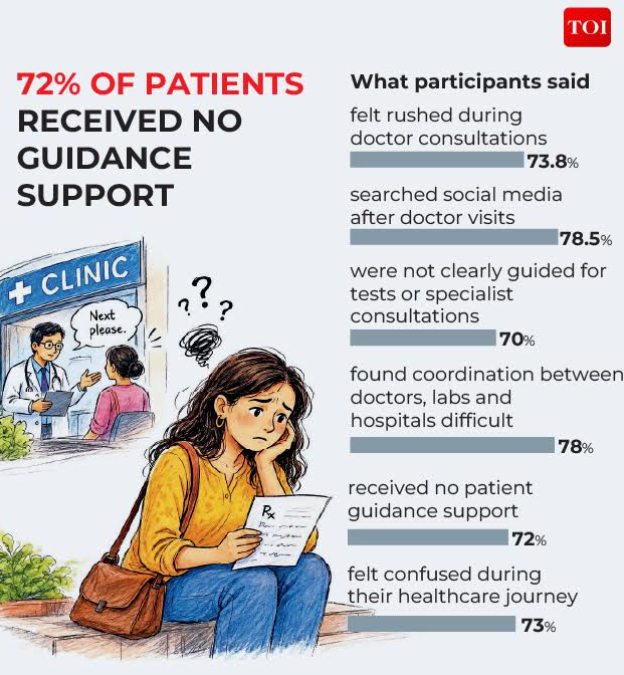
NEW DELHI: India’s healthcare system is facing a growing “patient confusion crisis”, with nearly eight out of 10 patients in Delhi-NCR turning to Google or social media after visiting doctors because they leave consultations without fully understanding their illness, treatment or next steps, according to a survey released on Sunday.The India Patient Navigation and Confusion Index (IPNCI), 2026, was conducted among 1,000 respondents across Delhi, Noida, Gurgaon, Faridabad and Ghaziabad. It found that 73.8% patients felt rushed during consultations, while 78.5% searched online later for clarity about medicines, tests or specialist referrals.
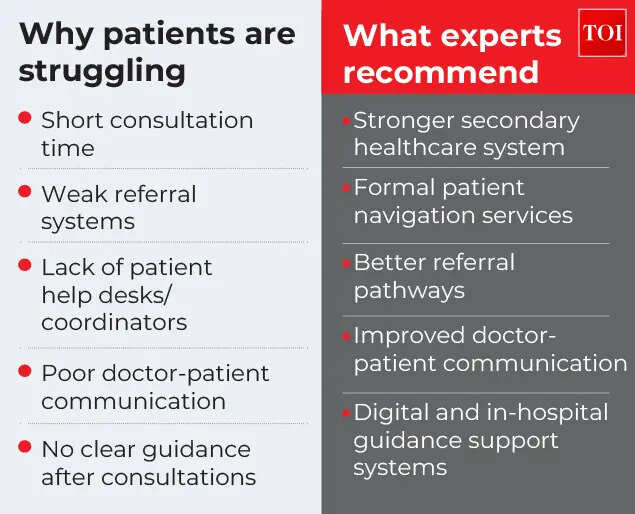
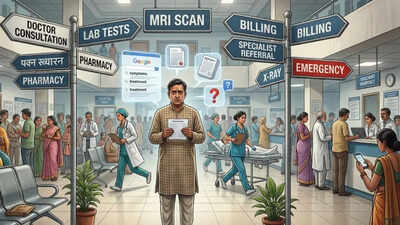
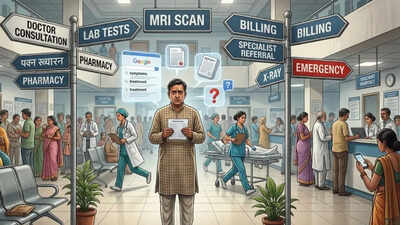
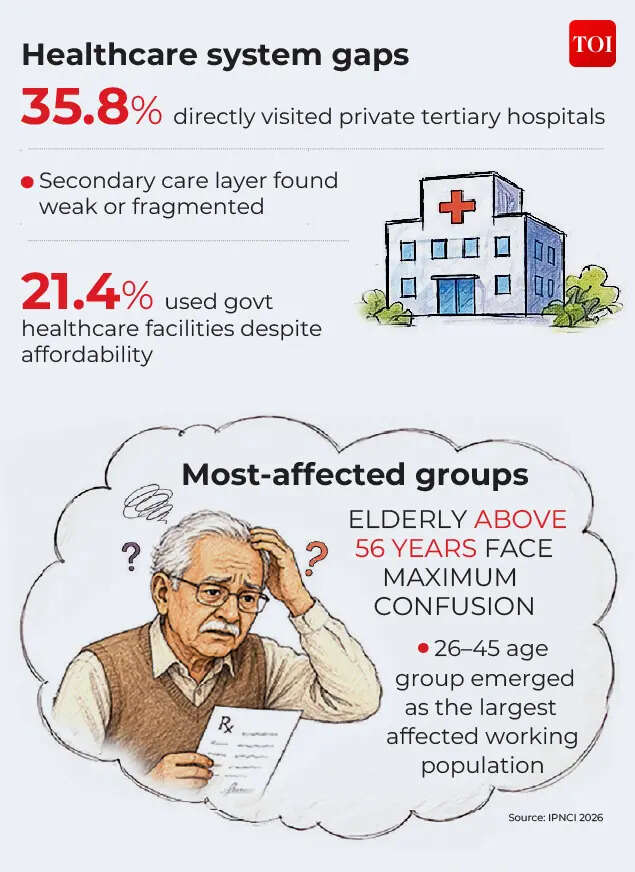
The study found that many patients struggle to understand where to go after leaving a doctor’s chamber — whether for tests, scans, medicines or further treatment — exposing major gaps in patient guidance and communication within hospitals.Around 70% respondents said they were not clearly guided about the next steps in care. More than 72% said hospitals did not provide support systems such as patient help desks, coordinators, helplines or digital guidance tools.The report described the situation as a growing “patient navigation crisis”, where patients enter the healthcare system but are often left to manage everything on their own.“Patients often feel rushed during consultations and move from one department to another without proper guidance,” said Dr Sunil Khetarpal of the Association of Healthcare Providers India.The study also found that many patients were directly going to large private hospitals instead of smaller secondary-level hospitals, increasing crowding and treatment costs.Only 21.4% respondents said they used govt hospitals despite lower treatment costs there.“The lack of a proper referral systems and patient guidance is increasing confusion and unnecessary healthcare expenses,” said Padma Shri Dr Mohsin Wali of the Indian Medical Academy for Preventive Health.Older people above 56 years were seen facing the maximum confusion while navigating healthcare services.Researchers called for better doctor-patient communication, stronger referral systems and dedicated patient guidance services in hospitals.
Docs say overcrowding, poor guidance to blame
Doctors of govt and private hospitals have acknowledged that overcrowded OPDs, rushed consultations and weak patient guidance systems are leaving many patients confused even after meeting physicians. They were reacting to findings of a recent Delhi-NCR healthcare survey on communication and navigation gaps in hospitals.Experts said rising patient load is reducing consultation time and making it difficult for patients to understand their illness, medicines and next steps after leaving hospitals.In govt hospitals, the challenge is more severe because of overwhelming patient numbers and pressure on infrastructure. A senior doctor at RML hospital said doctors in many OPDs are forced to see nearly 100 patients within four to five hours.“That leaves barely five to seven minutes for each patient, making detailed explanation extremely difficult,” he said. Patients, on the other hand, often spend hours moving from registration counters to OPDs, laboratories and pharmacies. “Many hospitals lack proper navigation systems. Patients struggle to find departments or investigation centres inside large hospital campuses,” Gupta said.
Communication gaps are increasingly visible in private hospitals as well, where patients frequently leave consultations with unanswered questions despite higher consultation costs.Dr Suranjit Chatterjee, senior consultant in internal medicine at Indraprastha Apollo Hospital, said patients today seek not only treatment but also clarity about their illness and care journey.“Medical information can sometimes be difficult for patients to process, especially when they are already dealing with health concerns. Clear explanations around conditions, tests and treatment plans help patients better understand their care journey,” he said, adding that many patients now directly approach tertiary hospitals because they prefer specialist consultations, diagnostics and multiple services under one roof.Dr Rajiva Gupta, internal medicine specialist at CK Birla Hospital, said many patients turn to the internet because they leave consultations with unanswered questions.“Patients often hear terms like fatty liver or sepsis without fully understanding what they mean in daily life,” he said, adding that most hospitals still lack dedicated patient navigation systems.“A receptionist manages appointments, but a patient navigator helps explain the treatment journey and guides patients through the next steps. In most hospitals, this role is missing,” Gupta said.He added that hospitals are increasingly looking at counselling systems and digital tools to improve communication and continuity of care.Dr Sushila Kataria, vicechairman, internal medicine, at Medanta – The Medicity, said communication is increasingly becoming a key pillar of healthcare delivery.
“Technology should simplify healthcare, not add to information overload. Digital tools can help patients access treatment summaries, appointment guidance and verified health information in a simpler format,” she said.Doctors also stressed the need for stronger on-ground guidance systems, especially in large tertiary care centres handling heavy patient flow every day.Dr Anupam Prakash from the medicine department at Lady Hardinge Medical College said hospitals need clearer signage systems and better patient guidance mechanisms. “Clear-cut boards outlining service areas and proper directions need to be in place,” he said.Prakash added that tertiary hospitals remain overstretched because many patients bypass secondary-level healthcare facilities.Doctors said India’s healthcare challenge is increasingly becoming not just about access to treatment, but also about whether patients can successfully navigate the system.