


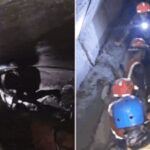





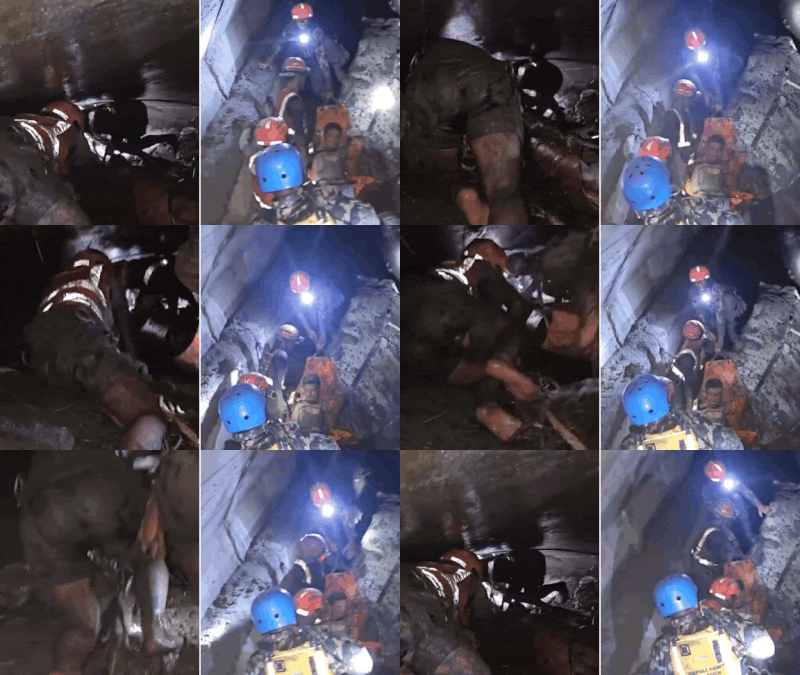
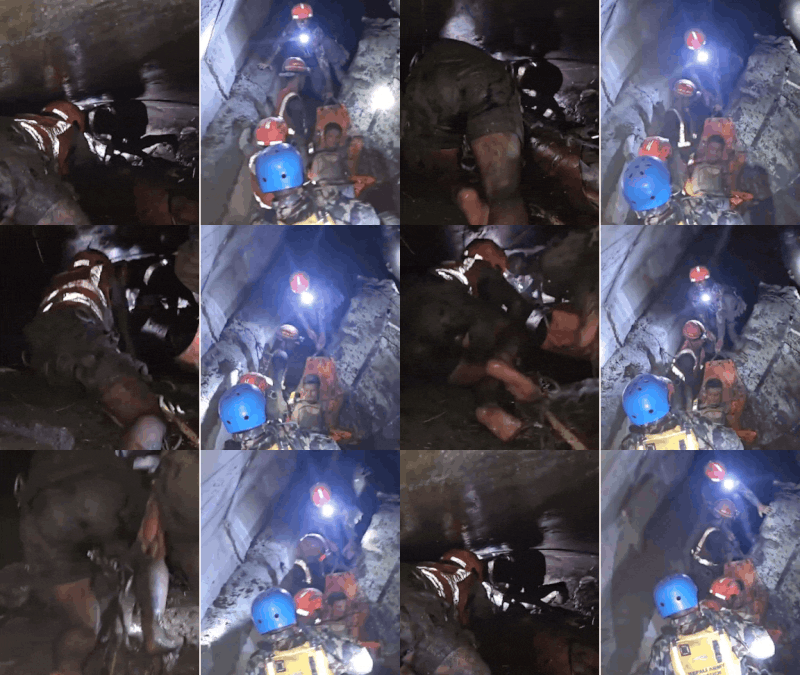
The operation at the Upper Trishuli 3A hydropower project was a painstaking process. It began with simply reaching the buried tunnel and eventually involved excavators, oxygen pipes, technical drawings, former plant employees, engineers and specialists advising rescuers in real time.Two hydropower workers were pulled alive from a debris-buried tunnel in Nepal on Friday, nine days after a catastrophic flood swept through the Trishuli valley. Their rescue offered a rare breakthrough on the tenth day of efforts that had repeatedly been stalled by huge volumes of mud, rocks and debris.The Nepali Army shared a snippet from the rescue operation that saved the two tunnel workers. In a video that has now garnered over 17k views show the workers crawling in and then pulling out a tunnel worker successfully. Calling the event “miraculous” the army said that the two workers got their rebirth after 10 days.“After 10 Days of Intense Struggle—Rebirth of Two Lives, a Miraculous Victory of Hope. Trishuli 3A. Two People Rescued Alive from the Tunnel,” it wrote.
How the rescue operation was carried out
Step 1: Rescuers first had to reach the buried tunnelThe August 26 flood had completely transformed the landscape around the hydropower projects. A huge wall of water, mud and rock, triggered by a vast glacial and rock collapse on a mountain on the China-Nepal border, buried tunnel entrances and altered the terrain around them.At Upper Trishuli 3A, rescuers took almost six days just to reach the tunnel because its entrance had been buried.The problem was not simply a blocked entrance. “This is not a normal closure of tunnels,” Nepal Army spokesperson Raja Ram Basnet said. He added that the flood had changed the terrain around the tunnels and altered their structure, while mud, rocks, soil and other debris had accumulated inside.Step 2: Heavy machinery began clearing the wayOnce rescuers reached the site, excavators were used to move huge boulders and debris from the mouth of the tunnel.Excavators were attempting to clear the tunnel entrance and work their way deeper inside, as reported by news agency Reuters, citing a photographer who flew over the site.The teams were effectively fighting their way through a newly created underground blockage rather than entering an intact tunnel.Step 3: Rescuers tried to keep anyone trapped inside aliveEven before reaching possible survivors, teams were preparing for the possibility that people remained alive inside cavities.At Upper Trishuli 3A, rescuers had been trying to supply oxygen through pipes into cavities where someone might have been trapped.At other sites, the same question was being asked: if workers had survived the initial flood and reached a chamber, could they still have access to food and water?At Rasuwagadhi, rescuers reached 250 metres into one tunnel before finding it blocked. Officials said as many as 46 people might have been trapped in a chamber where they could potentially have access to food and water.Step 4: Engineers turned WhatsApp into a rescue toolAs physical access became difficult, technical knowledge became just as important as machinery.An engineers’ WhatsApp group, created before the disaster, became a real-time support network for the rescue operation. It was expanded to include more experts and eventually had more than 500 members. Officials and rescue workers used the group to obtain information about the underground tunnel networks.At Chilime, for instance, a government official posted, “Can you send me Chilime layout drawings.” Minutes later, a member of the group responded with drawings of the project’s powerhouse and details of its access tunnels.The rescue teams also sought advice from former plant employees, whose knowledge of the tunnel networks helped them understand how to approach the buried structures.Step 5: Missing workers’ phone numbers were also circulatedThe engineers’ group was used for another possible avenue of locating survivors.Members shared the names and mobile phone numbers of missing workers, asking government officials to pass the information to telecom authorities in an attempt to establish their last recorded locations.Step 6: Rescuers searched for a response from insideAt Upper Trishuli 3A, the breakthrough came after days of digging.Australian rescue expert Arnold Dix, who had been supporting the operation remotely, said teams had cleared approximately 50 to 60 metres (164–196 feet) of debris blocking the tunnel.Earlier on Friday, Dix said rescuers believed they had heard a faint response from inside. He said the response was reportedly “hunchha”, meaning “yes” or “OK”. Rescuers had called into the tunnel, “Don’t worry, we are rescuing you.”The faint response gave the teams a possible sign that someone was still alive.Step 7: Breakthrough in less than an hour laterThe teams had been hoping for a breakthrough at any moment.Less than an hour after Dix described the faint response, rescuers pulled the two men out alive.The two workers were identified as Sanjay Shah (30), a mechanical foreman and Kabir Maharjan, (45), a mechanical supervisorStep 8: The workers were brought out through the muddy openingThe extraction itself was arduous.One worker emerged through a muddy opening. Rescuers helped him to his feet before carrying him on their backs towards a helicopter. He raised his hand as the emergency workers took him away.The second man emerged caked in mud and was carried away on a stretcher, with photographs showing his hands pressed together in prayer. Both men were subsequently taken for medical treatment.The Nepal Army said the search-and-rescue operation was continuing.
An international and expert-backed rescue effort
Nepali rescuers were supported by experts from India, China and South Korea.Dix, president of the International Tunnelling and Underground Space Association, was supporting the operation remotely and said the rescue was “back in miracle country” after what he described as a “week of 24/7 heartache”.Dix had also been a key adviser during the 2023 Himalayan rescue operation that freed all 41 Indian workers trapped inside a collapsed under-construction road tunnel.Wider search: More tunnels, more blockagesThe rescue of Shah and Maharjan was the first confirmed sign that tunnel workers had survived the disaster. Authorities had initially believed that more than 100 workers could be alive inside multiple tunnels. Rescuers were continuing searches at Upper Trishuli 3A and other sites.At Rasuwagadhi, teams had already penetrated 250 metres before being blocked. They were planning to go inside again.At Chilime, the Independent Power Producers’ Association said at least eight people could be trapped, while a Nepal Electricity Authority official said 46 may be trapped at Rasuwagadhi.Why the tunnel searches were so difficultThe flood deposited an estimated 2.2 million tonnes of mud and debris down the valley. This meant that even locating tunnel entrances became difficult. At Chilime, Reuters reported a large tunnel entrance with flood debris rising to the ceiling a short way inside.Across the valley, rescuers repeatedly encountered walls of hard-packed debris.
The disaster behind the rescue
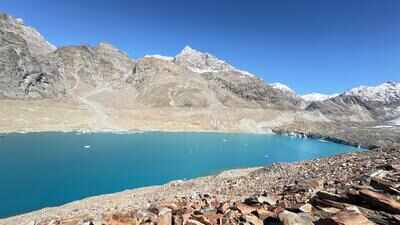
The floods followed a huge glacial and rock collapse on August 26, unleashing what Nepal’s foreign minister called a “Himalayan tsunami”.The resulting floods tore through mountain districts, destroying roads, bridges and multiple hydropower dams. At least 12 hydropower projects were smashed, while the disaster wiped out around 10% of Nepal’s generation capacity.Rescue workers were searching six hydroelectric sites in the valley, at least three of which were under construction.
Survivors who escaped before the flood buried the plants
At Upper Trishuli 1, civil engineer Jan Jiwan Thakur said a colleague warned him about the approaching flood moments before it swept down the valley.He and around 100 others from the facility ran towards higher ground. “We just ran away towards the hillside and, after two to three minutes, when we looked down, everything was gone,” Thakur said. He said the flood debris had completely covered their office area.Another survivor, Dhan Bahadur Tamang, described escaping through a tunnel as the flood struck. Pipes and other equipment were swept inside, but his knowledge of the tunnel system helped him and others find a way out. He said he saw dead bodies during the underground escape.
Families still waiting
As the rescue operation continued, some families had begun holding symbolic funerals for missing relatives as hopes of finding survivors faded. Among those still waiting was Rajesh Shrestha, whose 30-year-old son Rajish, an environmental engineer at Upper Trishuli 1, remained missing.“Whenever I look outside, I imagine seeing him carrying a bag and coming home, just as he used to,” Shrestha said, “I am surviving on the hope that he will return.”