







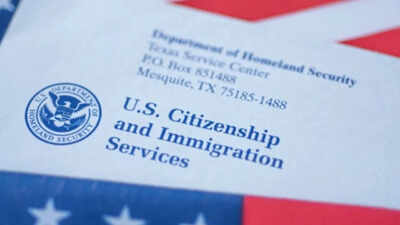
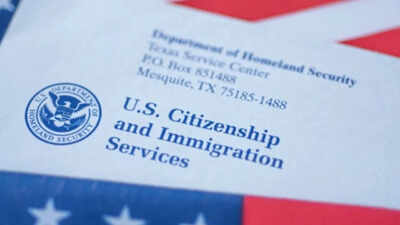
Thousands of H-1B visa holders and other foreign workers could face closer scrutiny when applying to extend their work status in the US under a new rule proposed by the Department of Homeland Security (DHS). The proposal would remove a regulation that requires US Citizenship and Immigration Services (USCIS) to give weight to its own earlier approval when reviewing an extension filed by the same employer for the same worker and job. The proposed change could affect around 208,429 petitions each year, according to DHS estimates cited by immigration law firm Reddy Neuman Brown. H-1B, L-1, O-1, TN and E visa categories would be among those affected. The proposal was published on October 14, 2026, and public comments are due by November 13, 2026.Notably, the rule has not yet been finalized. The existing regulation will remain in effect unless DHS issues a final rule and it takes effect.
What is DHS proposing to change
Under the current regulation, USCIS generally gives deference to a previous approval when an employer files an extension involving the same worker, employer and underlying facts. An officer can move away from the earlier decision if there is a material error, a change in circumstances or new information that affects eligibility.DHS now wants to remove this requirement by deleting Section 8 CFR 214.1(c)(5) and marking the paragraph as “Reserved.” If the proposal becomes final, USCIS officers would be able to review extension applications without being required to rely on the earlier approval. They could reconsider questions that had already been addressed, even if the worker remains in the same role with the same employer.The previous approval could still be considered, but officers would no longer be required to give it deference.
Why DHS wants to end deference policy
DHS says the current policy may shift the burden of proof from employers to USCIS officers. Under immigration law, the petitioner is responsible for proving that a worker qualifies for the requested status. The department also argues that deference could discourage officers from requesting additional evidence when eligibility has not been fully established. It says relying on an earlier approval could allow a questionable decision to influence future petitions.The deference policy was first introduced through a USCIS memo in 2004. USCIS rescinded the memo in 2017, reinstated deference in 2021 and DHS later codified it through the H-1B Modernization Rule in 2024, which took effect in January 2025.
H-1B workers could face more requests for evidence
H-1B petitions account for more than 75% of all Form I-129 filings, according to DHS. This means H-1B workers could be among the most affected by the proposed change. The removal of deference could lead to more requests for evidence (RFEs) during routine extension applications. USCIS may ask employers to provide additional documents or revisit issues such as whether a job qualifies as a specialty occupation.DHS estimates that the proposal could result in around 6,044 additional RFEs each year. The agency’s analysis also found that denial rates did not statistically differ between periods when deference was in place and periods when it was not. More RFEs could increase the workload for both employers and USCIS, potentially leading to longer processing times.
What could the change mean for workers
If the proposal is finalized, workers applying for extensions could face more uncertainty, even when their employment details remain unchanged. Additional evidence requests could delay approvals. Longer processing times may also affect workers who plan to travel abroad and need an approved extension before applying for a new visa stamp.Workers whose extensions are filed on time may generally continue working for up to 240 days after their I-94 expires while the application remains pending, subject to applicable rules. Longer processing times could bring more cases closer to this limit.