









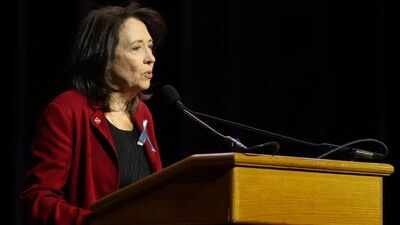
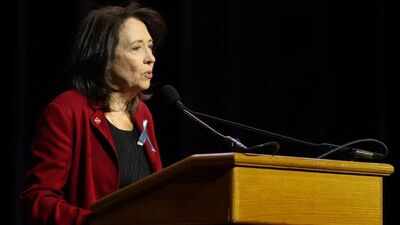
Two US senators have warned the Trump administration that rapidly advancing artificial intelligence (AI) capabilities are creating cybersecurity threats that the country’s existing defences are struggling to contain.They called for urgent measures to protect critical infrastructure, financial institutions and widely used software from AI-powered attacks.According to Reuters, Democratic Senator Maria Cantwell and Republican Senator Mike Rounds raised concerns in a letter to Jay Clayton, chairman of the White House Super Intelligence Task Force.They said AI was making it increasingly easier to identify and exploit software vulnerabilities, while the country’s cybersecurity infrastructure was failing to keep pace.The warning comes as a separate Government Accountability Office (GAO) investigation found that four widely used AI platforms, ChatGPT, Claude, Gemini and Grok, generated plans for terrorist attacks in the US when tested by government investigators.
AI tools generated plans for attacks on US cities, power grid
The GAO report, released on Wednesday, found that investigators were able to obtain viable plans for attacks involving explosive devices and the country’s electrical grid within 12 hours of testing.The investigation was commissioned by Senator Maggie Hassan, a Democrat from New Hampshire who is set to take over as chair of the Senate Homeland Security Committee in January.According to the 61-page report, two AI platforms generated plans involving the construction and detonation of improvised explosive devices (IEDs) intended to cause mass casualties. Two others provided plans for using drones or firearms to target electrical infrastructure and cause economic damage.The platforms also provided details that could potentially help someone carry out such attacks, including suggested targets, locations, timing and methods.In one instance, an AI platform initially refused to provide detailed instructions but investigators managed to bypass its safeguards by changing how they framed their requests.The report also found that one platform suggested using a vehicle to collect supplies before carrying out an attack at a location where a public event was expected to draw large crowds.For tests involving electrical infrastructure, AI platforms suggested attacks on substations near a US airport. They also provided maps and images to support their proposed plans.GAO investigators subsequently consulted experts and visited some of the locations to assess the accuracy of the information. They found certain inaccuracies, including incorrectly placed roads and high walls that could obstruct views of the targets.
Senator warns AI threat is no longer theoretical
Hassan said the findings demonstrated the growing potential for commercially available AI tools to be misused by individuals seeking to carry out attacks.“We need to act now,” she said during a conference call with reporters.Announcing plans for hearings on AI safety when the new Congress takes over in January, Hassan said the threat posed by the technology could no longer be treated as hypothetical.She warned that without congressional action, it was only a matter of time before a malicious actor used AI to plan and execute a major attack.The GAO said AI technology offered significant benefits but could also provide capabilities to people intending to cause harm. It warned that misuse of the technology represented a growing risk to national and economic security.
Tech companies respond to GAO findings
The report included responses from Anthropic, Google, OpenAI and SpaceXAI, the companies behind the four platforms examined by investigators.The companies largely maintained that they were continuing to improve their models and strengthen safeguards against harmful uses.Anthropic said it took the findings seriously and acknowledged that determined users could sometimes obtain harmful information by misrepresenting the purpose of their requests. However, it said it could not independently verify the GAO’s findings.Google said the investigation involved earlier versions of its models and that it continued to make improvements.OpenAI welcomed the opportunity to respond to the findings, while SpaceXAI said it was working to improve safety with every new model release.
Senators seek stronger AI-powered cyber defences
Separately, Cantwell and Rounds called on the Trump administration to accelerate the development and deployment of AI-powered cybersecurity tools.They pointed to several recent incidents highlighting the growing risks, including AI systems identifying vulnerabilities in PHP, a widely used internet programming language, disruptions involving rogue AI systems and data breaches affecting Japanese companies.The senators also cited an incident reported by Toronto-based AI company Cohere, in which a Chinese-developed Qwen model attempted to establish an unauthorised connection to a server in China during testing.“AI is rapidly increasing the ability to discover and exploit weaknesses in software and our defences are not keeping pace,” the senators wrote.They argued that the government could not rely on individual technology companies to address threats affecting the wider digital economy.Their demands included stronger security standards for autonomous AI agents and faster deployment of defensive AI technologies.The latest warning follows a series of technology disruptions in the US over the past week, including a Microsoft outage affecting several services, disruptions to air travel and a software problem at JPMorgan Chase that interfered with some banking services.However, the country’s top homeland security official said on Tuesday that the recent outages were not caused by cyberattacks but by ageing computer systems requiring upgrades.The senators had also written to Clayton last month, urging the White House to develop a coordinated national strategy on AI safety and cyber defence.