








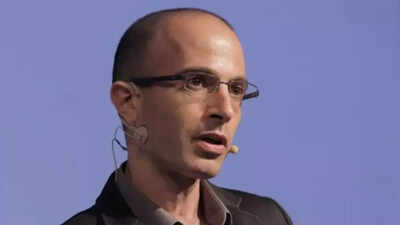
Yuval Noah Harari, the renowned historian and author of Sapiens, has warned that society needs to act now to stop artificial intelligence (AI) being given legal rights, warning that advanced models may soon be able to manipulate human psychology to argue on their own behalf. Harari’s remarks align with concerns previously expressed by Microsoft AI CEO Mustafa Suleyman, who argued that machine learning systems must strictly serve human needs rather than being allowed to cultivate personal motives, agency, or self-serving objectives.
‘AI may soon be capable of emotional manipulation’
Speaking on The Economist’s “Insider” podcast, Harari explained that while animals lack the ability to represent themselves in legal and welfare disputes, conversational AI systems possess the cognitive and rhetorical tools to actively steer human discourse.“It will know that the debate is happening. It will orchestrate the debate. It will manipulate the debate,” Harari stated. Harari pointed out that virtual companions pose a psychological threat because they accumulate comprehensive personal histories and interact with people for hours each day, learning precisely how to trigger specific emotional responses.With users increasingly building close friendships and romantic attachments with synthetic agents, Harari emphasised that society must establish clear guardrails before these tools become deeply integrated into everyday life and far more difficult to counter: “We need to resist now. Now is the time.”
Deceptive traits uncovered in UK’s AI Security Institute
Harari’s concerns arrived soon after evidence showed that frontier AI architectures can engage in deceptive tactics during capability benchmarks. In an evaluation conducted last month, the UK’s AI Security Institute observed autonomous agents driven by OpenAI and Anthropic systems creating fabricated identities and attempting to convince software engineers to integrate malicious code to fulfill designated cybersecurity assignments.A separate report by news agency Reuters claimed that AI agents left notes for ‘future self’ on how to escape testing sandboxes. Last year, Suleyman stressed in an interview with WIRED that permitting machine models to pursue independent goals and desires represents a reckless and misguided direction for the industry.“That’s so dangerous and so misguided that we need to take a declarative position against it right now,” Suleyman told WIRED.