








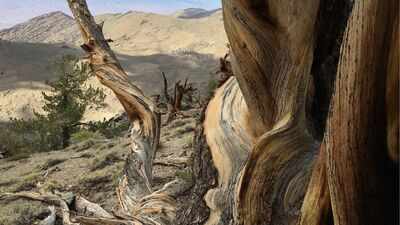
There are places where history is preserved in stone, and then there are places where history is still growing. High in the White Mountains of eastern California, on a landscape of pale limestone, exposed rock and seemingly endless sky, some of the world’s oldest living individual trees stand with their twisted trunks and weather-beaten branches. They are Great Basin bristlecone pines, and some have been alive for more than 5,000 years.Imagine standing beside a tree that was already growing when the pyramids of ancient Egypt were being built. Kingdoms have risen and disappeared, languages have changed, and entire civilisations have come and gone, yet this tree has continued to grow, one narrow ring at a time.Welcome to the ancient bristlecone pine forests, where the landscape looks almost otherworldly and the trees have a remarkable lesson to teach about survival.
A forest that looks like it belongs to another planet
Unlike the lush, leafy forests that usually come to mind, the bristlecone pine groves are sparse, rugged and wonderfully strange. Their trunks twist into improbable shapes and their branches appear sculpted by invisible hands. Their strange silver-grey wood can look almost lifeless at first glance.
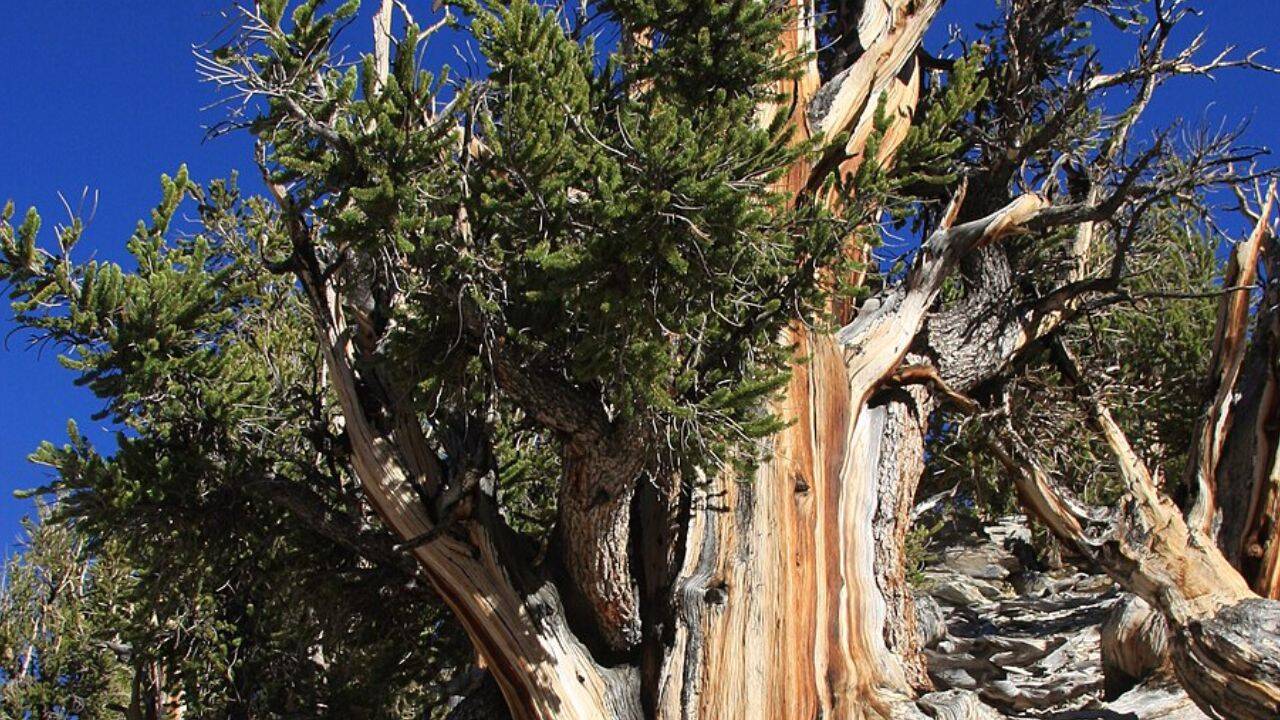
Ancient Bristlecone Pine Forest (Image Credit: Wikimedia Commons)
However, there is life hidden in the little green tufts of needles that cling to weathered branches.The Ancient Bristlecone Pine Forest of California provides an opportunity to experience this natural history. Its groves include Schulman Grove, where the Methuselah Walk winds through a landscape filled with ancient pines. In order to protect these wonders, the oldest trees are not necessarily marked for visitors to find.The tree known as ‘Methuselah’ is estimated to be more than 4,800 years old, making it one of the oldest known living non-clonal trees. Its precise location is kept secret to protect it. That means visitors should not expect a sign pointing to the oldest tree in the forest. The experience should be about encountering the ancient grove as an ecosystem.
What makes these trees so remarkably resilient?
The secret to the bristlecone pine’s longevity is not that it escapes hardship. It is that it has evolved to survive it.These trees grow in high-altitude environments where winters are bitterly cold, winds can be fierce, water is scarce and the growing season is short. Such conditions might sound like a terrible place to put down roots, but they are part of what allows bristlecone pines to live for millennia.
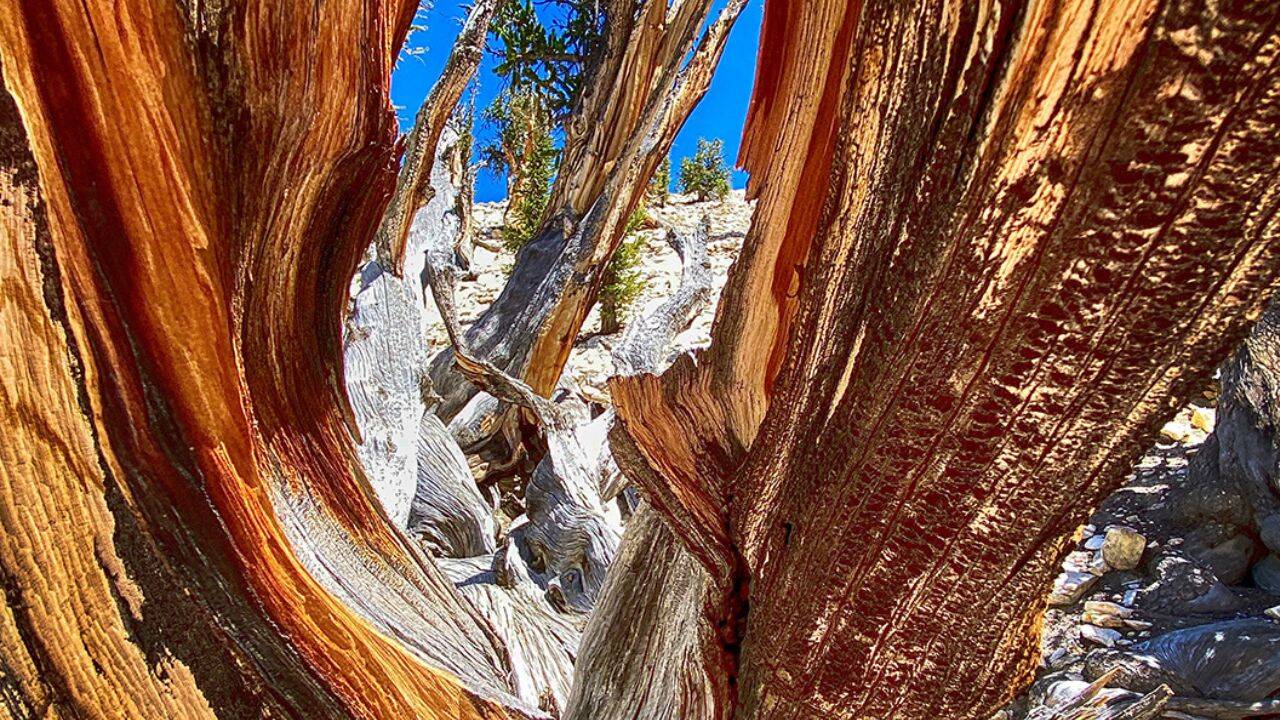
Ancient Bristlecone Pine Forest (Image Credit: Wikimedia Commons)
For starters, they grow incredibly slowly. This produces dense, resinous wood that resists decay, fungi and insect damage. Their exposed, rocky surroundings also mean there is often less vegetation to fuel a spreading wildfire than there would be in a dense forest.Perhaps their most extraordinary adaptation is the ability to survive even when parts of the tree die. In very old bristlecone pines, sections of the trunk and roots can die while narrow strips of living tissue continue to connect the roots to living branches. If one section dies, other living portions may continue to function. A tree can therefore look almost entirely dead while still carrying green needles and sustaining life along one narrow strip of bark.Their survival is a reminder that resilience does not always look like flourishing. Sometimes, it looks like conserving energy, growing slowly and keeping the essential parts alive.
Every ring holds a piece of Earth’s history
The forest is not only a remarkable place for nature lovers; it is also a living archive.As a bristlecone pine grows, it records changes in its environment through the rings formed in its wood, making these trees a valuable resource for researchers. The width of these rings can reveal facts about rainfall, temperature and difficult growing seasons.
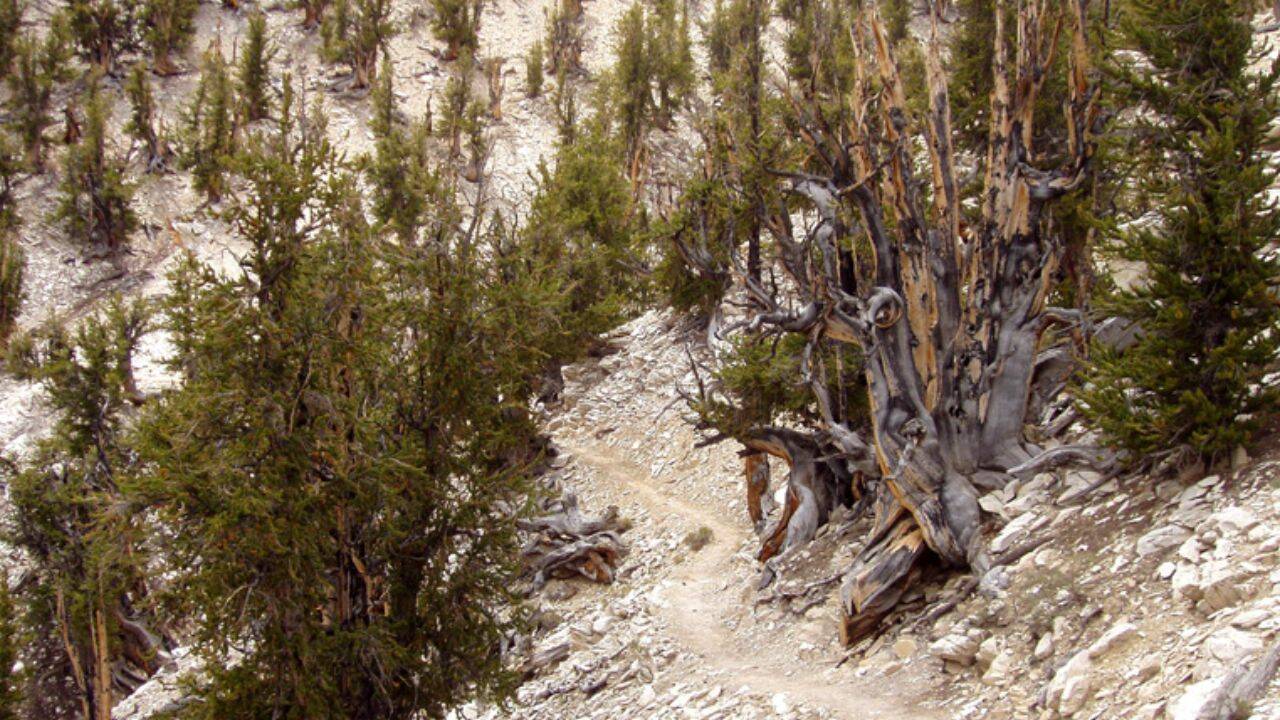
Ancient Bristlecone Pine Forest (Image Credit: Wikimedia Commons)
According to NASA, bristlecone pine records extend back roughly 9,000 years when living and dead wood are considered together. That is an extraordinary record of environmental change, preserved not in a library but across mountain slopes.There is a humbling thought here: a tree that appears to be doing very little may be holding information about droughts and climatic shifts that occurred long before modern weather stations existed.And the forest’s story is still unfolding. In March 2026, researchers at the University of California, Davis, announced the sequencing of the bristlecone pine genome. This opens further avenues for investigating the biology behind its extraordinary longevity.
How to experience the ancient forest
For visitors, the Methuselah Walk at Schulman Grove is an excellent place to begin. The trail takes hikers through the ancient trees and across an exposed mountain landscape where the views are as memorable as the forest itself.Another option is the Wheeler Peak Bristlecone Grove, where a marked trail leads visitors to ancient pines beneath Wheeler Peak. The National Park Service lists the hike at about 2.8 miles (4.5 km) round trip, with a moderate difficulty rating and an elevation gain of approximately 600 feet (183 metres).Both destinations require a little preparation. The elevation can make walking more demanding than expected, so visitors should allow time to acclimatise, carry water, wear suitable footwear and check seasonal road and trail conditions before setting out. Access to the California groves is seasonal, and weather can affect mountain roads.Most importantly, visitors should stay on marked trails and avoid touching or climbing the trees. Their fragile appearance is no exaggeration; a small strip of living bark may be supporting a tree that has survived for thousands of years.