





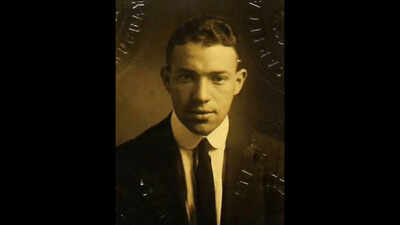
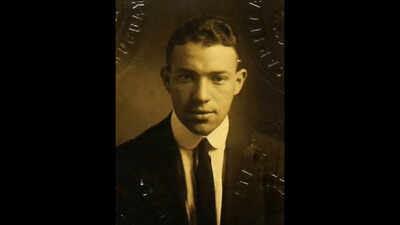
More than 85 years after “Over the Rainbow” appeared in The Wizard of Oz, lyricist E.Y. “Yip” Harburg’s work continues to generate support for charitable causes. The Yip Harburg Foundation, established in 1981, uses royalties from his songs to fund nonprofit programmes pursuing economic and social justice. It offers grants ranging from $500 to $5,000 to eligible programmes operated by registered 501(c)(3) organisations with less than $10 million in assets. Its grants have supported work involving social and economic justice, immigration rights, climate change, criminal justice and underserved communities. Harburg wrote lyrics that addressed racism and social injustice, and he used humour to raise awareness of serious issues. The foundation’s grant programme gives a continuing charitable role to revenue from his songwriting, directing funds towards organisations working on social concerns.
Over the Rainbow lyricist Yip Harburg and his social justice legacy
Harburg, who lived from 1896 to 1981, was described by the foundation as “Broadway’s social conscience”. Across a career spanning more than 50 years, he wrote lyrics for over 600 songs, including the songs in the 1939 film The Wizard of Oz. His best-known work, “Over the Rainbow”, won the Academy Award for Best Original Song. In 2001, Judy Garland’s performance of “Over the Rainbow” topped the Recording Industry Association of America’s “Songs of the Century” list. The project was created by the RIAA, the National Endowment for the Arts, Scholastic and AOL@School. According to CNN’s report on the list, hundreds of voters selected songs from a pool of 1,100 supplied by the RIAA and the National Endowment for the Arts, with space to write in additional choices.Harburg also wrote songs that addressed economic hardship and war. “Brother, Can You Spare a Dime?”, written with composer Jay Gorney in 1932, became closely associated with the Great Depression. The 1937 musical Hooray for What!, created with composer Harold Arlen, carried an anti-war message, while Bloomer Girl (1944), also written with Arlen, explored feminist and anti-racist themes. His political views affected his career. During the McCarthy era, Harburg was blacklisted from film, television and radio from the early 1950s for roughly a decade. He continued writing for Broadway. The foundation’s biography of Harburg describes his use of wit to “gild the philosophic pill”, using humour to convey ideas to audiences.
Yip Harburg Foundation grants: eligibility and how to apply
The foundation awards grants of $500 to $5,000 to programmes operated by registered 501(c)(3) organisations with less than $10 million in assets. According to its official grant guidelines, an organisation may apply once per year, whether or not it received funding previously. Applications are reviewed quarterly, with meetings held in December, March, June and September. Applicants do not need to email to confirm receipt of an application. The foundation says it will notify applicants whether they have received funding and invites them to check back if they have not heard anything within 3 months of submitting their application.The foundation’s published grant statistics show about 30% for social and economic justice, 30% for immigration rights, and 40% for other areas, including climate change, criminal justice and underserved communities. Organisations considering an application can review the foundation’s mission and funding information to assess whether their work fits its stated priorities. The official grants page provides the application requirements and access to the online application form.
Past grantees show the range of causes supported by Harburg’s legacy
The foundation’s published list of previous grantees includes organisations working in legal advocacy, environmental protection, medical debt relief, immigration and the arts. Recipients named on the site include the Coalition of Immokalee Workers, The Bail Project, the Midwest Innocence Project, Rainforest Action Network, the Outlaw Ocean Project and RIP Medical Debt. Arts organisations such as Black Ensemble Theatre and Theatre for the New City also appear on the list. These recipients work across different issues covered by the foundation’s grantmaking. The list includes organisations addressing criminal justice, environmental concerns, medical debt relief and artistic expression, among other causes.Established in 1981, the year Harburg died at the age of 84, the foundation is funded by royalties from his songs. The foundation’s website does not specify which songs generate the royalties. Its licensing page directs requests to the Yip Harburg Lyrics Foundation and the Songwriters Guild of America, separate organisations identified for licensing enquiries. The licensing information does not establish how royalties from individual songs flow to the grantmaking foundation. Harburg’s songwriting remains part of his legacy, alongside his work addressing social issues through lyrics and humour. Through its grants, the foundation continues to direct revenue from his songs towards nonprofit programmes working on economic and social justice.