








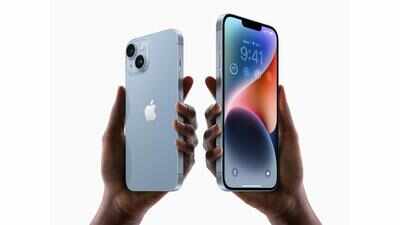
On the evening of June 29, 2007, people queued outside Apple Stores across the United States to buy a phone few had touched but many believed would change everything. There were no livestreamed launch events, countdown timers or influencers posting first impressions. Apple simply announced that the iPhone would go on sale at 6 pm, stores would stay open until midnight, and customers could buy two each on a first-come, first-served basis.Nineteen years later, that understated debut looks almost surreal. The device that quietly went on sale that Friday evening would go on to become the most influential consumer product of the 21st century. It didn’t just redefine the mobile phone. It put a capable camera in every pocket, made dedicated music players obsolete, accelerated the rise of social media, transformed banking and commerce, and turned the smartphone into the world’s primary computer.The iPhone didn’t merely create a new category. It rewrote how billions of people work, communicate, travel, shop and capture their lives.
The device that swallowed everything
The original iPhone was hardly perfect. It lacked an App Store. It did not support copy and paste. There was no 3G. Its camera would look laughably basic today.None of that matteredWhat Apple had really built was a computer that happened to make phone calls. More importantly, it convinced people that software—not hardware—would define the future of personal technology.The casualties came quicklyThe MP3 player was the first to disappear. Dedicated digital cameras followed. Why carry another device when the camera on your phone kept getting better every year?Then came portable GPS units, pocket dictionaries, alarm clocks, calculators, flashlights, voice recorders and scanners. Boarding passes moved onto the iPhone. Tickets followed. Wallets began shrinking. Bank branches became less relevant. The morning newspaper gave way to notifications.One device became dozensThe iPhone didn’t invent every category it consumed. It simply made carrying separate devices feel unnecessary.That single shift fundamentally altered consumer electronicsPhotography became democratic because everyone suddenly had a capable camera with them all the time. Social media exploded because the camera was connected to the internet. The creator economy owes as much to smartphone cameras as it does to platforms like YouTube, Instagram and TikTok.Entire professions — from ride-hailing drivers to food delivery partners, influencers, livestreamers and mobile-first entrepreneurs —depend on a smartphone that descends directly from that first iPhone.It is difficult to find another consumer product that has quietly rewritten so many industries without physically changing all that much.
The world’s most influential computer
Today, the iPhone is often judged by incremental upgrades — a better camera, a faster chip, thinner bezels or new AI features.That perspective misses the bigger story.The iPhone’s greatest innovation was not Face ID, Retina displays or even multitouch. It was changing humanity’s relationship with computing.Before 2007, computers were destinations. You sat down in front of one.The iPhone made computing ambient. It became something that travelled with you, responding instantly whenever you needed it.That change transformed expectations across the technology industry. Every service suddenly had to become mobile-first. Banks built apps instead of branches. Retail shifted to shopping from the sofa. Food delivery became normal. Video calls became effortless. Work, entertainment, payments, navigation and communication converged into a single slab of glass.Even artificial intelligence’s current boom is unfolding largely through smartphones. Whether it is voice assistants, visual search, live translation or on-device AI, the smartphone remains the primary gateway through which billions of people experience new technology.Apple has sold billions of iPhones since that first weekend in June 2007. The device has generated trillions of dollars in revenue, transformed Apple’s fortunes and inspired an industry that now ships well over a billion smartphones annually.Yet the significance of that first launch cannot be measured only in units sold.It lies in the countless moments it changed everyday life.The parent capturing a child’s first steps without planning ahead. The traveller navigating a foreign city without unfolding a paper map. The student carrying an entire library in a pocket. The small business owner accepting digital payments from a roadside stall. The citizen livestreaming history as it unfolds.Those moments became so ordinary that they stopped feeling remarkable.Perhaps that is the iPhone’s greatest achievement. It made revolutionary technology feel routine.Back in June 2007, Apple’s press release promised free workshops, Genius Bar appointments and late-night store openings. It said almost nothing about changing the world.History filled in the rest.