







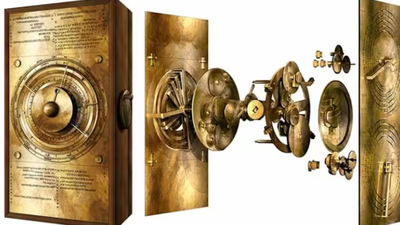
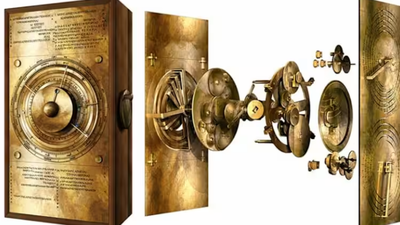
The Antikythera Mechanism is a hand-powered Greek device, built roughly 2,100 years ago, as mentioned in an article published in Scientific American in 2022 named ‘An Ancient Greek Astronomical Calculation Machine Reveals New Secrets’. It used interlocking bronze gears to track the sun, moon, and planets. It also predicted eclipses, followed the moon’s phases, and showed the dates of the ancient Olympics.It is called one of the most technologically advanced instruments known from antiquity, and it’s often described as the world’s first analogue computer. That explains the first half of the title: you set a date, turn a crank, and the gears do the math. The second half is about what experts believed before 1901. Back then, Greek craftsmen were thought to have made only simple fixed gears, the kind found in windmills and watermills. This device had gears mounted on other gears, called epicyclic gears, with teeth carved about a millimetre long. Tony Freeth of the University College London Antikythera Research Team has studied it for around twenty-five years and calls it “almost unbelievable in its brilliance”.A rare machine that survived by accident
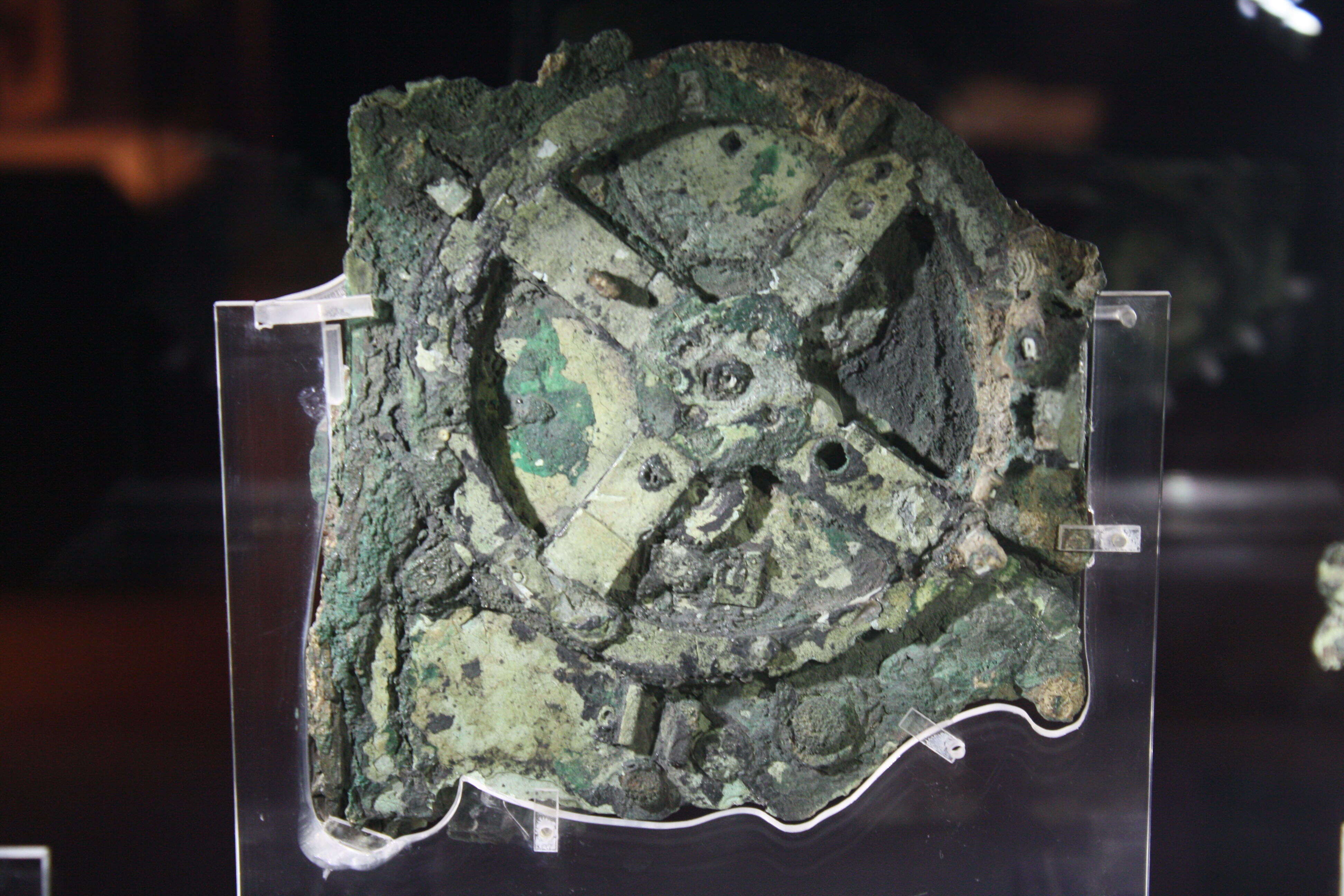
Antikythera-mechanism: Main drive wheel of the Antikythera mechanism, as seen in a photograph of its present state. 2005 National Archaeological Museum in Athens Image credits : Scientific American
Alexander Jones, a historian of ancient science at New York University, said that these devices were probably never common. He suspects one high-end workshop around 100 B.C. had the skills to build them, that each took months to finish, and that buyers were few. When one stopped working, its metal was recycled, which was normal practice. That’s why almost none survive.One escaped because its ship sank off the island of Antikythera, near Crete, around 60 B.C. It stayed on the seafloor until 1900, when sponge divers sailing from Symi to North Africa stopped there to shelter from a storm. While looking for sponges, they found the wreck. One diver reportedly mistook the first sight for a heap of dead bodies. They were marble statues. The Greek government hired the divers to excavate, with a gunboat standing guard against looters. Wearing primitive helmets and canvas suits, they could stay down only about five minutes at a time, yet they brought up statues, glassware, furniture, ceramics, coins, and golden earrings. The statues got the press attention. A corroded lump about the size of a shoebox got almost none.Discovery in an Athenian MuseumAccording to World History Encyclopedia, the mechanism dates to the late 2nd or early 1st century BCE, roughly 205 to 60 BCE, and was built to calculate where the sun, moon, and planets sit. He says it was probably a little over a foot tall and housed in a wooden box. So many objects came off the wreck that the odd lump sat ignored until 1902, when the Greek archaeologist Valerios Stais noticed it in a workroom at the National Archaeological Museum in Athens.
Ancient astronomy to the birth of mechanical thinking
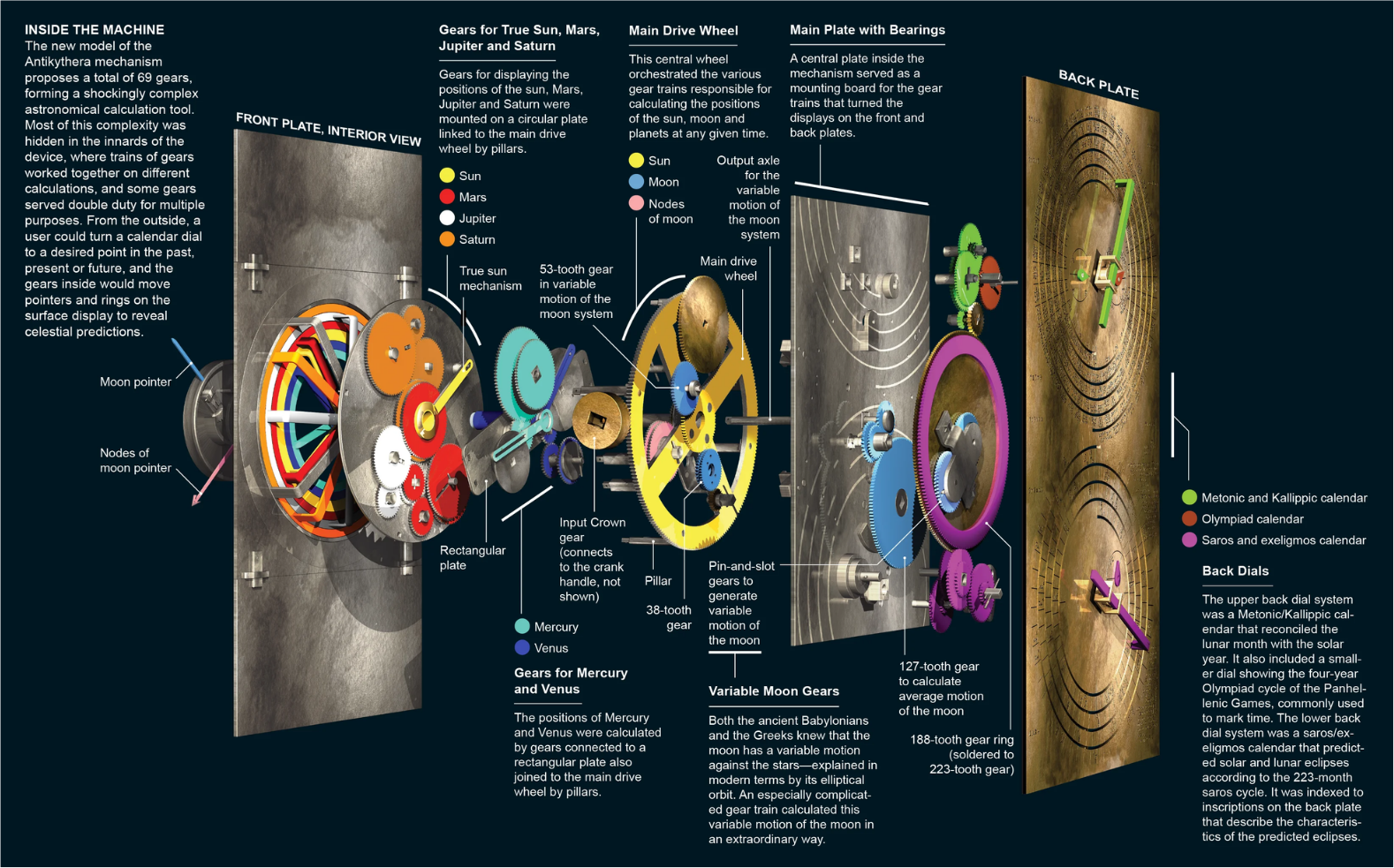
Celestial calculation machine Image Credit: Tony Freeth and Jen Christiansen (graphic), UCL Antikythera Research Team (model)
A machine like this didn’t come from nowhere. Mark explains that Greek astronomy grew out of Babylonian and Egyptian systems. The Babylonians treated the zodiac as the path the planets follow and divided it into twelve signs of 30 degrees each. Thales of Miletus, who studied in Babylon, is often called the first Greek astronomer because he predicted the solar eclipse of 28 May 585 BCE.The Ionian thinkers who followed him made the bigger shift. They argued that nature runs on rules people can work out, rather than on the moods of the gods. They never denied the gods. They just objected to Homer and Hesiod portraying them as immortals with superpowers and short tempers. Pythagoras added the belief that numbers explain the heavens. Those habits of mind are what made a gear-driven model of the sky thinkable.
Why does it still matter?
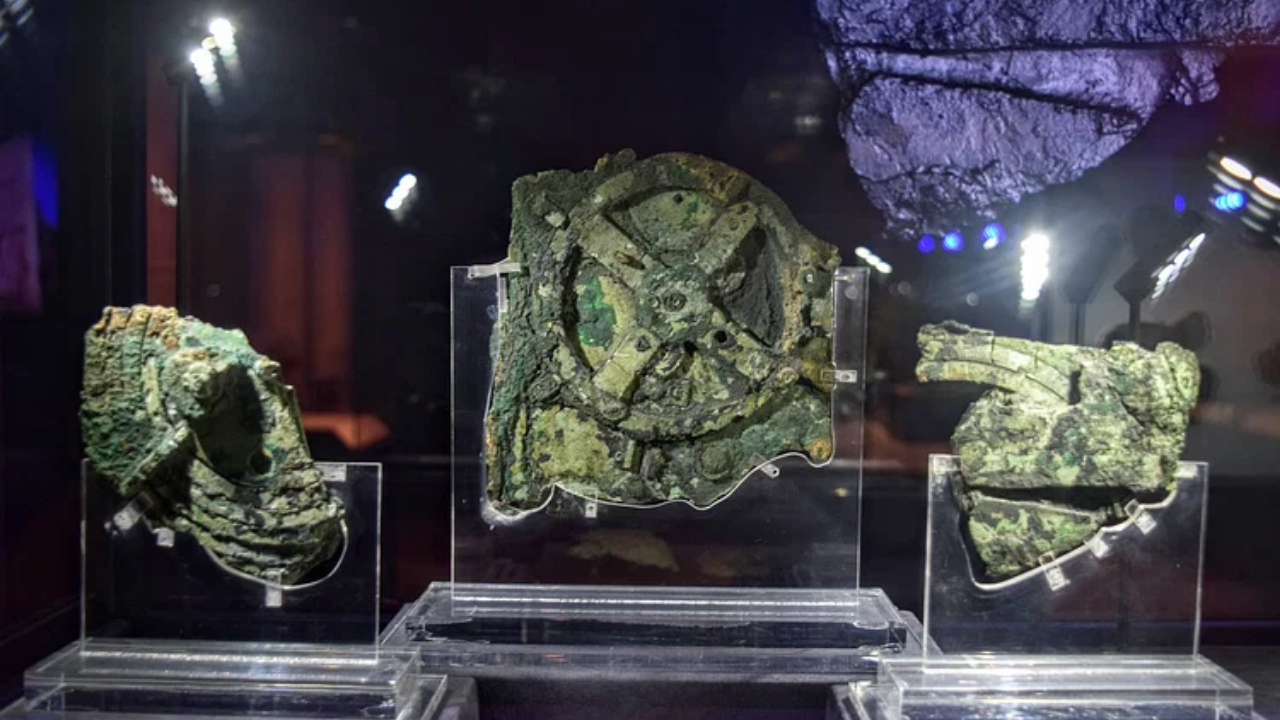
Three Pieces of the Antikythera Mechanism, Weekend Wayfarers Image credits: Worldhistory.org
The Antikythera Mechanism proves that Greek thinkers and metalworkers could turn centuries of astronomy into a working machine, long before anyone expected that kind of engineering. It also shows how much is lost. The mechanism shows that ancient engineers could do far more than we gave them credit for. Technology doesn’t move in a straight line, with each century building on the one before. Someone in the Greek world designed and built a machine this sophisticated, and as far as we can tell, nothing comparable showed up again for many centuries. Knowledge can be gained and then lost. Every fragment still under study is evidence that people in the past were often more capable than we assume.