









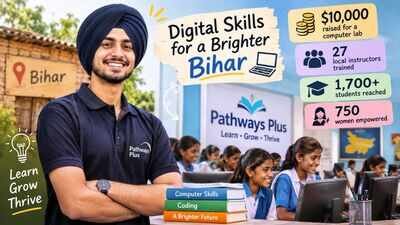
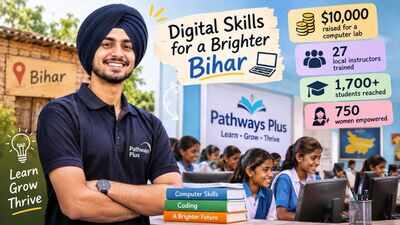
Imagine being a student with an interest in technology but having little or no access to a computer. While children in cities explore coding, artificial intelligence and digital tools, many students in rural communities are still trying to get familiar with basic computer skills. Sumair Kandhari wanted to change this reality for children in rural Bihar. Instead of simply talking about the digital divide, he decided to build a learning space where students could get hands-on experience with technology.That idea became Pathways Plus, a digital education initiative launched in 2023 in partnership with KCS Foundation India. Through fundraising, curriculum development and local teacher training, Sumair helped establish a computer laboratory and create a structured programme for students who otherwise had limited opportunities to explore the digital world. The initiative has since reached more than 1,700 students and 750 women, according to the Diana Award’s 2026 Roll of Honour.
A teacher’s story inspires a bigger mission
Sumair’s interest in improving education access was influenced by his mathematics teacher, Dr Pankaj Jha. According to his official founder profile, Jha shared stories about growing up in Bihar and his commitment to making education accessible. Those conversations made Sumair think about how technology could create opportunities for students who lacked access to digital learning.He recognised that simply having access to the internet was not enough. Children also needed computers, guidance and someone who could teach them how to use technology meaningfully. Determined to address this gap, he began working on Pathways Plus in 2023. He raised approximately $10,000 to establish a computer laboratory with 20 workstations in Samastipur, Bihar. The project was developed with support from KCS Foundation India, which helped bring the initiative to the local community.
From basic computing to Python and artificial intelligence
Pathways Plus is designed to make technology education practical and accessible rather than limiting learning to theoretical lessons. The programme follows a structured training cycle of approximately 2.5 months, introducing students to essential computer skills before moving towards more advanced subjects. Its curriculum includes Microsoft Office, file management, internet use, Python programming and artificial intelligence tools such as ChatGPT and Canva. Students are also introduced to ethical AI usage and the basics of prompt engineering.The programme primarily caters to students aged 9 to 16 from local and neighbouring schools. Instead of relying entirely on external teachers, Sumair also focused on developing local teaching capacity. According to the Diana Award, he personally trained 27 local instructors, allowing the programme to continue serving students through educators within the community.He also designed the curriculum and continued conducting online sessions, mentoring instructors and monitoring the programme’s progress. This approach is important because a computer laboratory alone cannot create lasting change. Students need regular lessons, guidance and opportunities to practise what they learn.
1,700 students and 750 women gain digital skills
What began with a single computer laboratory has gradually expanded into a wider educational initiative. The Diana Award’s 2026 Roll of Honour reports that Pathways Plus has empowered more than 1,700 students and 750 women with digital skills and access to government resources. The programme’s own website separately reports that more than 1,000 students have participated and over 20 teachers have been trained, reflecting a different published impact update.Beyond teaching students how to operate computers, the initiative aims to help them use technology to explore new opportunities. Learning tools such as Python and AI can introduce children to areas of technology they may not otherwise encounter in their regular classrooms.For women, digital literacy can also make everyday tasks easier, particularly when accessing online information and government services. The larger objective is to ensure that people in underserved communities are not excluded from opportunities simply because they lack access to technology or the confidence to use it.
Building opportunities beyond the classroom
Sumair’s approach goes beyond installing computers and organising lessons. Pathways Plus also includes a career guidance resource called the Pathway Programme, which introduces students to 10 professions across technology and non-technology sectors. The idea is to help young learners understand the different career possibilities available to them and make more informed decisions about their futures.The initiative also operates through local educators who conduct classroom sessions, while Sumair continues to provide remote mentorship and adapt the curriculum. His journey demonstrates how access to technology can become more meaningful when infrastructure is combined with training, guidance and community participation.For students in rural Bihar, a computer laboratory can offer their first opportunity to experiment with coding, explore artificial intelligence or create something of their own. And for Sumair, the larger goal is to make sure that a child’s location does not determine how far their curiosity and ambitions can take them.