









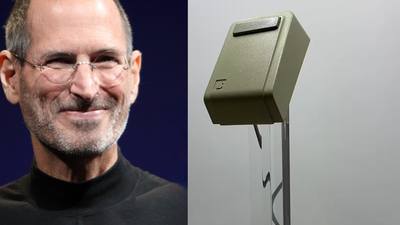
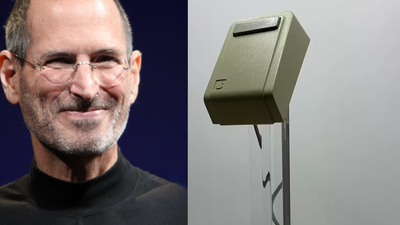
In 1983, Steve Jobs left behind an unusual piece of Apple history in Aspen, Colorado. After speaking at the International Design Conference, he put the mouse he had used with Apple’s new Lisa computer into a large time capsule being buried on the Aspen Institute grounds. The capsule was meant to be opened in 2000, but the plan went wrong. Changes to the surrounding site meant that its exact position was eventually lost. For years, the tube remained underground without anyone knowing precisely where to dig. Three decades after it was buried, a National Geographic television crew working with people connected to the original project finally located it. Inside was the Lisa mouse, along with a collection of ordinary objects from 1983.
Steve Jobs brought the Lisa to Aspen before its mouse was buried underground
Jobs had brought the Lisa to Aspen at a time when Apple was trying to move personal computing towards a different kind of user experience. The Lisa had been released earlier in 1983 and was among the first commercially available computers to combine a mouse with a graphical interface. Instead of relying entirely on typed commands, users could point, click and work with items displayed on the screen.Jobs demonstrated the machine during the International Design Conference in Aspen. According to Steve Jobs Archive, the conference took place under the theme “The Future Isn’t What It Used to Be”, and his presentation has since become one of the better-known records of his thinking about personal computing. An archive of the event preserves a recording of his June 1983 speech.After the presentation, the mouse used with the Lisa became part of the conference’s time-capsule project. Rather than being kept as a conventional piece of company memorabilia, it was placed underground with other objects representing the period.The capsule itself was not a small box. It was a 13-foot-long tube, packed with objects contributed around the conference and then buried on the Aspen grounds.
PC: Aspen Public Radio
The planned 2000 opening turned into a search for the lost capsule
The idea was that the tube would eventually be opened at the turn of the century. That date came and went, however, without the capsule being recovered. The problem was not that the capsule had been removed. It was still underground. The difficulty was finding it.Landscaping and changes to the Aspen site altered the surroundings over the years. The physical landscape no longer matched the conditions that had existed when the capsule was buried, leaving the people responsible without a dependable location for the excavation. The capsule had effectively become lost beneath a place that had changed around it.That detail turned what might otherwise have been a routine time-capsule opening into a search. The original plan was simple enough: bury the objects, wait, then return to them in 2000. Instead, the tube remained in the ground for more than another decade.

PC: Aspen Public Radio
The lost time capsule was finally found after 30 years underground
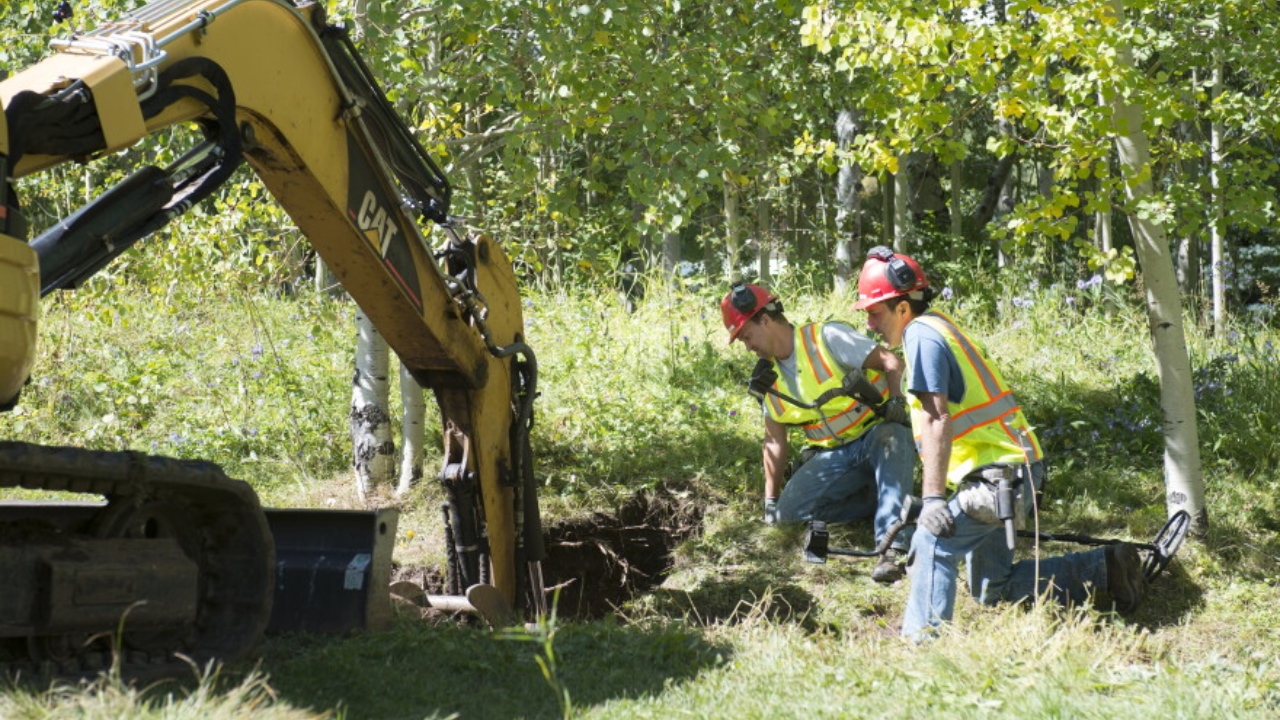
As reported by Aspen Public Radio, the eventual recovery involved the National Geographic Channel programme “Diggers”. Its hosts, George Wyant and Tim Saylor, travelled around the United States looking for buried historical objects, and the Aspen capsule became one of the programme’s more unusual targets.The team did not simply start digging at random. They worked with the Aspen Music Festival and School and Harry Teague, who had been involved with the original design team that buried the capsule. Information from the earlier project helped narrow down where the tube could be. The excavation took place in September 2013.When the crew finally reached the capsule, the object that had brought much of the attention to the search was still there. Jobs’ Lisa mouse had survived underground for about 30 years.
What was buried with Steve Jobs’ Lisa mouse
The mouse was only one part of the collection. The tube had been filled with a mixture of technology, entertainment and everyday items from the period.Among the contents reported after the excavation were an eight-track recording by The Moody Blues, a Sears Roebuck catalogue, a June 1983 issue of Vogue, a Rubik’s Cube and a six-pack of beer. Other accounts of the opening also documented additional period objects from the capsule.That mixture gives the time capsule a distinctly ordinary quality. Alongside an object connected to one of the most recognisable figures in early personal computing were things that would have been familiar in an American home in the 1980s.
Why the Lisa became an unusual part of Apple history
The story of the mouse is also tied to one of Apple’s less successful early products. The Lisa was among the first commercially available computers to combine a mouse with a graphical interface. Its graphical interface and mouse-based navigation were significant parts of its design. Yet the computer struggled commercially and was discontinued in 1986. Apple introduced the Macintosh in 1984, and the newer machine went on to become far more important to the company’s consumer computer business.That history gives the buried mouse an unusual place in Apple’s story. It came from a product that did not achieve lasting commercial success, but from a period when Apple was experimenting with ways to make computers easier and more intuitive to use.The Aspen conference itself offers a glimpse of that thinking. Jobs spoke about the development of computers and the way technology could become more accessible to ordinary people. His recorded remarks remain part of the archive of the event.
How the Lisa mouse became a time-capsule artefact
The mouse itself was a modest piece of hardware. Its importance came largely from where it had been, who had used it and why it ended up underground. In 1983, it was simply the pointing device Jobs used while demonstrating Apple’s new Lisa computer in Aspen. It was then sealed inside a long metal tube with magazines, music, a Rubik’s Cube and other objects from the same moment.When the tube disappeared from the known map of the site, nobody could simply walk over and retrieve it. The changing landscape had erased the practical clues that were supposed to lead people back to it in 2000.The capsule eventually resurfaced in 2013, and its story reached a wider audience the following year. The Lisa mouse had spent about 30 years underground, preserved not as a planned museum exhibit but as one small contribution to a time capsule whose location had almost been forgotten.