






A rare ninth-century grave in Latvia has revealed clues about violence, family ties and life during the Viking Age. Six people were buried at the Čunkāni-Dreņģeri cemetery in the Zemgale region, an unusual arrangement for a Semigallian burial ground where people were generally laid to rest alone. Sharp-force injuries found on the remains of three adult men suggest that they died violently. Ancient DNA has revealed close family links among some of those buried there. Two were father and son, while a third shared a more distant family connection with them. According to the research article published in the Journal of Archaeological Science titled ‘A multiple burial from the Viking Age in Semigallia, Latvia’ found that, two others had no biological connection to the rest of the group. The genetic evidence also places the six individuals closer to local Baltic populations than to Scandinavian groups. This reveals that the people buried in the grave were part of the local community rather than a predominantly Scandinavian group.
What did the ancient DNA reveal about the Viking Age burial in Latvia
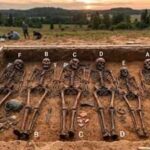
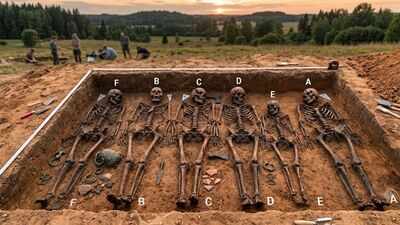
The six people were buried together in ‘Burial 351’ at the Čunkāni-Dreņģeri cemetery in Zemgale. Among 750 excavated burials at the cemetery, only seven, or 0.9%, contained more than one individual. The researchers dated it to the second half of the ninth century, during the Viking Age. All six individuals were placed in a single layer and were buried according to Semigallian traditions. Such burials were not normal in Semigallian funerary practice that points towards exceptional circumstances surrounding these six deaths. The circumstances also raise questions about why these individuals were buried together and what may have brought them to the same grave.
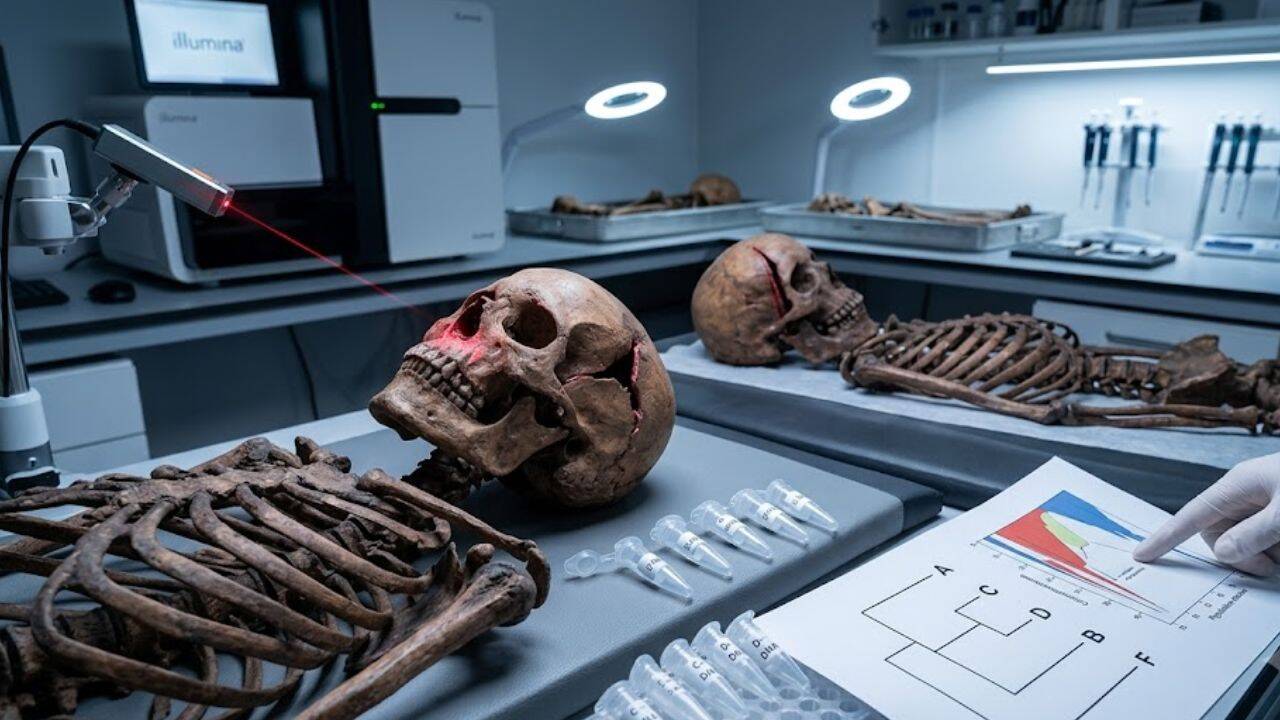
PC: AI Generated
What did the injuries reveal about the Latvian burial
The remains of three adult men, identified as individuals A, B, and C, show sharp-force injuries that occurred around the time of death. The injuries point to violence, although the study does not demonstrate exactly how the men died or what weapon was used. The evidence is significant because all three were buried in the same grave as three other people. Their injuries suggest that the group may have been caught up in a violent incident before they were buried together. At the same time, the study does not establish that all six died in the same way or during the same incident.
How did DNA uncover a father and son among the six individuals
Ancient DNA revealed that the six people buried together were not all from the same family. Individuals C and D had a first-degree biological relationship and were identified as father and son. Individual A was more distantly related to D, with the analysis indicating a third-degree relationship. Individuals B and F, however, were not biologically related to the others in the grave. All six individuals belonged to Y-chromosomal haplogroup N. Population genetic analysis placed them closest to local ancient Baltic populations, with no evidence that the group had predominantly Scandinavian ancestry. This is significant because the burial dates to the Viking Age, a period marked by movement and contact across the region.
What does the burial suggest about a possible Viking Age raid
Reportedly, the researchers reveal that the violence may have been connected to a Viking Age raid, but this remains a possibility rather than a proven explanation. The evidence combines the injuries, unusual burial, and ninth-century date. The genetic results indicate that the people were most similar to local Baltic populations, not predominantly Scandinavian. Their burial also followed Semigallian traditions. The grave therefore does not simply point to outsiders arriving in the region. It records an unusual event involving local people, and the combination of biological relationships, trauma and burial practice gives researchers a rare opportunity to examine violence and kinship in Viking Age Semigallia.