


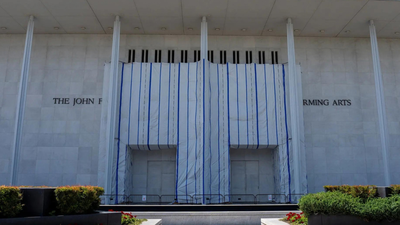
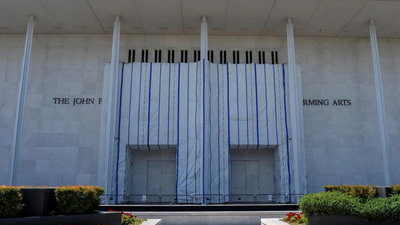
The TOI correspondent from Washington: In an unprecedented crisis for American cultural diplomacy, the board of the Kennedy Center for the Performing Arts in Washington DC voted on Tuesday to shutter the iconic venue immediately, following a bitter legal battle over President Donald Trump’s demand to add his name to the national memorial. The shutdown, coming after what the administration says is mounting financial strain and structural concerns, puts the future of the country’s premier stage in limbo and delivers a profound blow to global artistic exchanges, including of celebrated artists from India.The board vote came hours after a judge issued a ruling reaffirming that only Congress holds the authority to alter the memorial’s name or add new inscriptions to the building. In response, Trump publicly threatened to block a planned multi-million-dollar renovation unless the judicial ruling is overturned, leaving the flagship halls locked indefinitely. A blazing row during the board meeting with Democratic lawmaker Joyce Beatty, during which Trump reportedly called her “dumb” and “obstructionist” and she called him “incompetent” with “more bankruptcies than anyone in the room,” capped the fiasco. “He threw a tantrum…. like an immature child,” Beatty said later.Beyond the political fracas, loss of the Kennedy Center reverberates far beyond the Potomac to the banks of the Ganga and Cauvery. For over half a century, the marble institution has functioned as Washington’s window to international masterworks, serving as an essential cultural bridge between East and West. Few artistic traditions reflect this legacy as deeply as the classical and contemporary arts of India.The Center’s Concert Hall and Terrace Theater served as historic showcases for Indian music pioneers. Pandit Ravi Shankar routinely brought his sitar to the venue, delivering transcendent performances of Raga Madhuvanti and Desh that redefined classical music for Western audiences. Tabla virtuoso Ustad Zakir Hussain made the Center a home base for his Masters of Percussion series, weaving intricate rhythmic dialogues that brought packed halls to their feet. In September 2025, sarod grandmaster Ustad Amjad Ali Khan shared the Terrace Theater stage with his sons, Amaan and Ayaan, and young grandsons Abeer and Zohaan, for a rare multi-generational masterclass in lineage and legacy.South Indian traditions shone just as brightly. Legendary vocalist M S Subbulakshmi, Carnatic violin maestro L. Subramaniam, and the late electric mandolin prodigy Mandolin U Srinivas all graced the Center’s acoustic spaces. Langas and Manganiars lit up its Millennium stage. Dance ensembles like Chennai’s Kalakshetra and Bengaluru’s Nrityagram brought the geometry and spiritual depth of Bharatanatyam and Odissi to the 1100-capacity Eisenhower Theater, establishing new standards for Indian choreographic arts in America. “In my experience, Kennedy Center matters as a venue because it commands such a diverse, international audience,” said Anuradha Nehru, an award-winning Kuchipudi artist who is the founder and artistic director of Kalanidhi Dance, which has staged many performances here.Such affection from Indian performers resulted in historic milestones that your correspondent marinated in. Like the 2011 Max India Festival — a monumental complex-wide takeover featuring over 500 artists across classical music, theater, street performance, and contemporary dance — as well as landmark tours by cross-genre fusion pioneers Shakti, featuring Zakir Hussain alongside John McLaughlin and Shankar Mahadevan. In 2016, Ranvir Trehan, a leading Indian-American patron of the arts, his wife Adarsh, and their Trehan Foundation, gifted $1 million to the Center to create an India Fund for presenting Indian programming through 2025.For global artists, particularly those from India who spent fifty years building an audience within its grand halls, the curtain falling on the Kennedy Center is more than a local political dispute. It represents an immense loss for international cultural exchange, silencing one of the world’s greatest crossroads for artistic dialogue. The current US ambassador to India, Sergio Gor, is on the Board constituted by Trump, but he will be a distant witness to its shuttering.