









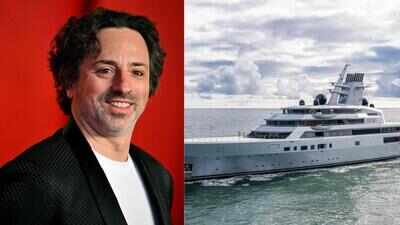
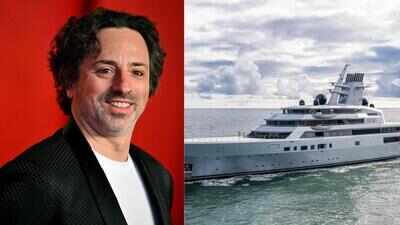
Google co-founder Sergey Brin’s superyacht Dragonfly is so large that even a routine fuel stop becomes a commercial-scale operation. Measuring 466 feet (142.1 meters), the Lürssen-built yacht is too large for the kind of fuel pump found at an ordinary marina, forcing it to rely on Gibraltar’s industrial bunkering infrastructure instead. Delivered in 2024 and valued at approximately $450 million, the yacht’s sheer size recently forced it to dock at a Spanish Navy cruise berth.In a recent YouTube video from the channel Gibraltar Yachting, Dragonfly can be seen berthed alongside Gibraltar’s commercial-scale bunkering terminal, with shoreside fuel tanks towering behind it. The scene offers a glimpse of what refuelling a yacht of this size actually involves. It looks less like a stop at a luxury marina and more like a visit from a small ship to a working fuel port.
A fuel stop measured in hours
The scale of Dragonfly becomes clearer when you consider the fuel figures. The Gibraltar bunkering operation, run through Gib Oil’s Western Arm terminal, can deliver fuel directly through its pipe system at rates of up to 80 metric tons per hour. Even at that rate, Dragonfly would take about 13 hours to tank up fully, depending on the amount required.Gibraltar’s fuel infrastructure includes 18 tanks with around 3,200 metric tons of marine gas oil and automotive gas oil storage, along with a separate facility capable of storing another 13,350 metric tons of marine gas oil. The operation also has barges available for vessels refuelling at anchor or requiring different fuel grades.For Dragonfly, even a partial 500-metric-ton refill would be substantial. That amount translates to roughly 581,000 litres of diesel and could cost approximately $690,000 to $720,000 at indicative Gibraltar marine gas oil prices of $1,380 to $1,440 per metric ton.At the maximum pumping rate, filling that amount would take about 6¼ hours. A 1,000-metric-ton uplift would mean around 1.16 million litres, a bill of roughly $1.38 million to $1.44 million, and about 12½ hours of pumping.By comparison, using conventional road tankers would be far less practical. A 1.16-million-litre delivery would require roughly 58 truckloads, or around 60 tankers when rounded, and could take about two days using 20,000-litre fuel trucks.
Why Gibraltar, and why the Navy berth
Gibraltar’s Ocean Village Marina can accommodate superyachts measuring up to around 100 meters. Still, the 142-meter Dragonfly is too large for that facility, forcing it to use the port’s commercial-scale North Mole facilities instead, including the Spanish Navy cruise berth where it was recently docked.Gibraltar is particularly convenient for a vessel of this size because it sits at the gateway between the Atlantic and Mediterranean. More than 60,000 vessels pass through the Strait each year, and Gibraltar functions as a bunkering hub with competitive fuel pricing and infrastructure built for vessels much larger than those found in conventional yacht marinas.Dragonfly’s Gibraltar visit also appears to have been an operational stop rather than a leisure destination. AIS records show the yacht travelled roughly 463 nautical miles from Palma de Mallorca toward Gibraltar before continuing its journey. Its latest reported destination is Alcudia, Spain, according to MarineTraffic, with the yacht heading back toward the Balearics.
A floating complex that still needs fuel
Dragonfly is not simply a large hull with lavish cabins. The 9,408-gross-ton yacht runs on a diesel-electric hybrid propulsion system powered by two MAN 16V28/33D diesel engines, each roughly the size of a semi-truck, weighing 44 tons and generating 9,760 hp. Together, they propel the vessel to a reported top speed of 24 knots. Germán Frers designed the yacht, with Nauta Design responsible for its interiors and social spaces. It also includes a dedicated business deck, reflecting Brin’s apparent desire to work while travelling.Across its five decks are the kinds of facilities expected on a yacht of this scale, including a glass-bottom swimming pool, spa, gym, games room, cinema, beauty salon, elevators, galleys, refrigeration and laundry facilities. It also carries navigation and communications systems, water-making and waste-treatment equipment, and infrastructure supporting tenders and helicopter operations.The hybrid propulsion setup can make the vessel more efficient and quieter, but it does not make Dragonfly fuel-independent. Its diesel engines remain essential to generating the energy needed to move the yacht and support its onboard hotel load.