









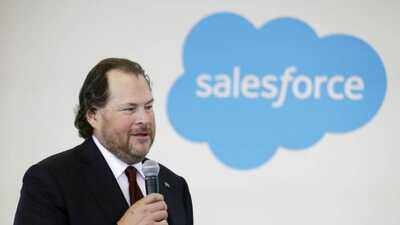
Salesforce CEO Marc Benioff says the days of relying on a single billing formula for sales are over even as artificial intelligence (AI) reshapes enterprise software. He explained that there is no single “perfect pricing mechanism” that works for every customer, unlike previously where companies followed the ‘traditional’ Software-as-a-Service (SaaS) and IT services business models. Earlier this year, there were fears that autonomous AI agents and AI-driven coding could disrupt workflows, eliminating the need for software platforms. When asked whether Salesforce can actually deliver outcome-based pricing in the AI era, Benioff broke down how software sales are evolving across six distinct pricing dimensions.Benioff said Salesforce is projected to bring in more than $50 billion next year, while noting that the company cannot afford to lock itself into just one pricing model and must instead offer custom agreements tailored to each client.
The 6 ways AI is changing software pricing
According to Benioff, enterprise software pricing now spans six different approaches: Named users, named Agents, usage, consumption, transactions, and business outcomes.
- Named users: Traditional per-user, per-month billing remains a major pillar of the software industry – much like paying a monthly per-seat fee for tools such as Claude or OpenAI.
- Named agents: As AI agents take on independent workloads, companies can pay based on each individual AI agent deployed.
- Usage: Customers are billed according to how actively they use the product.
- Consumption: Billing is tied directly to the volume of resources consumed, which can include AI tokens or data storage.
- Transaction outcomes: Payment is triggered when a specific action is finished, meaning the software vendor gets paid because a transaction was completed.
- Business outcomes: The last model, which is the most results-driven tier, ties pricing directly to financial impact, where the vendor takes a percentage of the money saved or the new revenue generated for the client.
“Well, right now, number one. There is no perfect pricing mechanism for all customers. So I look at it on 6 dimensions. ‘Named users’ is still a major aspect of our industry. I’m sure you have either Claude or OpenAI, and you pay a per user price per user per month. Named Agents. So, you’re paying by the agent. I think number three is usage. I’ve used so much of the product. Number four might be consumption. I consumed so much. That could also be tokens that could be storage. Number five is going to be outcomes or transaction outcomes. I completed the transaction, therefore I’m paid. And the final one is business outcomes. I saved you so much money. I want a percentage of that, or I made you so much money. I want a percentage of that,” Benioff said on the Sources Podcast.
Custom agreements for a $50 billion business
Asked whether Salesforce plans to offer every single one of those models, Benioff confirmed that the company’s scale demands total flexibility.“Well, with our size, we’re going to do more than 50 billion dollars next year. We cannot be limited by one pricing model,” Benioff said, adding, “We have to do users, agents, consumption, usage, transactions and business. We have to do all of it for our customers. We’re willing to write with them a custom agreement to say this is the perfect agreement for you.”Last year in November, Microsoft CEO Satya Nadella hinted at this change on Dwarkesh Podcast that the company’s pricing model is going to change. Nadella revealed the company is shifting from charging “per user” to “per agent” as AI systems increasingly perform autonomous work alongside human employees.
Which sales pricing model do you think will dominate the AI era?
3k+ users shared opinion today
5k+ users already voted today
3k+ users shared opinion today
Nadella said: “Our business, which today is an end-user tools business, will become essentially an infrastructure business in support of agents doing work. The way to think about the per-user business is not just per user, it’s per agent.”