









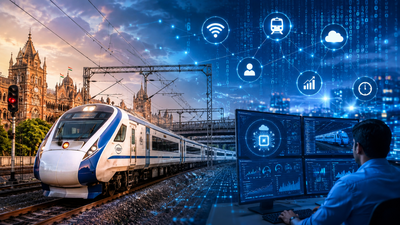
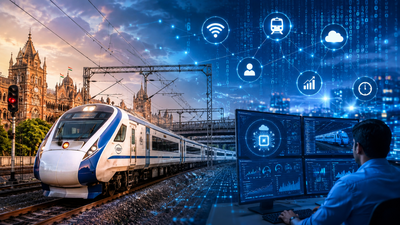
Not very long ago, a railway journey in India often began with a queue.Passengers would visit reservation counters, wait for printed tickets, check paper charts pasted outside coaches and rely on station inquiry windows for information about delays or platform changes.Today, much of that experience fits inside a smartphone.
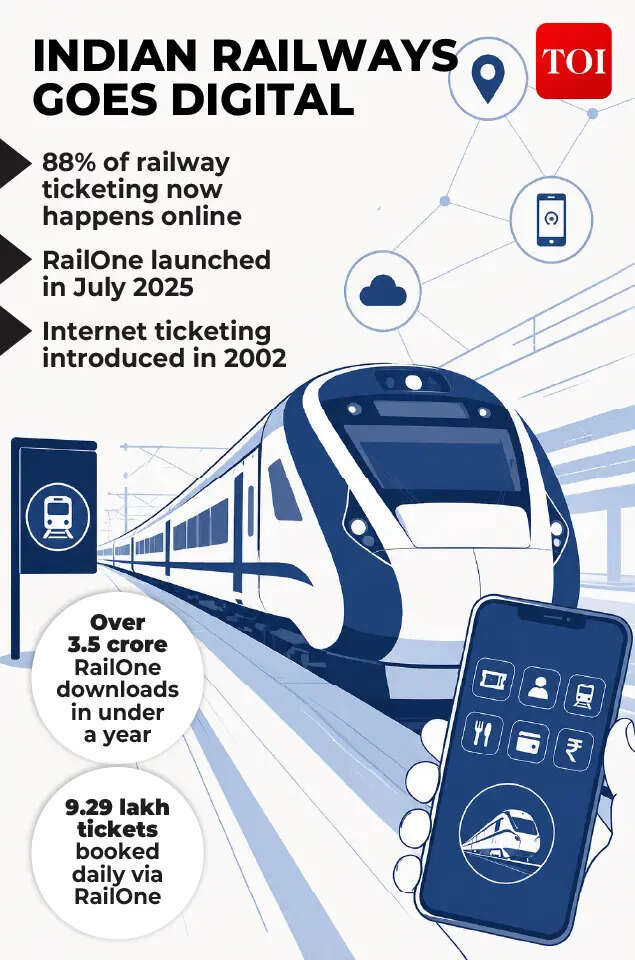
A passenger can book a ticket, check a train’s live location, order food, file a complaint, book a porter and even arrange last-mile transport without visiting a railway counter. Behind these conveniences lies a transformation that is changing one of the world’s largest transportation systems.The scale of this shift is enormous. According to the railway ministry, nearly 88% of India’s total railway ticketing demand is now fulfilled through online channels. What began with internet ticketing in 2002 has evolved into a largely digital passenger ecosystem, reducing dependence on reservation counters for millions of travellers.Railways, which carry millions of passengers and move vast quantities of freight every day, is increasingly becoming a digital network powered by software, data, automation, artificial intelligence and real-time communication.The transformation is not as visible as a new railway station or a high-speed train. Yet it is quietly reshaping how trains operate, how passengers travel and how goods move across the country.Sima, a retired OS of Railways, told TOI that the scale of change is far greater than many passengers realise.“The scale of digital transformation is quite large as most work is done digitally. There are only a few sections left where the work is not being done digitally,” she said.From ticket booking and train operations to freight management and safety systems, digital platforms are increasingly becoming central to railway operations.
Railway journey now begins on a smartphone
For most passengers, the most visible sign of this transformation is the rapid shift towards digital services.In July 2025, Railways launched RailOne, a unified mobile platform designed to bring together several railway services that were previously spread across multiple applications.Before RailOne, passengers often had to switch between different apps for ticket booking, train tracking, grievance redressal and unreserved ticketing.According to the Centre for Railway Information Systems (CRIS), RailOne combines services such as reserved and unreserved ticket booking, PNR status checks, live train tracking, food ordering, complaint registration and other passenger facilities on a single platform.The app has emerged as one of the most visible examples of railway digitisation. According to the railway ministry, RailOne crossed 3.5 crore downloads within a year of launch, including more than 3.16 crore downloads on Android devices and over 33 lakh downloads on Apple devices.
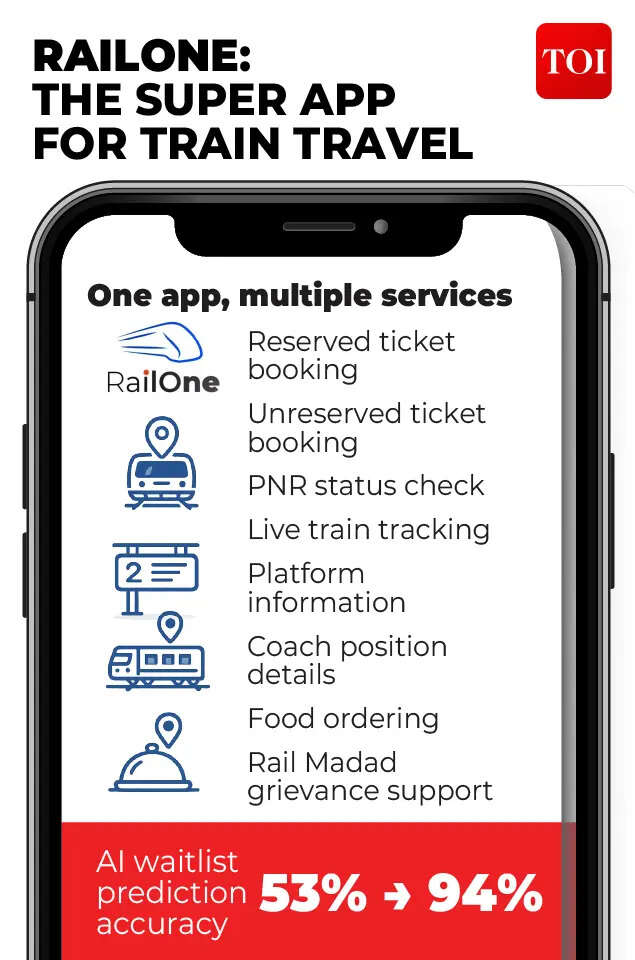
Railway officials said around 9.29 lakh tickets are now booked daily through the app, including 7.2 lakh unreserved tickets and 2.09 lakh reserved tickets.Apart from booking and cancellation services, RailOne offers live train tracking, platform information, coach position details, food ordering and grievance redressal through Rail Madad.The app has also introduced AI-based waitlist prediction. According to the ministry, the accuracy of waitlist confirmation forecasts has improved from 53% to 94% after the introduction of AI-driven prediction tools.The move reflects a broader shift in how railways now view passenger services.Instead of treating ticket booking, train information and customer support as separate functions, Railways is increasingly integrating them into a connected digital ecosystem.For younger travellers especially, the railway experience now begins long before they reach a station.
Hidden technology company
Most railway passengers are familiar with IRCTC, the platform used for online ticket booking.Far fewer know about CRIS, the Centre for Railway Information Systems, which functions as the technological backbone of Indian Railways.CRIS develops and manages many of the digital systems used across the railway network. These include reservation systems, freight management platforms, train monitoring applications and passenger information services.The scale of these operations is enormous.According to information shared by railway officials, digital systems managed by CRIS help handle millions of ticket transactions every day while monitoring thousands of train movements across the country.In many ways, CRIS operates like a large technology company embedded within the railway system.Its role is becoming increasingly important as railways depend more heavily on real-time data and digital infrastructure.
Building a new digital backbone
The next stage of railway digitisation is already under development.Railway officials have announced a new Passenger Reservation System (PRS) designed to replace and upgrade the existing ticketing infrastructure.The project represents the most significant overhaul of the reservation platform since it was first introduced in 1986.According to railway minister Ashwini Vaishnaw, the upgraded system is expected to handle significantly higher traffic volumes than the current platform.The new system will be capable of processing more than 1.5 lakh ticket bookings per minute, compared with around 32,000 bookings per minute currently.
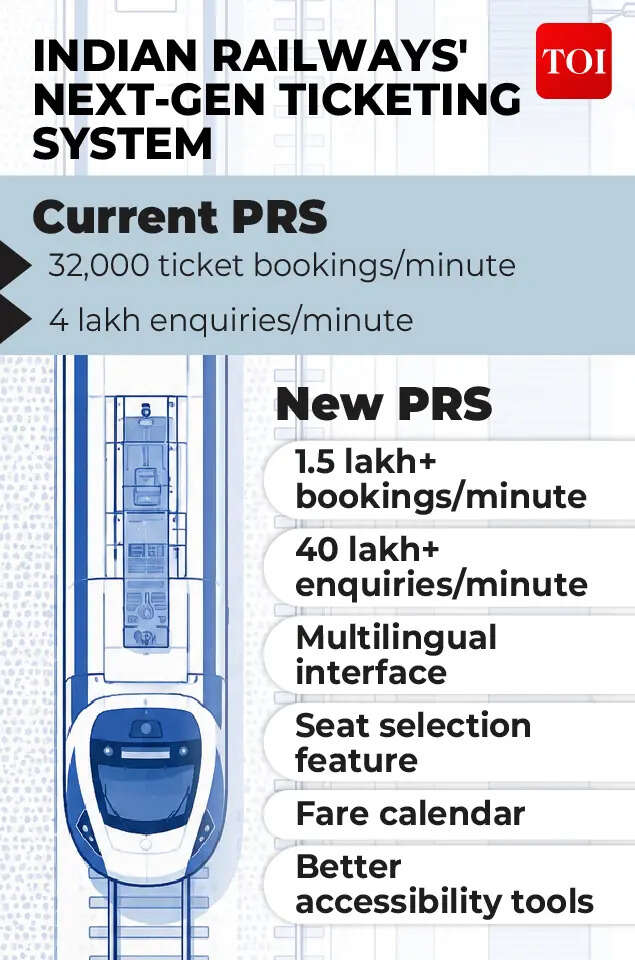
Ticket enquiry capacity is expected to increase tenfold, rising from around four lakh enquiries per minute to more than 40 lakh.Officials have also said the system will include multilingual support, fare calendars, preferred seat-selection features and dedicated facilities for senior citizens, students, patients and persons with disabilities.Railway officials have begun preparations for shifting trains to the upgraded reservation platform and have been directed to ensure passengers do not face inconvenience during the transition.The railways is also moving towards advanced chart preparation. Under the proposed system, reservation charts for trains departing before 2 pm could be prepared by 9 pm on the previous day, reducing uncertainty for waitlisted passengers and giving travellers more time to make alternate arrangements.While passengers may only notice a smoother booking experience, the upgrade represents a much larger effort to modernise the digital architecture supporting one of the world’s busiest railway networks.
Teaching trains to communicate
Perhaps the most significant digital transformation is happening behind the scenes on railway tracks themselves.For decades, railway safety depended heavily on signalling systems and human decision-making.Now Railways is increasingly introducing technology that allows trains and infrastructure to communicate with each other in real time.The most prominent example is Kavach, India’s indigenous Automatic Train Protection system.Railway officials describe Kavach as a digital safety shield designed to reduce the risk of accidents caused by human error.The system continuously monitors train movements and can automatically apply brakes if a train crosses a signal at danger or exceeds safe operating limits.Kavach is certified to Safety Integrity Level-4 (SIL-4), among the highest safety standards used in railway systems globally.The first field trials began in 2016 and the system was adopted as India’s national train protection technology in 2020.According to railway ministry data, by February 2025, Railways had installed more than 5,743 km of optical fibre cable, 540 telecom towers and Kavach equipment at 664 stations. The technology had also been deployed on 795 locomotives and across 3,727 route kilometres.Railway officials have finalised plans to equip 10,000 locomotives with Kavach and invited bids for deployment over approximately 15,000 route kilometres across major routes.More than 20,000 technicians, engineers and operators have already undergone specialised training on Kavach technology.The objective is simple but ambitious: creating a railway network where trains can effectively “talk” to infrastructure and automatically respond when safety risks emerge.
Freight is becoming smarter too
Passenger services often receive most of the public attention, but the digital transformation extends far beyond passenger travel.Railways remains one of the country’s most important freight carriers, transporting coal, food grains, cement, steel, fertilisers and countless other goods.Managing this enormous movement of cargo requires sophisticated digital systems.The Freight Operations Information System (FOIS) enables real-time monitoring of freight trains, wagons, locomotives and cargo movement.Railways has also developed the Smart Freight Operation Optimisation and Real Time Information application, known as SFOORTI.These systems allow railway managers to monitor freight trains on GIS-based maps, track wagon movements in real time, analyse traffic flows, monitor loading trends and optimise freight asset utilisation across the network.According to official data, Indian Railways moves nearly 1.5 billion tonnes of freight annually and operates thousands of freight trains every day.For industries dependent on rail freight, access to real-time information has become increasingly important.The shift mirrors broader trends across the global logistics sector, where data-driven decision-making is becoming central to supply-chain management.
Stations are becoming digital spaces
The transformation is also visible at railway stations.Over the past decade, many stations have seen the introduction of Wi-Fi services, digital information displays, CCTV monitoring systems and app-based passenger services.What was once a largely manual environment is gradually becoming a connected digital space.Passengers increasingly receive platform updates, train alerts and service information through digital channels rather than relying solely on public announcements.At many stations, QR-code-based services, online complaint systems and digital payment options have become routine.Railways has also expanded its Integrated Passenger Information System (IPIS), which combines electronic display boards, coach guidance systems and public announcement systems with the National Train Enquiry System.According to the railway ministry, automatic real-time train announcements are now available at 1,405 stations across the network.Meanwhile, a high-capacity IP-MPLS telecom backbone has been commissioned at 1,396 stations. The system supports critical railway applications including reservation systems, freight operations, train communication, video surveillance and operational control systems.While these changes may appear small individually, together they represent a significant shift in how passengers interact with the railway network.
AI is increasingly becoming part of railway operations
Artificial intelligence is also beginning to play a larger role in railway operations.According to the railway ministry, AI-enabled video surveillance systems have been deployed at 1,874 railway stations.The systems are capable of automatically detecting activities such as intrusion and loitering, while facial recognition tools assist monitoring and security operations.Railway officials have described the initiative as an effort to combine surveillance infrastructure with automated analytics rather than relying solely on manual monitoring.The ministry has also announced plans to install CCTV cameras across all 74,000 railway coaches and 15,000 locomotives.Each coach will be equipped with four cameras, while locomotives will carry six cameras along with onboard microphones.Officials have indicated that future AI-based analysis of video feeds could further strengthen railway security and operational monitoring.
A railway powered by data
What connects all these developments is data.Whether it is tracking train movements, processing ticket bookings, monitoring freight operations or operating safety systems, Railways is generating and using unprecedented volumes of information.The network increasingly relies on software systems capable of analysing this data in real time.This allows railway managers to monitor operations more effectively, identify disruptions quickly and improve service delivery.In many respects, the railway system is evolving into a large digital platform that happens to move trains.
Challenges remain
The digital transformation, however, is not without challenges.As railway services become increasingly dependent on technology, concerns around cybersecurity, data protection and system reliability become more important.Sima said while digitalisation has made ticket booking and passenger services significantly more efficient, important gaps still remain.“I think the interface of the official website needs to be more efficient and easy to navigate. While the system of ticket booking has become more streamlined as we go more digital, cybersecurity risks and digital illiteracy remain significant challenges,” she said.According to her, cybersecurity threats such as hacking, ransomware attacks, phishing and data breaches could potentially disrupt ticketing, scheduling, passenger information and maintenance systems.Technical failures such as network outages, software glitches or server breakdowns could also affect services and cause delays.She added that excessive reliance on digital platforms could inadvertently exclude passengers who do not have smartphones, internet access or adequate digital literacy.Railways must therefore balance technological innovation with inclusivity.Digital platforms must also remain accessible to passengers who may not be comfortable using smartphones or online services.Railways must therefore balance technological innovation with inclusivity.The transition also requires continuous investment in software upgrades, network infrastructure, staff training and maintenance.Given the sheer scale of Indian Railways, implementing technological change across the entire network remains a complex task.
Future railway may be as much about software as steel
For much of its history, Indian Railways was defined by tracks, locomotives, coaches and stations.Those physical assets remain essential.But increasingly, another layer of infrastructure is emerging beneath them — one built from software, communication networks, data centres and digital platforms.Passengers may notice it through a mobile app, a live train update or a seamless ticket booking experience.Freight customers may see it through real-time cargo tracking.Railway operators may experience it through automated safety systems and digital control networks.The scale of this transformation can also be seen in railway finances. According to the ministry, Indian Railways provided passenger subsidies worth Rs 60,239 crore during 2024-25, equivalent to an average fare support of around 43% for every passenger.Managing a network of this size increasingly requires digital systems capable of handling millions of transactions, enquiries and operational decisions every day.Together, these changes point to a larger transformation.Indian Railways is still one of the world’s largest transportation networks. But it is also becoming something else: a vast digital network connecting passengers, trains, freight operations and infrastructure in real time.The tracks remain the same. The journey, however, is increasingly digital.