








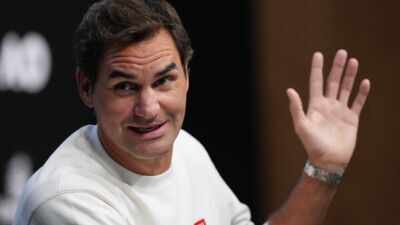
Roger Federer built an entire reputation on staying calm when everyone around him expected him to crack. Off the court, raising four children including two sets of twins, he admitted the calm has limits. “I’m as patient a father as I am on the tennis court,” he said. “It takes a lot for me to get really upset, but sometimes kids can get you really cross if they really keep bugging you.” It is a small, honest confession from someone usually associated with total composure, and that honesty is exactly what makes it worth paying attention to, since it comes from someone whose whole public image was built on never appearing rattled by anything, on court or off it.
Quote of the day by Roger Federer
“I’m as patient a father as I am on the tennis court. It takes a lot for me to get really upset, but sometimes kids can get you really cross if they really keep bugging you”
What is the meaning behind the quote
Federer opens by comparing his parenting temperament to his tennis temperament, both known for staying composed under pressure. Then he adds an honest qualifier. Even someone famous for extraordinary self-control has a limit, and children are remarkably good at finding it.That admission matters because it removes an unrealistic standard many parents quietly hold themselves to. Patience does not mean never feeling frustrated. It means continuing to respond with care even once frustration has actually shown up, which is a considerably more useful definition than pretending frustration never happens at all.
Why Federer became known for remarkable composure
Across a career that produced 20 Grand Slam singles titles, Federer built a reputation for staying visibly calm under exactly the kind of pressure that rattles most players, tight scorelines, hostile crowds, momentum swings within a single game. Where many opponents reacted to mistakes with visible anger, Federer generally kept his composure and his respect for opponents intact even after painful losses.That reputation gives his comment about parenting real weight. When someone known for that level of emotional discipline admits that his own children can still get him properly cross, it says something honest about how demanding parenting actually is, regardless of how much self-control someone has built up elsewhere in life.
Parenting demands a different kind of strength
Professional success does not exempt anyone from ordinary family life. Sleepless nights, repeated questions, and constant small disruptions are simply part of raising children, and none of that changes because a parent happens to be very good at their job elsewhere.Unlike a tennis match, parenting has no final set and no trophy at the end of a difficult stretch. It is built from thousands of small, ordinary moments instead. Federer’s willingness to admit occasional frustration is reassuring precisely because it removes the pressure to feel endlessly patient about all of it.
Emotional control is a skill built through repetition
Federer’s on-court composure did not appear naturally. He has spoken elsewhere about learning, over years, to stay positive and avoid getting visibly upset, a skill built through repeated practice rather than natural temperament alone.The same logic applies to parenting. Every difficult moment is another rep, another chance to practise staying calm rather than reacting immediately, and that skill compounds slowly over time the same way it does in any other demanding pursuit.
Other memorable quotes by Roger Federer
- “There is no way around the hard work. Embrace it.”
- “You have to believe in the long term plan you have but you need the short term goals to motivate and inspire you.”
- “Once you find that peace, that place of peace and quiet, harmony and confidence, that’s when you start playing your best.”
- “I fear no one, but respect everyone.”
Why it continues to shape our thinking
Public admiration tends to focus on obvious achievements, records, titles, trophies, while quieter qualities like patience and emotional balance rarely get the same attention despite shaping daily life far more directly. Federer’s comment is a reminder that even someone admired for exceptional composure keeps learning that same lesson at home.That is really the point worth taking from it. Parenting was never going to require perfect patience. It requires showing up again the next day with a bit more of it than the day before.