








Some quotes sound important the moment you read them. Others take a little longer. This one from Martin Luther King Jr. tends to stay in people’s minds because it quietly challenges an idea many of us accept without thinking too much about it.Most people would probably describe peace as the absence of conflict. If nobody is arguing, if streets are calm, if there is no obvious sign of trouble, the situation looks peaceful. It is a definition that feels natural.Yet real life is often more complicated.A school can seem perfectly orderly while some students feel excluded. A workplace can run smoothly while employees carry concerns they no longer bother raising. A town can look calm from the outside while certain groups feel they are not being treated fairly.From a distance, everything appears fine.Up close, the picture can look very different.That gap between appearance and reality sits at the centre of Martin Luther King Jr.’s quote. He was not dismissing peace. Quite the opposite. He was asking people to think more carefully about what peace actually means and what it takes to build something that lasts.It is a question that continues to surface today, sometimes in politics, sometimes in communities and sometimes in ordinary situations that never make headlines.
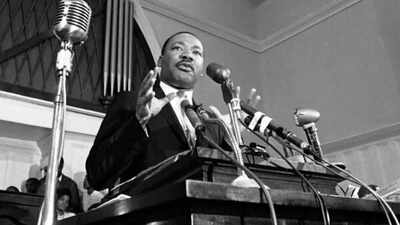
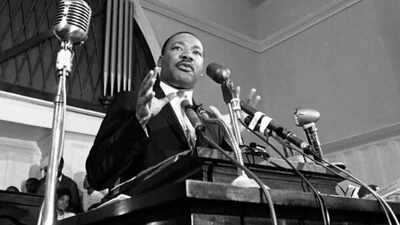
Quote of the day by Martin Luther King Jr .
“True peace is not merely the absence of tension; it is the presence of justice.”
What is the meaning behind the quote by Martin Luther King Jr.
The quote draws a line between two ideas that are often treated as the same thing.The first is the absence of tension. The second is justice.At a glance, they may seem closely connected. After all, people usually assume that if tensions disappear, fairness must have been achieved. Martin Luther King Jr. argued that this is not always true.People can stop complaining for many reasons.Sometimes a problem has genuinely been solved. Other times, people stop speaking because they are tired, discouraged or convinced that nothing will change. Silence can look peaceful even when frustration is still present.That is what makes the quote so interesting.It shifts attention away from what is visible and towards what is happening underneath. Instead of asking whether conflict exists, it asks whether people are being treated fairly.Those are not always the same question.A society can look stable while some people feel left behind. An institution can appear successful while certain voices struggle to be heard. In those situations, the absence of tension does not necessarily mean the presence of justice.That was the distinction King wanted people to consider.
Quiet situations are not always fair situations
Most people have experienced a smaller version of this in their own lives.Think about a disagreement between friends. Sometimes the issue gets discussed and resolved. Other times it simply gets ignored.The friendship may continue. There may be no argument. On the surface, everything appears normal. Yet something remains unresolved.Months later, the issue returns, often in a different form.Large organisations and societies can behave in much the same way. Difficult topics are sometimes avoided because they are uncomfortable. Bringing them into the open can create tension, and tension is rarely pleasant.The temptation is to keep things calm. But calmness and resolution are not identical.A problem that nobody talks about can still shape people’s lives. It can still influence decisions. It can still affect opportunities.The fact that it remains hidden does not mean it has disappeared.
The idea was shaped by a specific struggle
Martin Luther King Jr. was speaking from experience rather than theory.During the civil rights movement, there were many people who preferred order over disruption. They wanted the demonstrations to end. They wanted public disagreements to fade. They wanted things to feel normal again.King understood that desire. Most people naturally prefer stability.The question he kept returning to was simple.Normal for whom?For many African Americans at the time, discrimination was part of daily life. Unequal treatment existed whether or not it appeared in newspaper headlines. A peaceful appearance did not automatically reflect a fair reality.That experience shaped King’s understanding of justice.He believed that removing visible tension was not enough if the underlying causes remained untouched. A community could look calm while serious inequalities continued beneath the surface.His concern was not simply about peace. It was about the quality of that peace.
Why fairness matters more than appearances
Appearances can be persuasive.A quiet room feels comfortable. A calm community feels reassuring. Stability gives people a sense of security.There is value in those things.The difficulty comes when appearances become the main measure of success.Fairness works differently. It requires people to ask harder questions. Are opportunities available to everyone? Are rules applied consistently? Do people feel they are being heard?These questions do not always produce easy answers. They can expose problems that would otherwise remain hidden.That process may create discomfort for a while. Yet avoiding those questions rarely makes the problems disappear. More often, it delays them.Justice demands attention to things that are not immediately visible. It asks people to look beyond surface impressions and consider how systems actually affect everyday lives.That is one reason the quote continues to resonate. It encourages a deeper way of thinking about peace.
Difficult conversations are sometimes necessary
Nobody enjoys conflict for its own sake.Most people would rather avoid arguments than seek them out. That instinct is understandable. Life is stressful enough without adding unnecessary disputes.Yet there are moments when difficult conversations become unavoidable.A family may need to address a long-standing problem. A workplace may need to confront unfair practices. A community may need to acknowledge concerns that have been ignored for years.These discussions can create tension. That does not automatically make them harmful.Sometimes tension appears because people are finally talking honestly about something that matters. The conversation may feel uncomfortable, but discomfort and injustice are not the same thing.This is one of the more challenging aspects of King’s quote.It suggests that peace should not be judged solely by whether people feel comfortable in the moment. Lasting peace often requires confronting issues that would be easier to avoid.
Why the quote still feels current
The world today is very different from the one Martin Luther King Jr. knew, yet his observation continues to feel familiar.Questions about fairness, equality and opportunity remain part of public discussion. Different countries debate them in different ways, but the underlying issues are not new.People still disagree about what justice looks like. They still disagree about how to achieve it.What remains striking is how often societies focus on visible calm while deeper concerns continue to exist underneath. The quote acts as a reminder that appearances can only tell part of the story.A lack of conflict may be welcome. It may even be necessary.According to King, however, it is not the final goal. The goal is something stronger and more lasting.A condition where people are treated fairly, where rights are respected and where peace rests on something more solid than silence.That is a demanding standard. Perhaps that is why the quote has survived for so long.It asks a simple question that never seems to lose relevance. Is everything truly peaceful, or does it merely look that way?
Other famous quotes by Martin Luther King Jr.
- “Injustice anywhere is a threat to justice everywhere.”
- “The time is always right to do what is right.”
- “Darkness cannot drive out darkness; only light can do that.”
- “Life’s most persistent and urgent question is: What are you doing for others?”
- “Faith is taking the first step even when you don’t see the whole staircase.”