








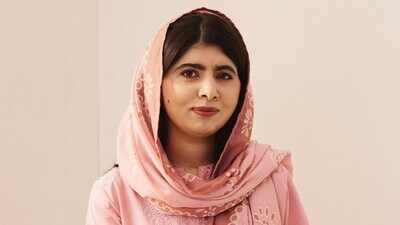
Malala Yousafzai was 15 when a gunman boarded her school bus in Pakistan’s Swat Valley and shot her because she had spoken publicly about girls’ right to attend school. She survived. The attack brought her story to the world, and her campaign for education grew far beyond the valley where it began.Three years later, in 2014, she became the youngest recipient of the Nobel Peace Prize. Her acceptance speech at the United Nations had the same message that had defined her activism from the beginning: education gives children the ability to shape their own futures.Her most famous line captures that belief with striking simplicity: “One child, one teacher, one book and one pen can change the world.”The power of the quote comes from its simplicity. There is no mention of wealth, political authority or technology. The ingredients are things found in almost every classroom. A child who learns something new can carry that knowledge into a family, a workplace or a community. A teacher can influence hundreds of students over a career. A book can carry an idea across generations. A pen gives someone the ability to record that idea, question it or create something of their own.
Why the four things in the quote matter
The child comes first because education begins with curiosity. A classroom does not change a life simply because information is available inside it. Someone has to ask questions, make mistakes and keep trying to understand.That curiosity is one of the earliest forces behind human progress. Children ask questions adults sometimes stop asking. Why does something work this way? Could it work differently? Why is a rule necessary? Could there be another answer? Many discoveries have begun with questions that seemed simple at first.The teacher gives those questions direction. A good teacher does more than transfer information from a textbook to a student. They can make a difficult subject understandable, notice a student’s ability before the student recognises it and encourage someone to keep going after an early failure. For many people, a teacher becomes the first person outside their family to take their ambitions seriously.Then comes the book. It allows knowledge to travel beyond the person who first discovered or recorded it. A reader in one country can encounter an idea written centuries earlier in another. A child can learn about a civilisation they have never visited, read the story of someone who lived thousands of kilometres away or discover a subject that changes the direction of their life.The pen represents something equally important: the ability to contribute.Reading gives people access to other people’s ideas. Writing gives them a way to put their own ideas into the world. A student who learns to write can record a memory, challenge an argument, tell a story, write a letter or explain an injustice. The act may begin on a school notebook and eventually reach far beyond it.
How a classroom can influence the world
The history of social change is filled with people whose education shaped the work they later carried out.Frederick Douglass taught himself to read while enslaved in the United States and later became a leading abolitionist and writer. In India, Savitribai Phule became one of the country’s earliest women teachers and dedicated her life to expanding education for girls and marginalized communities. Their achievements were enormous and their beginnings were rooted in learning.The same process happens on a smaller scale every day. A girl learns about science at school and decides to become an engineer. A student discovers history and begins questioning the stories they have inherited. Someone learns to read and becomes able to understand documents, access information and communicate independently.The world changes through these individual decisions.Education also has a way of moving between generations. A parent who receives an education can place greater value on sending their children to school. A student who discovers a love of books can introduce younger siblings to reading. A teacher can inspire a pupil who eventually becomes a teacher themselves. One classroom can therefore have a life far longer than the school year in which it exists.
The idea behind Malala’s words
Malala’s own experience gave the quote a particular force. She spoke publicly about girls’ education while living in Pakistan’s Swat Valley, where the Taliban had imposed restrictions on girls attending school. In 2012, she was shot by a Taliban gunman while travelling home from school. She survived and continued her campaign for education.Her story brought global attention to a basic question: what happens when children are denied the opportunity to learn?The answer reaches far beyond classrooms. Education affects employment, health, political participation and the ability to make informed decisions about everyday life. For girls in particular, access to schooling can influence when they marry, how much they earn and whether their own children receive an education.That is why the simplicity of Malala’s quote carries such weight. A book can seem small. A pen can seem ordinary. One teacher can appear to be one person doing one job. One child can seem like one individual among millions.Give those four things a chance to work together, and the effects can travel much further than the classroom.A child learns to read. The child discovers an idea. The idea changes a decision. That decision influences a family. A family influences a community. Somewhere along the way, a lesson taught in one classroom begins appearing in lives far beyond it.