








NEW DELHI: A warning email was apparently lost in the machinery of a global logistics chain, and what followed was an embarrassing detour involving some of the most sensitive components of America’s F-35 stealth fighter.A United Parcel Service Inc. employee apparently missed an email instructing that a shipment containing F-35 parts must not pass through certain countries. The shipment was subsequently routed through Hong Kong, potentially putting sensitive US military technology within China’s reach, according to a person briefed on the incident who spoke to Bloomberg.The fresh details, reported by Bloomberg on Wednesday, offer a new explanation for how the F-35 components ended up being diverted through Hong Kong. The missing parts were first reported by Bloomberg last month, but the newly revealed email lapse has shed further light on how a series of logistical errors may have allowed the shipment to reach a route that US regulations specifically sought to prevent.
The email that was missed
The shipment included an F-35 cockpit canopy and a weapons-bay door, both coated with radar-absorbing material designed to enhance the aircraft’s stealth characteristics.The parts were being returned to the US in late May for possible repair or disposal, according to people familiar with the incident. They were originally supposed to travel to San Francisco through South Korea and Taiwan, both US defence partners.But after the shipment left Australia later than expected, it was mistakenly routed through Hong Kong in an effort to speed up delivery, the person told Bloomberg.Before that happened, freight forwarder DSV A/S had sent an email warning that the shipment carried an International Traffic in Arms Regulations, or ITAR, designation and could not transit through certain countries. The regulations are designed in part to prevent sensitive US military technology from reaching adversaries.DSV was handling the shipment on behalf of F-35 developer Lockheed Martin Corp. The person familiar with the incident said the email may have been sent through a different IT system from the one used by the UPS employee who handled the shipment.The previously unreported details were presented by Pentagon officials during a roughly hour-long briefing on September 29 with staff members of the House foreign affairs and armed services committees.
Why the F-35 parts matter
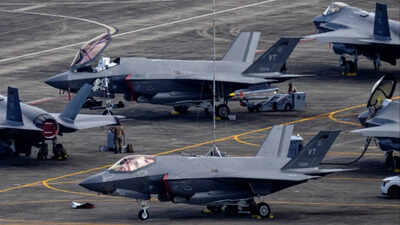
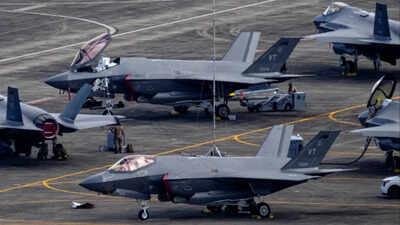
The episode has raised concerns in Washington because the F-35 is not just another military aircraft. It is the world’s most advanced fighter jet and the most expensive weapons programme in US history. China has also spent years targeting the aircraft through espionage efforts.Both components were covered with radar-absorbing material, which contributes to the aircraft’s ability to evade detection.Diana Maurer, who oversees F-35 support reviews at the non-partisan Government Accountability Office, told Bloomberg that the loss of the components was a serious concern.“It’s not good the Chinese now have” an F-35 canopy, she said, calling the loss “a big deal.”“I’m sure the Chinese celebrated and then they got busy trying to reverse engineer it and figure out how to counter it with their own technical capabilities,” she added. “I’m sure that’s what they were up once they got those things.”The incident has triggered investigations by the Pentagon and State Department and prompted US lawmakers to demand a wider review of the global supply chain used to move American military equipment.
Pentagon faces questions over supply chain
The Pentagon has sought to distance itself from responsibility for the errant shipment while stressing that the parts were “unserviceable”.The US Transportation Command said it “was not involved in the transportation or coordination of the shipment in question.”The Department of Defense said it was working to recover the components and investigate what happened.“We are actively working with U.S. authorities and industry partners to retrieve these components, investigate the incident, and place safeguards to avoid a future occurrence,” the Defense Department said in a statement.At the September 29 briefing, Erica Plath, the deputy assistant secretary of defense for logistics, said a team she had assembled was taking steps to prevent a similar incident from happening again, according to the person familiar with the meeting.A State Department compliance official from the Directorate of Defense Trade Controls, which enforces US defence export controls, also attended the briefing. The directorate is investigating the diversion.The episode has also drawn scrutiny from Capitol Hill. Senator Mark Warner, the ranking Democrat on the Senate Intelligence Committee, had demanded the Pentagon briefing, while committee chairman Senator Tom Cotton called for a review of the military supply chain.Senator Kevin Cramer of North Dakota, who chairs the Armed Services Committee panel investigating the incident, has also questioned whether the diversion was accidental.“Did China have a plan all along to intercept this?” Cramer asked.
Lockheed, UPS decline to comment
Lockheed Martin, which manages much of the global spare-parts pool supporting F-35 operations for the US and 19 other countries, said last month, when Bloomberg first reported the missing components, that “our logistics decisions are not made unilaterally.”The company said it selects carriers based on their ability to comply with government regulations.“While we cannot discuss the details of which logistics partner was involved, we are working closely with them to help develop and implement preventive measures to strengthen our collective oversight and prevent recurrence,” Lockheed said.After being presented with the newly reported details about the diversion, Lockheed said on Wednesday that “we have nothing to add or correct on the series of events you mentioned.”DSV spokesman Stephan Ghisler-Solvang and UPS spokesman Malcolm Berkley declined to comment.The incident has nevertheless exposed a potentially serious vulnerability in the movement of sensitive military hardware: even when export restrictions are clearly laid out, a missed email and a hurried logistical decision can send highly sensitive components down a route they were never supposed to take.