









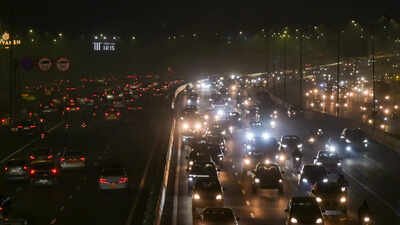
For two decades the toll plaza has been a fixture of the Indian highway: the slowing down, the queue, the wait for a barrier to lift. Over the past six months, at a handful of locations across the country, that routine has started to disappear. Vehicles now pass under overhead gantries without stopping, and the toll is settled electronically afterwards.The technology is called Multi-Lane Free Flow, or MLFF. It lets vehicles pass through toll locations without stopping. It is still a small part of a very large network, but it marks the biggest change in how India collects highway tolls since FASTag made cashless payment routine.How the system worksMLFF does not replace FASTag. It builds on it. The framework combines Automatic Number Plate Recognition (ANPR) with FASTag-based electronic collection: cameras read number plates as vehicles pass under gantries, and the FASTag account is debited automatically. Because of the “One Vehicle, One Tag” policy, each FASTag is tied to a vehicle’s registration number, so the equipment can create a toll transaction by reading the tag, the number plate, or both.The government says the aim is a faster and cleaner journey. NHAI says the technology should cut travel time, improve fuel efficiency, and make road transport safer and more sustainable.Six months, seven plazasThe first site went live on 1 May 2026. NHAI announced India’s first MLFF system at the Chorayasi Toll Plaza on the Surat–Bharuch section of NH-48 in Gujarat. Mundka-Bakkarwala on the Urban Extension Road-II in the Delhi-NCR region followed as the second. Union Minister Nitin Gadkari inaugurated it.The summer brought more. Rajasthan’s first MLFF plaza opened at Daulatpura on the Delhi–Jaipur section of NH-48 on 19 June. Gharaunda on the Panipat–Jalandhar section of NH-44 came next, and Manoharpura on the Delhi–Jaipur road followed on 1 July. Shahjahanpur, also on NH-48 in Rajasthan, went live in August. With that, all three plazas on the corridor supported non-stop passage. The system then moved south. On 1 October, NHAI rolled out Tamil Nadu’s first MLFF system at Paranur Toll Plaza on the Tambaram–Tindivanam section of NH-179B. Seven plazas are now operational.That is slower than planned. NHAI had targeted 17 plazas across nine states by September 2026.What happens when the payment failsThe harder question is what happens when the FASTag does not work. Without a booth, there is no one to stop the vehicle. The framework answers this with an electronic notice, or e-notice.If the FASTag balance is insufficient, or the tag is invalid or non-functional, the motorist is issued an e-notice and must pay the normal fee within 72 hours. After that, the amount is charged at twice the normal rate for the vehicle category. The notice is sent by SMS to the mobile number registered against the vehicle in the VAHAN database, and to the number linked to the FASTag. The mechanism rests on Rule 14 of the National Highway Fee Rules, 2008.Notices can be checked and paid on the designated portal, and a grievance can be raised there within the same 72 hours. The e-notice can also be viewed on the Rajmargyatra mobile app. The stakes of ignoring one go beyond the doubled fee. Non-payment may lead to the FASTag being blacklisted and to restrictions on other vehicle-related services through the VAHAN platform.multi lane free flow mlff barrierless tolling what to know features how to check enoticeNHAI’s advice to motorists is plain. Keep the FASTag balance sufficient, keep the tag active and properly affixed on the windshield, and use a clear High Security Registration Plate, whose laser-etched serial number the ANPR cameras can read.The early numbersA Crisil Intelligence analysis gives the first real measure of how the system is performing. By 1 August, six plazas had together processed more than 110 lakh vehicle transactions and collected over Rs 147 crore in toll revenue since Choryasi opened. Choryasi led on revenue at more than Rs 51 crore, while Mundka handled the highest volume, at over 41.5 lakh transactions.FASTag is still doing most of the work. It accounted for roughly 94 per cent of revenue between May and July, about Rs 138.4 crore, against Rs 9.2 crore collected through e-notices. The notice figures show how large the compliance problem is. About 10 per cent of vehicles passing through the operational plazas triggered a payment failure, roughly 10.5 lakh notices in all.What the government expects to saveThe ministry’s case rests on money, fuel and emissions. It expects MLFF to cut operational costs by Rs 5,000–6,000 crore a year and save around 250 crore litres of fuel annually, which it puts at nearly 81,000 tonnes less CO2, mainly by reducing idling and congestion at toll points. Once fully rolled out, the system is projected to handle more than 450 crore vehicle passages a year.The plan for the next phaseThe current network is a pilot compared with what is planned. NHAI has invited bids to extend MLFF to 104 more plazas across Haryana, Uttar Pradesh, Telangana, Andhra Pradesh, Odisha, Gujarat and Rajasthan. Combined with plazas already operational or awarded, that would bring the total to 121. That is only 10–11 per cent of the more than 1,150 physical plazas now active nationwide.Passes for the frequent travellerThe shift comes alongside changes to how regular users pay. The annual FASTag pass, launched in August 2025, was being used by around 52 per cent of private vehicles at these plazas. Its standard price is Rs 3,075.A cheaper option for people who live near plazas took effect on 1 November. The ministry introduced a Concessional Local Pass for eligible non-commercial vehicle owners living within 20 km of a fee plaza. It costs Rs 1,500 a year at plazas outside municipal or local town limits and Rs 3,000 at those within them. Eligible owners with a valid, working FASTag can choose between this and the existing monthly pass. The pass is valid only at the plaza for which it is issued and cannot be transferred.
Share your thoughts in the comments
Be respectful · TOI community guidelines
Officials expect it to encourage more commuters to link their vehicles to FASTag, and so reduce e-notices.The risks that remainThe Crisil analysis lists the system’s weak points. It points to revenue leakage from payment failures, inaccurate vehicle identification and tampered tags, and calls for stronger ANPR camera coverage and tighter integration with the VAHAN registry.There is also the matter of the motorist who never sees the notice. The 72-hour window is short, and the penalty is a doubled fee and, potentially, a blacklisted tag. A vehicle owner whose registered mobile number is out of date, or who does not check SMS regularly, is the person most exposed. That is a question for the next phase as much as for the first.The road aheadIndia’s highway toll system is changing in stages. FASTag took the cash out of the booth. MLFF now aims to take out the booth itself. Seven plazas, an expanding bid pipeline and a first set of figures show the direction of travel, but the pace is behind the original target, and a network of over 1,150 plazas will not change quickly.What the next phase has to show is whether the compliance rate improves as more motorists link their tags and plates correctly, and whether the savings the ministry projects begin to show at the plazas that have already gone live.