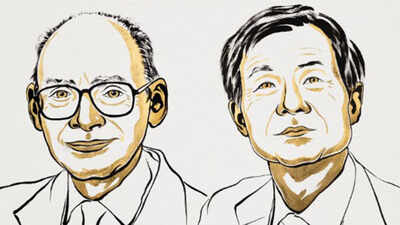











Just months after warning that artificial intelligence could automate most white-collar tasks within 12 to 18 months, Mustafa Suleyman, chief executive of Microsoft AI, is now promoting a much more gradual vision of the technology’s impact on jobs, backing Nobel Prize-winning economist Daron Acemoglu’s argument that AI will replace only a small portion of human work over the next decade. In a post shared on social media platform X (formerly known as Twitter) highlighting an essay by Acemoglu in the inaugural issue of The Humanist Review, a magazine published by Microsoft AI, Suleyman said fears that AI will rapidly eliminate jobs are overblown and that the focus should shift towards building systems that help workers become more productive rather than replacing them.
Microsoft AI CEO predicted AI will automate most White Collar jobs
In an interview with the Financial Times in February, Suleyman said most, if not all, white-collar tasks would be fully automated by AI within 12 to 18 months. He named accounting, legal work, marketing and project management as vulnerable. The prediction spread widely, and Sen. Bernie Sanders called it an “economic earthquake” if it came true.Suleyman’s latest post points the other way. He wrote that in ten years only 5% of what humans do will be replaced by AI, citing Acemoglu’s essay in the first issue of The Humanist Review, a new magazine from Microsoft AI (MAI) about the future of AI. The post does not say whether Suleyman is revising his February forecast, and Microsoft AI did not immediately respond to questions about it.
What Daron Acemoglu says AI job fears are exaggerated
Sharing the essay, Suleyman highlighted Acemoglu’s argument that AI will not take people’s jobs anytime soon and that only around 5% of human tasks are likely to be replaced by AI over the next 10 years. According to the economist, about 52% of Americans are worried about AI’s impact on employment, but those concerns are influencing AI development in the wrong direction by encouraging efforts focused on automation rather than augmentation.Instead, Acemoglu argues that companies should develop “pro-worker AI” tools that improve employees’ capabilities and help them perform their jobs more effectively.Acemoglu argues the industry is making a mistake by trying to make AI mimic human intelligence, which he says is fundamentally different from machine intelligence. He wants developers to build “pro-worker AI” that makes people better at their jobs and gives them new skills. He says such tools are feasible with today’s models, and gives teaching as an example. An AI tool could flag which parts of a curriculum students struggle with and suggest how a teacher might regroup the class, rather than trying to replace the teacher.He says four forces have pushed the industry toward automation:1. Tech companies’ existing business models are built on selling software to corporations and on digital advertising.2. A concentrated market leaves little room for new entrants to try alternatives.3. A “nuts and bolts” coordination problem leaves firms and developers each waiting for the other to demand something different.4. The influence of the AGI idea and “human parity” as the measure of success.
Policy proposals
Acemoglu says the US tax code should be changed. He notes that labor faces an effective marginal rate of more than 25%, while capital faces a rate close to zero, which effectively subsidizes automation. He also calls for stronger antitrust enforcement, noting that the seven largest tech companies make up 60% of the Nasdaq. Other proposals include a digital advertising tax, small government programs to demonstrate pro-worker tools, and a functioning market for high-quality data.The essay does not spare Suleyman’s industry, including Microsoft. Acemoglu names Microsoft among the seven giants and notes that it acquired Nuance, the owner of the Dragon voice-recognition software, which he says neglected consumer products. The magazine is published by Microsoft AI.