





PATNA: In Bihar, where liquor is prohibited, smugglers are turning the illegal trade into a game of disguise — changing not just the routes and vehicles they use, but even the language of their conversations.A bottle may no longer be called a bottle, a consignment may become a parcel, while brands are given ordinary-sounding names such as “Rocky Singh” or “Ravi Lal”.Investigators say there is no single code language used by liquor networks. Different groups create their own expressions and change them when they suspect their conversations are being monitored. Alongside coded conversations, smugglers have used everything from snack packets and school notebooks to homeopathic medicine bottles, specially modified vehicles and boats to conceal liquor and spirit.The unusual methods have emerged in a series of seizures by enforcement agencies across Bihar.
When liquor becomes ‘Rocky Singh’ or ‘Ravi Lal’
One unusual feature of the networks is the alleged use of ordinary names instead of liquor brands during phone conversations.Saharsa SP Vikram Sihag said, “Some groups have used ordinary names as substitutes for liquor brands. ‘Royal Stag’, for instance, is allegedly referred to as ‘Rocky Singh’, while ‘Red Label’ becomes ‘Ravi Lal’. Other conversations may use words such as food, groceries, milk, oil, silk/sari or parcel to refer to consignments or their movement.”The objective, investigators believe, is to make intercepted conversations sound like legitimate commercial transactions.“Instead of discussing liquor directly, members may talk about delivery schedules, transportation, bills, payments or the destination of a parcel. Such conversations can make the communication sound like routine business dealings unless investigators are able to connect the coded terms with physical seizures and other evidence”, he said.Officials said the codes are not universal. A word used by one group may have a completely different meaning for another, forcing investigators to examine the context and establish links between callers, vehicles, locations and seized consignments.
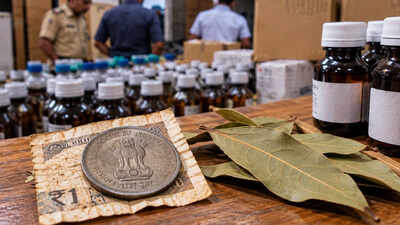
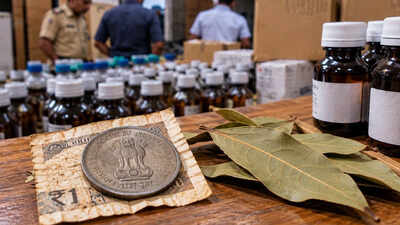
A Re 1 note and bay leaves reveal a trail
In one unusual case in Muzaffarpur, smugglers allegedly used currency notes and bay leaves as identifiers for intended recipients.In May this year, excise officials intercepted a consignment in which spirit was allegedly being transported in bottles resembling homeopathic medicine containers. The seizure included 20 cartons labelled “Whizz Dilution Sepia-6” and “Whizz Dilution Justicia Adhatoda 30C”.The operation began after the excise department received information that spirit was being moved through the Bairiya bus stand area under the guise of homeopathic medicine.An excise team led by inspector Deepak Kumar Singh intercepted a suspicious autorickshaw near Patahi airport ground in the Ahiyapur police station area. Around 180 litres of spirit were recovered and Suraj Kumar of Salha in Mushahari was detained.Investigators found a code number on the suspect, which became a crucial link in tracing the intended delivery point. The probe led the team to Mohammadpur Khaje village under Karja police station, where a raid at a poultry farm allegedly found Sumit Patel and Neeraj Sahani operating an illegal liquor manufacturing unit.“The code number was crucial to the network; without it, the delivery could not take place,” inspector Deepak Kumar Singh said.A local delivery boy in Patna, Bhushan Singh said, “We don’t deliver to unknown persons and even don’t take the names of the brand openly, but instead use either short forms of their names or ‘frooti’ word for a tetra pack of 180ml.”For instance, a full bottle of ‘Royal Challenge’ is called RC, while Blenders Pride is called BP. Premium brands such as 100 Pipers are called ‘Pipe’ and Teachers are known as ‘Masterji’, Singh said.“Cost of a tetra pack of 180ml is Rs 250 per piece, while those in plastic PET (Polyethylene Terephthalate) bottles range from Rs 300 to Rs 700 according to the brands”, he added.
Kurkure sacks hide a huge consignment
In Barh’s Panchmahla area, smugglers allegedly used sacks of snacks as a cover.Excise officials intercepted a pickup vehicle and found sacks of Kurkure placed over a large quantity of liquor. A search led to the recovery of around 1,200 litres of foreign liquor, estimated to be worth nearly Rs 13 lakh.Two suspected smugglers were arrested. Investigators suspected the consignment had been transported from Dhanbad towards Begusarai.
An ‘empty’ SUV with liquor hidden inside
Smugglers have also allegedly modified vehicles to create concealed spaces.In Gopalganj’s Phulwaria area, an apparently almost empty SUV raised suspicion among enforcement personnel. A detailed search revealed hidden compartments in the engine area, body, chassis and Stepney, where liquor was allegedly being transported from Uttar Pradesh.Two suspected smugglers were arrested.
School notebooks become a cover
In Motihari, East Champaran district, smugglers allegedly chose stationery as a cover.In the Town police station area near Abbas Chowk, bundles of school notebooks were found concealing 286 bottles of foreign liquor, amounting to around 51 litres.Rohit Kumar of Belsand in Sitamarhi was arrested in connection with the seizure. Police records indicated he had earlier been jailed in a liquor-related case in 2024.Investigators suspected a concealed space had been arranged in the notebook bundles before they were transported by bus to Motihari.
Even an e-rickshaw and a boat were used
The methods have not been limited to road transport.In Katihar, an e-rickshaw, or toto, was allegedly fitted with a concealed compartment. Excise personnel recovered around 52 litres of foreign liquor from the hidden space and arrested a youth.In Gopalganj, another consignment travelled by water. Around 574 litres of liquor were transported through the Gandak river by boat, leading to an arrest.Other seizures have involved liquor hidden inside gas-cylinder trucks and clothing bundles. In one case, 27 cartons were concealed in a truck carrying gas cylinders. In another, around 2,208 litres were hidden among bundles of clothes.
Smuggling becomes a battle of detection
A SP rank police officer on the condition of anonymity said, “For enforcement agencies, the challenge is no longer simply to stop a vehicle carrying liquor. Investigators are increasingly looking at how the entire network operates — who arranges the vehicle, who creates concealed compartments, who finances the consignment, who receives it and how the liquor reaches the final customer.”The changing codes and unconventional hiding places suggest smugglers are adapting whenever an old method becomes vulnerable to detection.But every disguise can also leave behind a clue — a suspicious code, an unusual compartment, a repeated route, a phone number, a financial transaction or a link between a transporter and a supplier, he added.