






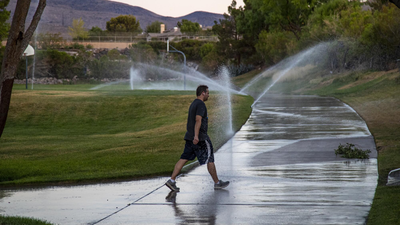
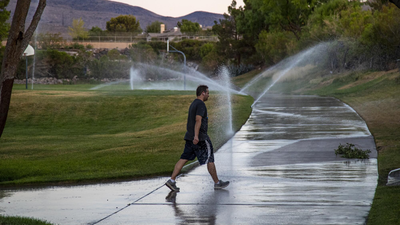
A major effort to remove grass lawns across the Las Vegas Valley has saved 203 billion gallons of water, but environmental research shows that the large-scale change has also brought a serious rise in local surface temperatures. According to data from the Southern Nevada Water Authority’s Water Smart Landscapes Rebate programme, property owners across the metropolitan area have removed 250 million square feet of non-functional grass since 1999. The programme offers financial incentives of up to $5 per square foot to help residential and commercial property owners replace water-heavy lawns with desert landscaping and drip irrigation. The push gained legal backing after the Nevada Legislature passed Assembly Bill 356, alongside earlier laws including the Nevada Revised Statutes Water Conservation and Colorado River Act. The law requires decorative, non-functional grass to be removed from commercial properties, multi-family buildings, government sites and homeowners association properties across the region. However, scientific research into the effects of large-scale grass removal has found that getting rid of lawns can also raise local surface temperatures, particularly during the hottest months of summer.
The heat caused by removing grass
A study published in the academic journal Urban Climate found that removing turf grass in the Las Vegas Valley increased summer land-surface temperatures by 20 ± 0.3 Kelvin, or about 20°C. Researchers examined surface energy, sunlight reflection and evapotranspiration across urban, rural and barren parts of the dry valley. Grass lawns naturally cool their surroundings by releasing water through evapotranspiration. Replacing them with bare gravel, rocks, artificial grass or hard surfaces removes much of that cooling effect. “Turf grass removal increased temperatures by 20 ± 0.3 K, while urbanization, in general, increased LST by 5 ± 0.3 K,” the researchers wrote in the Urban Climate study. They also noted that commercial buildings and asphalt roads remain the main sources of the wider urban heat island effect across the valley. The researchers found that grass keeps land surfaces cooler, but it requires large amounts of water to do so. This creates a difficult choice for Las Vegas between protecting its limited water supply and reducing heat in neighbourhoods.
Balancing Colorado River water and heat
Southern Nevada gets about 90 per cent of its drinking water from Lake Mead, the Colorado River reservoir that has faced long periods of drought over the past two decades. Since outdoor irrigation causes most of the water that cannot be recovered to be lost in the Las Vegas Valley, local planners have focused heavily on removing grass to stay within federal water limits. Water used indoors in Las Vegas is collected, treated and returned to the water system, eventually making its way back towards Lake Mead. Outdoor water used on grass, however, largely evaporates and cannot be recovered. The Southern Nevada Water Authority estimates that replacing decorative grass with desert plants can reduce outdoor water use on targeted properties by up to 55 per cent. To deal with the higher temperatures linked to grass removal, regional water agencies and urban forestry experts recommend replacing lawns with water-efficient landscapes that still provide plenty of tree cover. Deep-rooted shade trees watered through targeted drip systems can create cooler areas and reduce the heat absorbed by nearby surfaces without using the huge amounts of water needed to maintain traditional lawns. Recent development rules promoted by the Southern Nevada Water Authority also prevent new grass from being installed in the front and back yards of single-family homes. At the same time, local authorities are encouraging urban forestry programmes to make sure that removing lawns does not make desert neighbourhoods even more vulnerable to extreme heat.