







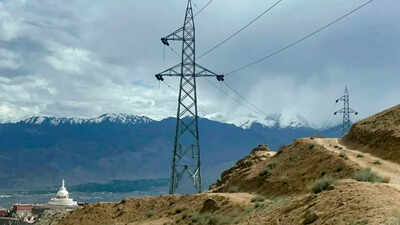
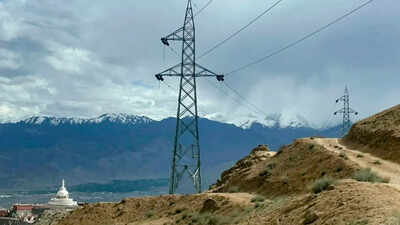
NEW DELHI: Since environmentalist-activist Sonam Wangchuk began his indefinite fast here in solidarity with the Cockroach Janta Party’s (CJP) campaign against alleged irregularities in NEET, political developments have moved at a fast pace in his own backyard, Ladakh. The Ladakh administration on Monday announced its decision to constitute autonomous hill development councils for each of its seven districts, barely 10 days after it had, along with the Centre, convinced the Ladakh representatives to finally sign the minutes of May 22 meeting with the home ministry, in which Wangchuk was one of the key negotiators.On both the occasions — July 3, when the minutes of May 22 meeting were finalised, and Monday, when the councils for every Ladakh district were announced — Wangchuk was here in the Capital, fasting.Announcing the move to set up autonomous councils in the newly-created districts of Nubra, Changthang, Sham, Zanskar and Drass, in addition to Leh and Kargil that already have these councils, Ladakh chief secretary Ashish Kundra told a press conference in Leh that it is a “major step towards democratic decentralisation and grassroots governance”.\The seven councils will have full powers set out in the LAHDC Act. “The new districts shall get the same authority that Leh has held since 1995 and Kargil since 2003, not a reduced version of it,” he underlined. The councils will have authority over land ownership and land allotment within the district. They will regulate recruitment and promotions for district cadre posts.The councils — which will exist alongside Panchayati Raj institutions — shall hold a dedicated council fund and can levy taxes and fees. Each new district will have a revenue base of its own and formulate development plans. They will handle health, education and tourism, along with local infrastructure and social welfare schemes.Though the May 22 talks between Union home ministry officials and Ladakh bodies Leh Apex Body (LAB) and Kargil Democratic Alliance (KDA) here had witnessed a breakthrough with the two sides agreeing in principle on creation of elected bodies at UT-level and district level with “full legislative, executive, financial and administrative powers” and Constitutional safeguards under Article 371, the Ladakh representatives later objected to the minutes of the meeting omitting the assurances on Article 371 and control over bureaucracy. These concerns were finally ironed out at a meeting in Leh on June 3, leading to signing of the minutes.Kundra on Monday told TOI that the forthcoming talks shall focus on the structure of the UT-level elected body as well as the scope of safeguards under Article 371. Both sides are finalising their respective drafts in this regard, and a date will eventually be set to discuss them, he said.The chief secretary said the model of UT and district level bodies proposed in Ladakh has no parallel elsewhere in the country and will draw on the best features of other arrangements. The UT will have elected representation at the village, district and Union Territory levels, he said.“Some rebalancing of powers between the councils and the UT body may follow,” said Kundra.Section 3(1) of the LAHDC Act already provides for a council for every district, to be constituted from a date the government notifies in the gazette. Only amendments to the Act where required and a delimitation of constituencies remain, according to Kundra.Five of the seven Ladakh districts are dominated by Buddhists, while Drass and Kargil have a significant Muslim population.