







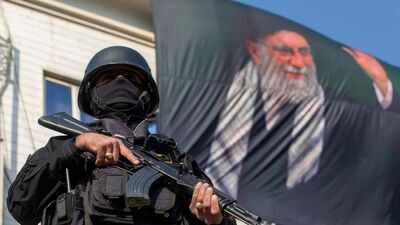
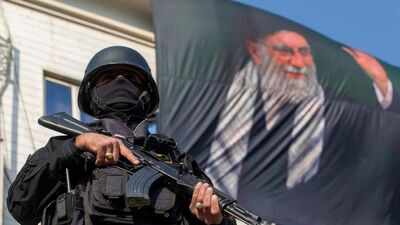
Ahead of Ayatollah Ali Khamenei’s funeral, Iran is laying the groundwork to avoid a repeat of deadly crowd disasters that marred previous burials of Ayatollah Ruhollah Khomeini and Qasem Soleimani. Khamenei will be buried on July 9 after five days of ceremonies across Iran and Iraq. The body will lie in state for three days at Tehran’s Mosalla prayer complex before a funeral procession through the capital, Iran International reported. According to the report, Khamenei will then be taken to the Shiite holy cities of Najaf and Karbala before returning to Iran for ceremonies in Qom and burial in Mashhad, Khamenei’s birthplace, at the shrine of Imam Reza, the eighth Imam of Shiite Islam.However, authorities are yet to announce who will lead the funeral prayer, traditionally one of the ceremony’s most symbolic moments.If Mojtaba Khamenei, who has not appeared publicly since his father’s death, attends, some observers believe he could lead the prayer himself, although officials have given no indication that will happen.Security blueprintIranian officials say crowd control and security will be their top priorities during Ayatollah Ali Khamenei’s funeral.Gholamhossein Mozaffari, governor of Razavi Khorasan Province, where Khamenei will be buried, has said helicopters could be deployed during parts of the procession to help manage crowds and ensure the safe movement of the coffin. It remains unclear whether such measures will be limited to Mashhad or extended throughout the multi-city ceremonies.Protecting senior leaders, managing millions of mourners and transporting the coffin across several cities in two countries is expected to require one of the biggest security operations in the Islamic Republic’s history.Earlier this week, Iranian foreign minister Abbas Araghchi visited Baghdad to coordinate with Iraqi officials on arrangements for the cross-border procession.Shadow of Khomeini’s funeralIran’s extensive planning is shaped largely by the chaotic funeral of Islamic Republic founder Ayatollah Ruhollah Khomeini after his death on June 3, 1989.Khomeini’s body first lay in state at Tehran’s Mosalla, where funeral prayers were led by Grand Ayatollah Mohammad Reza Golpayegani. The following day, however, hundreds of thousands of mourners surged toward the coffin as it was being transported to the burial site.Security forces were overwhelmed as people tried to touch the coffin, damaging it and tearing the burial shroud. Authorities eventually evacuated the body by helicopter, returned it to Jamaran for re-shrouding, and postponed the burial until the next day.Iranian state media claimed that around 10 million people attended the funeral, though foreign estimates were much lower. Scores of people were injured in the crush and several are believed to have died, but no official casualty figure was ever released.Khomeini was initially buried in a simple grave near Tehran’s Behesht-e Zahra cemetery, which was later transformed into a sprawling mausoleum complex.Soleimani stampedeThe funeral of Qasem Soleimani, who was killed in a US drone strike near Baghdad airport on January 3, 2020, became the largest state funeral in Iran since Khomeini’s.After processions through several Iraqi and Iranian cities, Soleimani’s body reached his hometown of Kerman, where a crowd crush and collapsing barriers killed at least 56 people and injured more than 200. The burial had to be postponed.The twin tragedies at the funerals of Khomeini and Soleimani continue to shape Iran’s planning for major state ceremonies.By placing crowd management, carefully choreographed processions and unprecedented security at the centre of preparations, Iranian authorities appear determined to ensure Khamenei’s funeral is remembered not for chaos, but as a display of the state’s ability to manage one of the most significant events in the Islamic Republic’s history.How Iran preserved Khameini’s remainsMeanwhile, the delay to the funeral have raised questions about how Khamenei’s remains have been preserved. Islamic generally calls for prompt burial and discourages chemical embalming. However, wartime conditions, security concerns delayed Islamic Republic’s longest-serving supreme leader by four months.“The mechanism is almost certainly refrigerated cold storage, not embalming, as Islam bars chemical embalming,” counterterrorism expert Dr. Mohammed Omar told Fox News Digital.“Shia law allows delayed burial and preservation by cold in exceptional cases, and a clerical exemption for a Supreme Leader is easy to get,” he added.“Iran’s forensic morgues already hold bodies for months, so four months in freezing is not exotic. That is what ‘religious and legal standards’ cover,” Mohammed said.