






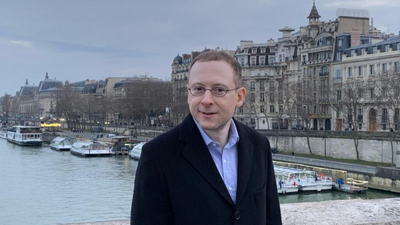
Nathan Cofnas, the academic who exposed Cambridge University Sociology professor Jason Arday’s plagiarism, faced objections from fellow academics at Ghent University over his appointment to a postdoctoral research role.Cofnas joined the Belgian university in March for a project examining “the future of liberalism”. Soon after his appointment, professors of philosophy and moral sciences department raised questions about his suitability for the role, including his academic expertise and the process through which he was selected, The Guardian reported.The department submitted a 19-page statement to the university’s rector and the dean of the relevant faculty on May 28, after its council approved the document as its official position on the appointment on May 27.The academics questioned whether Cofnas had been the strongest candidate among 14 applicants. They said his background showed “very limited expertise” in political philosophy, liberalism and demography, which they identified as central to the research project.They also said the job requirement for a “strong research interest in liberalism” was not reflected in his publication record or CV.The concerns went beyond Cofnas’s academic qualifications. The department said his appointment could hurt the university because of views associated with racial pseudoscience and what it described as a “far-right agenda”.Academics also questioned his work on intelligence, saying Cofnas had not conducted research in the field himself even though he had publicly written about intelligence and racial differences.“Cofnas himself has never conducted intelligence research, nor is such research envisaged within the project for which he was hired,” the department said.It added that views expressed by Cofnas in blog posts were “not based on his own scientific research” and were “simply not based on sound research”.Opposition to the appointment had emerged earlier. An email sent to Ghent’s university leaders and governors in March was signed by 48 department staff, 73 students and 367 academics from Ghent and other universities. The signatories expressed “astonishment and indignation” over Cofnas’s appointment.The philosophy department’s statement also alleged that there had been insufficient transparency in the hiring process. Academics said a “large majority” suspected the appointment was “an ideological choice … decided in advance”.Cofnas has previously attracted attention for his views on race and intelligence. In a 2023 post on X (formerly Twitter), he wrote: “There are obviously personality differences between Jews and non-Jews … On average, Jews are better than gentiles at capitalising on their [general intelligence].”He also wrote an April 2023 Substack post titled “How to take back academia”, in which he discussed ways to “remove” academics he called “wokesters” by showing that they did not satisfy what he described as “minimal criteria”.Cofnas has defended his academic credentials and rejected the criticism surrounding his appointment.“My academic qualifications are a matter of public record,” he said.He also accused critics of trying to silence him over his views, saying: “The silliest accusation is that I am ‘uninterested in the academic exchange of ideas’. The people who said this are trying to get me fired or even thrown in jail for expressing my ideas.”Ghent University has since suspended Cofnas pending a “preliminary investigation”. The university has not said whether the disciplinary action is connected to the concerns raised over his appointment.A university spokesperson said Ghent would not comment on “the specific details of the disciplinary case or the underlying arguments”.In announcing the suspension, rector Petra De Sutter and vice-rector Herwig Reynaert said the university remained committed to academic freedom and open debate, including when opinions are controversial.“We attach great importance to academic freedom and to open academic debate, even when views are controversial. However, that freedom is not unlimited,” they said.They added that academic freedom carries responsibility and may be restricted to protect the rights of others. The university said it took recent public statements by a postdoctoral researcher “very seriously” and had acted within its powers and the applicable framework.The dispute over Cofnas’s position at Ghent has unfolded alongside the controversy surrounding his allegations against Arday. The University of Cambridge sociology professor was found dead on August 14 after facing intense scrutiny over his professional and personal achievements.The plagiarism allegations made against Arday have not been formally proven. In response to them, Arday acknowledged “mistakes” but said he had faced unacceptable cruelty.