








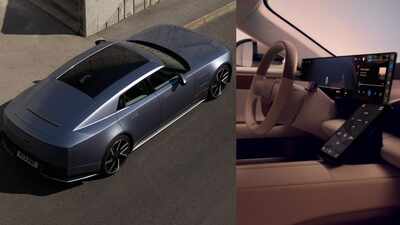
Few cars started as much debate recently as the Jaguar Type 00 concept. It was unveiled in late 2024 and its angular look and bare-bones interior got everyone talking, raising questions about whether it was too much of a break from tradition. Fast forward to 2026, things have turned around for the Type 01, which is now getting serious love for its standout design. We recently spoke with JLR’s Chief Designer of Materiality, Mary Crisp, and Chief Designer of Interior, Tom Holden, to dissect the cabin design, the materials they picked, and the ideas driving the new layout.Speaking about the Type 01’s interior, Mary Crisp, Chief Designer, Materiality at JLR, said sustainability was considered across every material, from its composition to how it could be recycled. The team calls this approach “material hygiene” and works closely with JLR’s sustainability team to assess its choices.The cabin uses lightweight carpet made from recycled polyester, while the stowage areas feature recycled felt without adhesives. The latter also avoids flocking, which Crisp described as a microplastic. Weight was another consideration, given the car’s electric powertrain.“Being an EV it’s vitally important we can contribute to bringing down the overall weight of the vehicle,” she said.
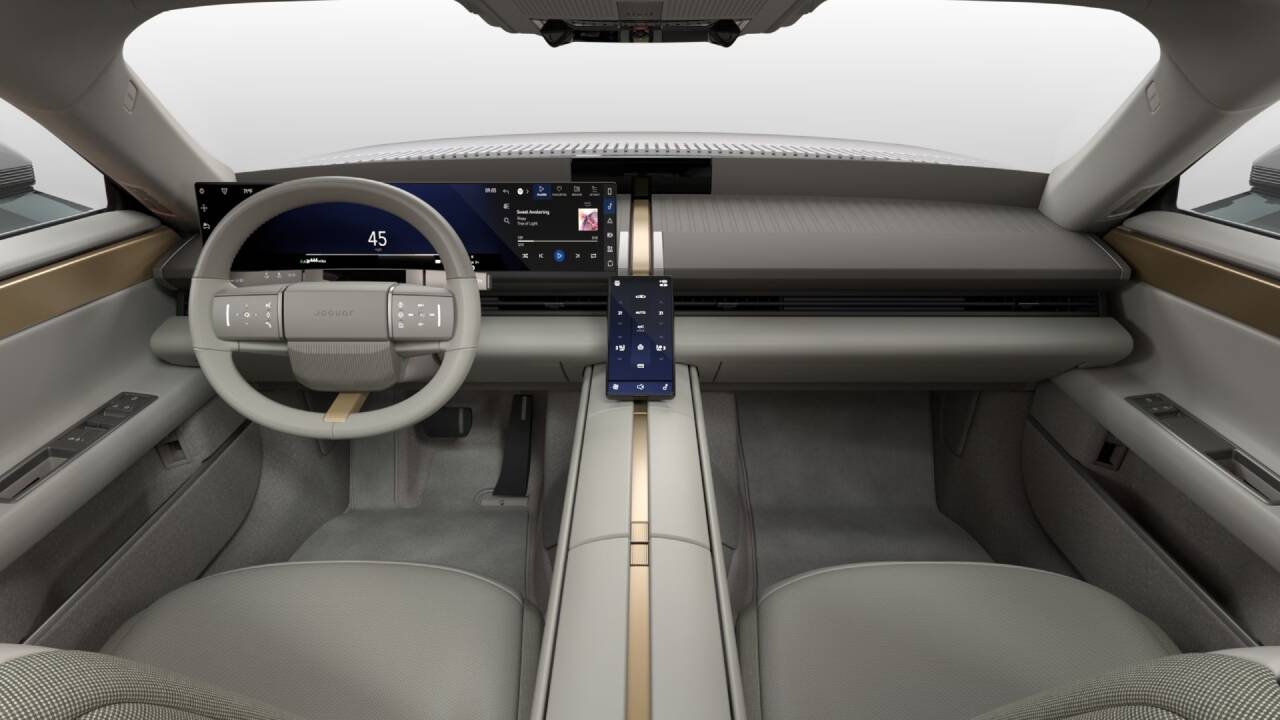
Luxury without adding more materialsCrisp said luxury did not mean adding more materials or ornamentation. Instead, the cabin combines layered colours, textured seat fabrics and distinctive flooring to create warmth.One of the standout elements is a brass-inspired finish, developed from experiments with artists and makers. It takes the form of anodised, embossed aluminium running along the top of the doors and the central spine. The choice of materials also extends to the door panels, which use Ultrafabrics’ Neograin product to create a continuous surface without conventional stitching. However, leather seats will remain available as an option. “We really feel like there are materials other than leather that are luxurious,” Crisp said.A different approach to technologyTom Holden, Chief Designer, Interior at JLR, said the team deliberately avoided following technology trends simply for the sake of adding features. Instead, it focused on how drivers would interact with the car and what information they needed.“We didn’t want to just offer tech for the sake of tech’s sake in a sort of arms race if you like,” he said. The aim was to create a driver-focused experience, with essential information readily available and other digital content remaining in the background until needed. Holden said achieving clean, uninterrupted surfaces was one of the biggest challenges. While this was a feature of some of Jaguar’s classic models, modern vehicle regulations, including side-impact requirements, made it harder to achieve.“One of the hardest things to do, which may appear as one of the most simple, it’s just getting that continuous flow of beautiful clean surfaces through the car,” he said.Bringing back the classic Jaguar driving positionHolden said the driving position was central to recreating the feel of older Jaguars. The driver sits low in the cabin, with a slim dashboard and a high central spine helping create an enclosed feel. “You sit very low in this car,” he said.Textiles flowing from the floor into the door panels further contribute to the cabin’s wraparound design, bringing together the material choices and layout to create a distinct driving environment.