








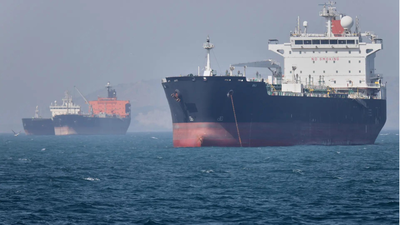
Iran stands to gain access to billions of dollars in oil revenues after the United States granted a 60-day sanctions reprieve as part of a newly signed US-Iran memorandum of understanding (MoU). But actually unlocking decades of frozen assets and fully dismantling the sanctions regime could prove far more difficult than simply announcing sanctions relief.The development stems from a 14-point MoU signed by the United States and Iran last week, under which Washington agreed to begin abolishing various categories of sanctions according to a timetable to be negotiated in a final agreement within 60 days, a period that can be extended.As an initial step, the US treasury issued a temporary general licence on Monday, permitting the production, delivery and sale of Iranian crude oil, petrochemical products and petroleum products until August 21. The measure also covers related banking, insurance and transportation activities, allowing Iran quicker access to revenues generated from energy exports.
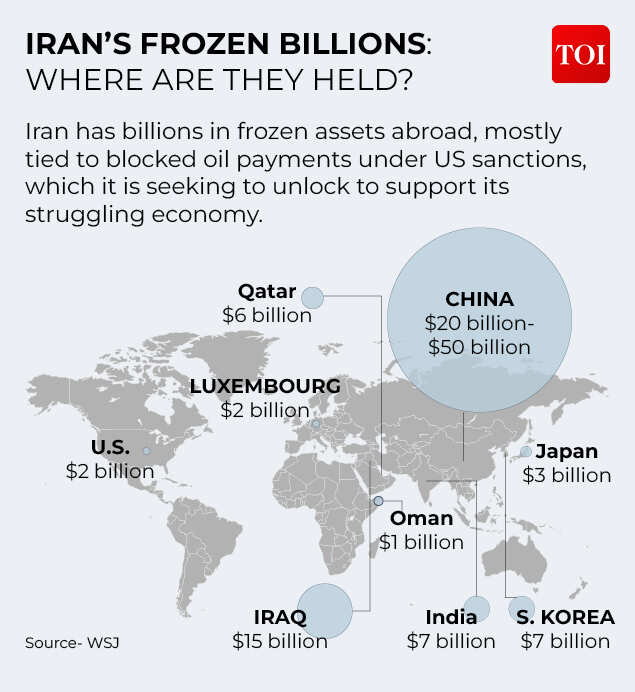
While the licence could deliver up to $3 billion to Iran over the next two months, a Reuters report says that the country’s much larger pool of frozen or restricted assets accumulated under decades of sanctions remains entangled in a complex web of legal, political and commercial barriers.In simple terms, the latest US move allows Iran to earn and receive more money from current oil sales. However, recovering assets that have been frozen abroad, removing blacklists, restoring access to international finance and persuading global companies to return to the Iranian market requires a much longer process involving multiple governments, regulators and legislatures.The United Nations, the United States and the European Union have imposed sanctions, trade embargoes and asset freezes on Iran since the late 1970s over issues including its nuclear programme, human rights record and support for armed groups across the Middle East.Over more than four decades, these restrictions have expanded into a vast framework that includes congressional legislation, presidential executive orders, international sanctions and thousands of designations targeting individuals, companies, vessels and aircraft.“You have this tangled nest of sanctions, and it’s not just executive orders, it’s congressional sanctions,” said Juan Zarate, deputy national security adviser for combating terrorism under former President George W. Bush.President Donald Trump can revoke executive orders imposed on Iran, but many sanctions are embedded in US law and would require congressional approval to amend or repeal. That prospect remains uncertain as the interim agreement has already drawn criticism from Republican lawmakers.Since early 2025 alone, the US Treasury’s Office of Foreign Assets Control (OFAC) has sanctioned more than 1,000 individuals, ships and aircraft linked to Iran. Removing thousands of entities from sanctions lists could itself take considerable time.Delisting thousands of entities designated for sanctions would take OFAC at least a year, according to Jeremy Paner, a partner at Hughes Hubbard & Reed and a former US sanctions official.Analysts say the economic stakes are enormous. Edward Fishman, a senior fellow at the Council on Foreign Relations, estimated that permanent sanctions relief could eventually be worth “at least tens of billions of dollars” to Tehran by eliminating discounts on Iranian oil, expanding its customer base beyond China and increasing export volumes.At present, China purchases around 90% of Iranian oil exports despite existing sanctions.However, sanctions removal does not automatically guarantee a return of international business. Banks, insurers and energy companies must still navigate changing regulations, conduct extensive compliance checks and assess exposure to sanctions-evasion networks involving countries such as China, Russia and North Korea. Many would also remain subject to separate sanctions imposed by Britain, the European Union and other jurisdictions.“We’ve kind of beaten the markets up with the risk of doing business with or through Iran, so you can’t just flip a switch and say, ‘Oh, now it’s okay to do business with Iran,'” Zarate said.The report also point to concerns over where newly accessible funds could ultimately flow.“There are a number of thorny issues involved,” said Stephanie Connor, a former OFAC official and now a partner at Holland & Knight as quoted by Reuters, “Are we really going to let money start flowing to Iran’s Islamic Revolutionary Guard Corps?” she asked, referring to the powerful paramilitary force designated by the United States as a foreign terrorist organisation.Legal risks may further deter foreign investors. Companies operating in Iran could still face litigation under the 2016 Justice Against Sponsors of Terrorism Act, which allows victims of attacks linked to designated groups to sue businesses accused of providing support.As a result, analysts believe that even if sanctions continue to be rolled back under the MoU, major international investment is unlikely to return immediately.“We’re not going to see massive multi-billion dollar commitments until things are far more cemented and politically stable,” said Brett Erickson, principal with Obsidian Risk Advisors. “There’s just a long way to go.”