








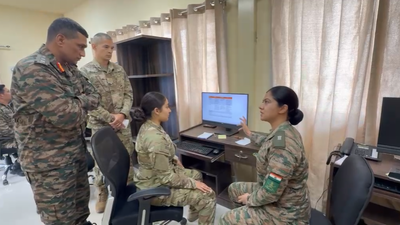
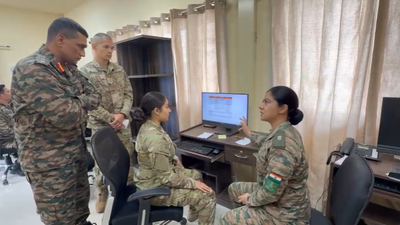
Indian and American troops are deep into the 22nd edition of Exercise Yudh Abhyas, running Command Post Exercises, Expert Academic Discussions and Subject Matter Expert Exchanges at Auli, Uttarakhand, alongside parallel field training at Auli and the Mahajan Field Firing Range in Rajasthan. Together, they bring 600 personnel from each army into what has become one of the most substantive bilateral training engagements between the two forces.The academic discussions this year are firmly focused on where modern warfare is headed. Topics on the table include maintaining tactical resilience in GPS-denied and heavily jammed electronic warfare environments, AI-enabled intelligence analysis, the operational use of counter-drone systems, and cyber capabilities within a broader multi-domain operations framework. There’s also a deliberate push to look beyond purely numerical military capability assessments, towards a more nuanced understanding of what actually determines combat effectiveness today.Running in parallel are Subject Matter Expert Exchanges specifically tailored to high-altitude and cold-weather operations, an area where both armies bring hard-earned operational experience. Specialists are exchanging notes on medical support in high-altitude terrain, information operations spanning cyber, psychological warfare and electronic warfare, effective use of aviation assets, and the employment of mortars and snipers in extreme cold and altitude.The Command Post Exercise itself gives commanders and staff from both armies a structured environment to practise joint planning, decision-making and coordination under simulated operational conditions, building the kind of procedural familiarity that becomes essential if these two forces ever need to operate together in mountainous or semi-mountainous terrain for real.Yudh Abhyas, however, is just one piece of a much larger picture. India and the US have built an entire ecosystem of joint exercises spanning every branch of their armed forces. The air forces train together through Tarang Shakti, Cope India and Red Flag, while the navies come together for Malabar, Milan and RIMPAC, the world’s largest multinational maritime exercise. Then there’s Tiger Triumph, a genuinely unique tri-service exercise bringing together the army, navy and air force of both nations simultaneously, testing coordinated operations across land, sea and air at once. Seen together, these exercises point to a defence relationship steadily moving towards greater interoperability between the two nations.