







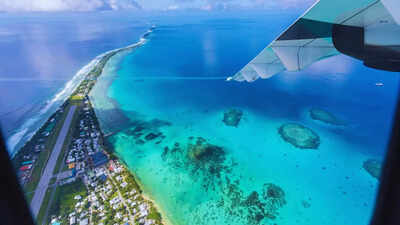
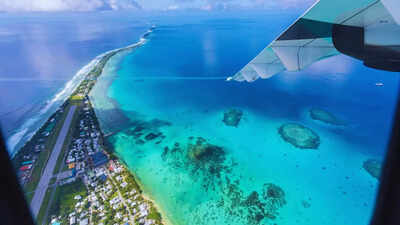
In August 2024, Tuvalu signed the Australia–Tuvalu Falepili Union treaty, giving its citizens a pathway to live, work and study in Australia. While the agreement creates new opportunities for people from the Pacific island nation, researchers are raising concerns about what could happen to its cultural heritage if more people move abroad. The concern is not just about losing homes and land to rising sea levels. Researchers say traditional buildings, construction skills and community spaces could also be lost as people move away and ways of life change.One example is the Lotolelei Church on Lakena, a small, uninhabited islet in Tuvalu. Although no one lives on the islet, families from neighbouring Nanumea still visit the church for religious services and family gatherings.Built in the early 20th century using timber brought from what is now Kiribati, the church remains an important link to the community’s history.
Why are Tuvaluans moving to Australia
Tuvalu has a population of 9,646 and is investing in projects to protect its islands from rising sea levels. Its coastal adaptation and land-reclamation projects are expected to add around six hectares of land to the main island of Funafuti.At the same time, the Falepili Union treaty provides a pathway for Tuvaluans to move to Australia. Up to 280 permanent residency places are currently available each year through a ballot. These developments are giving people more options to remain in Tuvalu or move abroad. However, researchers say migration and climate adaptation plans also need to consider the country’s cultural heritage.
What could happen to Tuvalu’s traditional buildings
Researchers working with local communities have been documenting traditional buildings across Tuvalu through photographs, architectural drawings, interviews and 3D models.On the island of Niutao, the Makaili Hut is an example of how traditional buildings carry history across generations. Its earlier structure, known as Faleomanuka or the “house of wisdom”, was used as a communal storehouse and meeting place before its timber was reused to build a family home.Traditional construction methods, including carved wooden joints and coconut fibre lashings, remain visible in the structure. Researchers have also documented two classrooms in Funafuti that use building styles from different islands. Their designs reflect the identities and construction traditions of those communities.
Can digital records help preserve Tuvalu’s heritage
Researchers believe digital records could help preserve knowledge of traditional buildings and construction methods. They have created 3D models that Tuvaluans, including those living abroad, can explore through virtual reality.However, researchers say digital models cannot replace actual buildings or the knowledge passed down through generations. Community members have also suggested documenting traditional canoes, oral histories, gathering places and beaches.The researchers argue that decisions about migration, new land and existing settlements should include cultural heritage.