






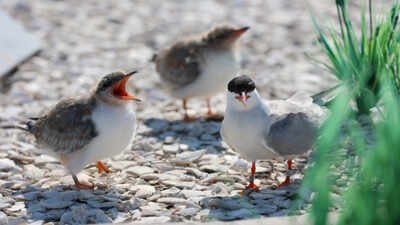
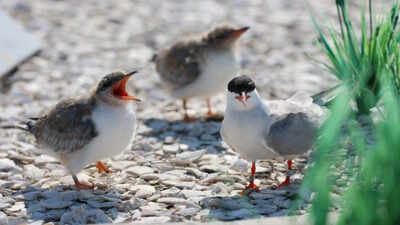
For a bird that spends much of its life around coastal waters, finding a safe place to nest is perhaps just as important as finding food. Common terns, with their silver-grey plumage, slender bodies and distinctive black caps, were once a familiar sight along Maryland’s coastal bays. However, the islands that provided safe nesting grounds for them have slowly begun to disappear, leaving fewer places for the birds to call home and raise their young.According to Bernard Devlin’s September 14, 2026, report for Audubon Mid-Atlantic, the common tern population in Maryland’s Coastal Bays had declined dramatically over several decades. During the late 1980s and early 1990s, researchers recorded more than 1,200 nests in the region. By 2020, however, fewer than 30 nests remained, bringing the population dangerously close to disappearing from the state’s coast. The decline was closely associated with the loss of suitable nesting habitats, which had been affected by years of erosion, increasingly intense storms and human disturbance.
A declining population has found a place to return to
In response to the declining numbers, the Maryland Department of Natural Resources (DNR), the Maryland Coastal Bays Program and Audubon Mid-Atlantic came together in 2020 to explore an unusual tactic by creating a floating wooden raft designed to imitate the natural nesting conditions that common terns depend on. This platform was designed to provide protection from flooding and predators, two of the major challenges that can threaten nesting birds and their young. So, rather than waiting for suitable natural habitats to return, conservationists created a space where the birds could begin establishing their colonies again. The raft supported 23 nests, which produced 22 chicks. Although this was only the beginning of the project, the return of the birds in subsequent years suggested that the platform was providing them with a suitable place to breed.Kim Abplanalp, Bird Habitat Coordinator at the Maryland Coastal Bays Program, explained that common terns are highly social birds and tend to gather where other members of their species are nesting.
From a floating raft to a restored island
The conservation efforts have not stopped with the floating platform. While the raft provided an immediate alternative to the declining natural nesting grounds, restoring the coastal islands remained an important part of the wider effort.
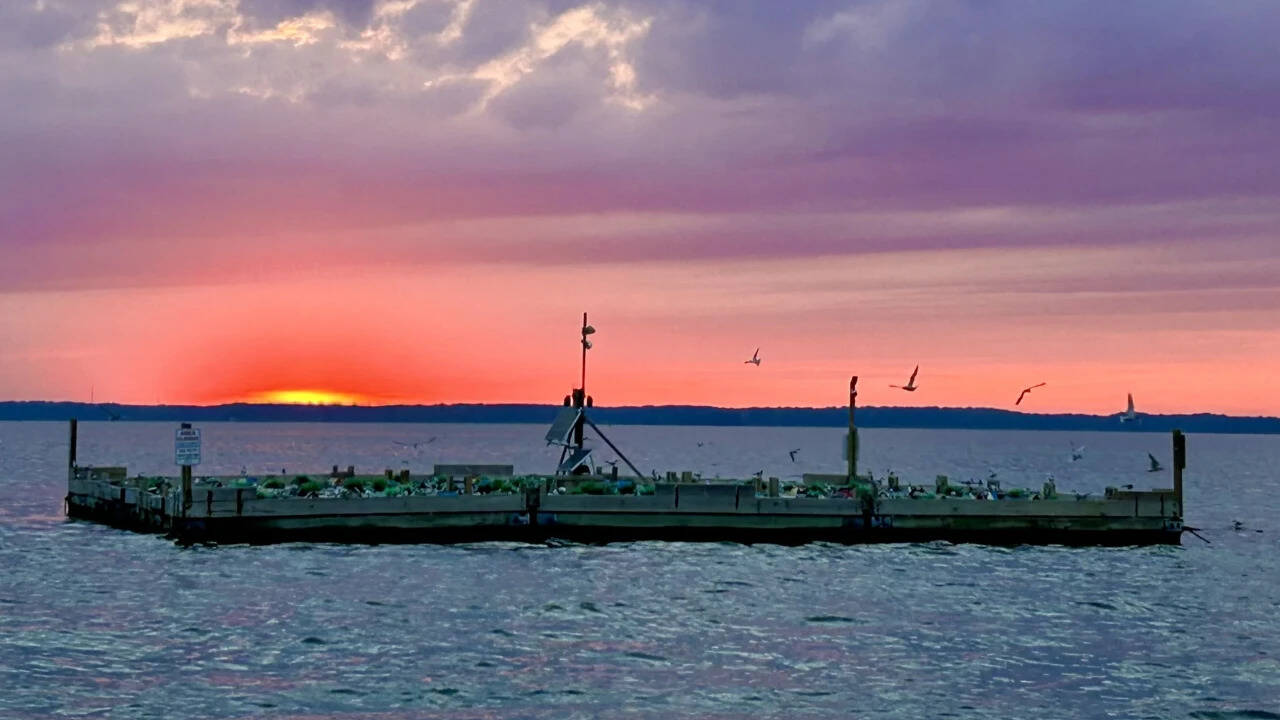
(Image credit: Kim Abplanalp/Maryland Coastal Bays Program via audubon.org)
Habitat restoration at Reedy Beach and West Reedy Island, two small islands situated in the Isle of Wight Bay in Ocean City, Maryland, has helped establish another nesting location for the birds. In an interesting development, researchers have also documented birds that hatched on the raft returning to establish nests on the restored island. Moreover, the birds are beginning to occupy multiple locations across the coastal landscape, expanding the areas in which they can establish breeding colonies.In the 2026 breeding season, biologists recorded 376 nests on the floating raft and another 84 on the recently restored Reedy Island, bringing the total to 460 nests across two colonies. According to Devlin’s report, this represents the strongest coastal breeding population Maryland has witnessed in decades, recovering to levels last seen in the early 2000s. Compared with the situation in 2020, these figures mark a major breakthrough, representing the recovery of nearly one-third of the region’s historic population.
A habitat that supports more than one species
The floating platform has also been attracting other birds, offering a wonderful glimpse into how restoring a habitat can welcome diverse wildlife to an area. Although it was initially introduced to support common terns, the raft has since been used by other species that frequent Maryland’s coastal waters.Royal terns have nested on the platform in small numbers, while Roseate Terns, Gull-billed Terns and Sandwich Terns were also spotted roosting there during the 2026 season. Their presence suggests that the platform is becoming a useful resting and breeding space for a wider variety of coastal birds. The project has also connected Maryland’s conservation efforts to a much larger migratory landscape. Common terns that have been banded by Abplanalp and her team have subsequently been spotted during the winter in places such as Punta Rasa in Argentina. These sightings offer a reminder that the birds using the restored habitats in Maryland are part of a much wider migratory network, travelling across considerable distances throughout the year.However, conservationists are aware that the floating raft cannot replace the natural islands that once supported these colonies. The continued success of the project has been an encouraging development in the face of habitat loss, but restoring the sand islands of Maryland’s Coastal Bays must remain a long-term goal, and work towards this is still underway.