








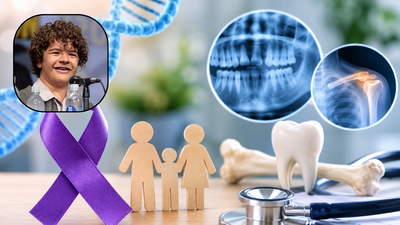
When a medical condition affects only a tiny fraction of the population, even experienced doctors may struggle to find enough information to treat it. This has been a longstanding challenge for people with cleidocranial dysplasia (CCD), a rare genetic disorder that affects the development of bones and teeth. Stranger Things actor Gaten Matarazzo, who was born with the condition, has used his public platform to raise awareness and support people facing similar challenges.A new study published online in the Journal of Bone and Mineral Research on January 8, 2026, marks an important development in that effort. Titled Diagnosis, treatment, and management recommendations for cleidocranial dysplasia: A modified Delphi panel, the research establishes 37 expert-consensus recommendations covering diagnosis, treatment and long-term medical care. The work involved specialists working with CCD Smiles, the nonprofit organisation Matarazzo and his family helped bring into formal operation in 2017, and researchers from Johns Hopkins and other institutions.
How Matarazzo helped establish CCD Smiles
Matarazzo, best known for playing Dustin Henderson in Netflix’s Stranger Things, was born with cleidocranial dysplasia. The genetic condition affects skeletal development and can cause short or missing collarbones, delayed closure of the soft spots in the skull, and dental complications such as extra teeth and delayed eruption of permanent teeth. The disorder is estimated to affect approximately one in a million people worldwide. Its rarity has made it difficult for patients and families to find doctors with sufficient experience in managing its different complications.CCD Smiles was founded by Kelly Wosnik, a nurse practitioner who also lives with the condition. According to the organisation’s account, Wosnik had been working towards establishing the foundation since 2013. Matarazzo’s father contacted her in 2016, and together they helped make CCD Smiles an officially recognised nonprofit organisation in January 2017.The organisation focuses on raising awareness, supporting access to dental treatment and encouraging research. In a November 2025 interview with Cero Magazine, Matarazzo explained that patients often had to depend on doctors who had treated only a handful of people with the condition. He said he wanted medical professionals to have a reliable care plan explaining how to treat patients without taking steps that could cause harm or setbacks.
Researchers developed 37 medical recommendations
To address the lack of standardised guidance, a multidisciplinary panel of 13 experts conducted a three-round modified Delphi study. This method involves collecting expert opinions through repeated surveys and discussions until sufficient agreement is reached. The research produced 37 recommendations covering three broad areas: diagnosis, treatment and management, and the healthcare professionals involved in patient care.Of these, nine recommendations focused on diagnosis, while 24 covered treatment and management. The latter included seven dental and orthodontic recommendations and 17 other medical recommendations. The remaining four addressed care providers. The researchers described the findings as the first comprehensive best-practice recommendations to help patients, families and healthcare professionals understand and manage the condition.
Guidance covers teeth, bones and overall health
A significant part of the recommendations addresses dental and orthodontic complications. Children with CCD should undergo orthodontic screening by a specialist experienced in the condition by the age of six. The panel also recommended regular dental monitoring through X-rays because some abnormalities may not be visible during ordinary oral examinations.Another important recommendation is that orthodontic treatment should be planned according to a patient’s dental development rather than simply their chronological age. Specialists also recommended a phased approach to exposing unerupted teeth. Prosthetic options, including implants, bridges or dentures, may be considered for patients who cannot undergo or do not wish to pursue conventional orthodontic treatment.However, the recommendations extend beyond dental care. The panel highlighted the importance of hearing assessments, particularly after diagnosis, with annual testing until consistently normal results are recorded. Patients may also need regular orthopaedic evaluations, mobility assessments and monitoring of bone density because the condition can be associated with fractures and reduced bone strength.The experts further recommended access to counselling, mental health support and pain management when needed. They emphasised that people with CCD should continue receiving ordinary healthcare alongside specialised treatment.
Coordinated care is a key recommendation
The study also stresses that managing CCD requires cooperation between different medical specialists. Depending on a patient’s symptoms, their care team may include primary care doctors, dentists, orthodontists, geneticists, orthopaedic specialists, hearing specialists, endocrinologists and physical or occupational therapists. The recommendations are intended to help doctors recognise the condition earlier, understand its complications and coordinate treatment rather than approaching each problem separately.For Matarazzo and CCD Smiles, the research addresses a major gap that has affected people living with the disorder for years. While the recommendations do not offer a cure, they provide a shared medical reference for patients and professionals who previously had limited standardised guidance. The study also represents a significant step towards making care more consistent for people with a condition that remains unfamiliar to many healthcare providers.