







Change can be tough for everyone. Shifting jobs, houses, cities; all are changes we struggle with in today’s day and age. But, 6000 years ago, changes were a bit more severe.For a child growing up on the Danish island of Sejerø around 6,000 years ago, the sea would have been less a scenic backdrop than a pantry. Molluscs could be gathered from the shallows, flatfish and eels caught close to shore, while deeper waters offered larger fish. A man now known as Rødhals Man appears to have grown up on precisely this menu. But the food he ate did not stay the same throughout his life, and that small change may have placed him in the middle of one of prehistory’s biggest transformations.
The discovery of the remains
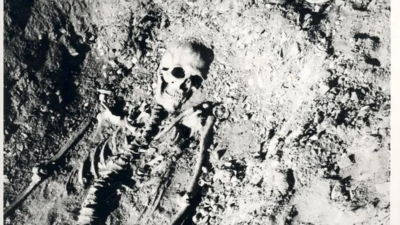
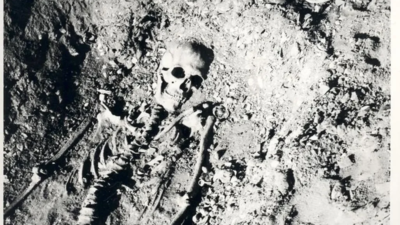
Rødhals Man’s nearly complete skeleton was discovered in 1956, when residents digging for artefacts came across human remains in an ancient shell midden at Rødhals, on Sejerø. The midden was essentially a prehistoric food-waste heap of shells, bones and other remains. The skeleton lay beneath an undisturbed layer of shells about 20 cm deep. Archaeologist Ole Klindt-Jensen was sent to document and recover it, reportedly working in the pouring rain.The discovery took decades to become fully understood. Radiocarbon dating placed him near the end of the Mesolithic period, when hunter-gatherer communities were giving way to farming societies. Yet his DNA showed that he belonged to the indigenous Western Hunter-Gatherer population, while earlier analysis suggested that he had relied heavily on seafood. He seemed to belong to an older way of life, even as farming was spreading around him.A study published in the journal Antiquity on November 16, 2026, has taken a closer look at his bones and teeth. By analysing stable isotopes in the remains, researchers could trace changes in the kinds of protein he ate at different stages of his life. The team also refined the radiocarbon dating, accounting for the fact that people who ate a lot of marine food can appear older in radiocarbon tests than they really are. Their revised estimate suggests he died most likely between 3890 and 3770 BCE, when he was around 30 to 40 years old.
A shift from sea to land
The results offered the scientists a detailed picture of his diet. As a child, Rødhals Man ate mostly food from the shallow coastal waters around Sejerø, including shellfish, flatfish and eels. From around the age of 11, his diet began to include more fish from deeper waters. During adolescence and adulthood, however, the proportion of protein from land-based sources rose sharply. Seafood remained important, but it no longer dominated his diet in quite the same way.Researchers believe the increase in terrestrial food may reflect contact with the farmers arriving in the region. Sejerø is a small island with limited space for large land animals, while the larger island of Zealand lies around 18 kilometres away. Farming communities had already begun establishing themselves there. Rødhals Man may have travelled between the islands, spent time among farming communities or obtained food from them. His burial also appears to share features with graves associated with early farmers.While isotope analysis can show that more of his protein came from land-based sources, it cannot tell whether that food came from domesticated animals or wild game. He may have spent time hunting and gathering on a larger landmass before returning to Sejerø. The researchers therefore describe farming as a likely explanation, but not necessarily a certainty. What they can say is that his adult diet was unusual for a coastal hunter-gatherer of the period.
Rødhals Man, beyond the diet
The rest of his skeleton offers a few more clues about the person behind the label. He stood about 1.55 metres tall, was right-handed and showed no signs of having died violently. His bones suggest he was generally healthy and well-nourished in early life, although traces of inflammation or vitamin deficiency appeared later. Wear around his joints and heels also points to considerable physical strain, possibly from repeated paddling.Rødhals Man did not neatly switch from one lifestyle to another. He remained genetically part of the Mesolithic hunter-gatherer population, and seafood continued to feature in his diet. But he also appears to have incorporated more food from the world of farming, at a time when that world was expanding around him. The researchers identify him as the latest known individual in Denmark with this combination of unadmixed Mesolithic ancestry and a marine-dependent diet.It is tempting to imagine the arrival of agriculture as a clean break, with one way of life simply replacing another. Rødhals Man suggests something messier and more human. People lived through the change, encountered new communities and adapted without necessarily abandoning everything they knew. His bones cannot tell us what he thought of the farmers, or whether he considered himself part of a changing world. But they preserve something almost as valuable: a record of that change taking place over the course of one ordinary life.