





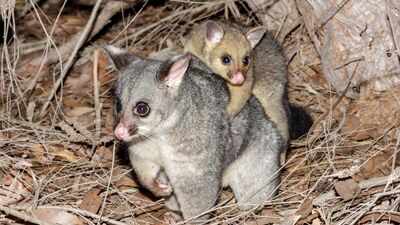
In 1837, New Zealand introduced Australian brushtail possums in the hope of building a profitable fur industry. The animals were expected to provide valuable pelts and help create a new rural economy, but the experiment had consequences that stretched far beyond anyone’s expectations. Nearly two centuries later, possums have become one of the country’s most damaging introduced pests, feeding on native plants, competing with wildlife and spreading disease. New aerial photographs from a rare South Island forest now show the scale of the problem in dramatic detail. About half of the forest’s vulnerable trees have been damaged, with possums stripping foliage and weakening the canopy from above. As reported by New Zealand’s Department of Conservation, the images offer a stark visual warning of how a decision made in the 19th century continues to reshape native ecosystems today.A fur trade experimentThe first possums were brought to New Zealand in the 19th century as part of an effort to establish a fur industry. Australian brushtail possums had valuable fur, and settlers believed the country’s forests could provide a suitable home for them. At a time when governments and private entrepreneurs were actively introducing animals for hunting, farming and trade, possums seemed like a promising economic opportunity.Additional releases followed over many decades. Animals were moved to different regions to expand the potential fur resource, and some were released by acclimatisation societies or private operators. The introductions were not accompanied by a clear understanding of how quickly possums could reproduce or how little natural resistance native New Zealand ecosystems would offer.New Zealand had evolved without native land mammals such as possums, rats and stoats. Its forests were shaped primarily by birds, insects and reptiles, many of which occupied ecological roles elsewhere filled by mammals. Plants had no long history of adapting to browsing pressure from large, nocturnal tree climbers. Once possums became established, they found abundant food and few effective controls.From economic hope to national pestThe fur trade never developed as hoped, but the possums remained. They spread through forests, farmland and urban fringes, reaching almost every part of mainland New Zealand. Today, the Department of Conservation describes them as a major threat to native biodiversity.Possums eat leaves, flowers, fruit, bark and seedlings. They can strip a tree of foliage, prevent regeneration and alter the composition of entire forests. Some species are particularly vulnerable because they grow slowly, reproduce infrequently or provide important food for native birds. A possum feeding on a flowering tree may also reduce the supply of nectar and fruit available to birds and insects.The animals compete with native species for food and may eat eggs or young birds when opportunities arise. They also carry bovine tuberculosis, a serious disease that can affect livestock. Their impact is therefore ecological, agricultural and economic at the same time.The damage often develops quietly. A single tree may survive repeated browsing for years, but its growth slows and its ability to reproduce declines. Over time, possum pressure can change a forest even before large numbers of dead trees become visible.The forest captured from aboveThe latest warning comes from aerial photographs taken over a rare South Island forest. Viewed from the ground, the damage might appear scattered. From above, the pattern becomes much harder to ignore. Many vulnerable trees show signs of heavy browsing, with reduced foliage, thinning crowns and broken or weakened branches.The images indicate that about half of the vulnerable trees in the affected forest have been damaged by possums. The photographs provide a broad view of the forest’s condition, allowing conservation managers to see patterns that are difficult to measure from individual tracks or ground plots. Aerial monitoring is increasingly important in pest control because it can cover large areas quickly. Drones, helicopters and high resolution imaging systems can identify canopy changes, compare conditions over time and help managers focus control work where it is most urgent. The technology does not replace field surveys, but it provides a powerful overview.The photographs also make the issue easier for the public to understand. Statistics about possum numbers or hectares of affected forest can feel abstract. Pictures of damaged treetops show what the loss looks like, making a hidden ecological process instantly visible.Why vulnerable trees matterNot all trees respond to possum browsing in the same way. Some native species can tolerate moderate feeding, while others are highly sensitive. Vulnerable trees may have soft leaves, nutritious flowers or fruit that attract possums, making them preferred targets. Repeated browsing thins the crowns of these trees and reduces their ability to produce seeds. The loss of mature trees affects more than the individual plants. Big trees make hollows for animals to nest, give shelter and a home for insects, fungi and epiphytes. Their blossoms and fruit can be a vital seasonal food source for native birds. If the preferred tree species declines, animals that rely on it may decline as well. The forest may take a long time to recover. Even if possum numbers are reduced, damaged trees may take years to regain their health. Seedlings may need decades to mature, and some species may struggle to regenerate if browsing continues. This means that protecting the remaining healthy trees is often more effective than waiting for a damaged forest to repair itself.A threat to birds and forest lifeNew Zealand’s native forests are internationally important because many of their birds evolved in isolation. Species such as kererū, tūī and bellbirds rely on native trees for fruit, nectar and nesting habitat. Less familiar species, including native bats, lizards and insects, also depend on forest plants and structures.Possums can reduce these resources through direct feeding. They eat flowers before birds get to them, they eat fruit that would otherwise spread seeds and harm the trees that provide nesting sites, and their presence can thus weaken the connections between plants and animals that keep forests functioning. In some locations, possums also compete with native birds for food. During seasons when flowers or fruit are scarce, competition can become especially intense. A forest that looks intact may still be failing to support the same number and diversity of animals if its most important food trees are repeatedly browsed.This is why conservation managers focus not only on the number of possums killed but also on changes in forest health and wildlife activity. Lower pest numbers are valuable because they allow native ecosystems to recover.The difficult work of controlNew Zealand has developed a range of methods to control possums. Trapping, shooting, poisoning and bait stations are used in different landscapes depending on terrain, conservation goals and community considerations. Large scale programmes may combine aerial application of toxic bait with follow up ground control and monitoring.No single method works everywhere. Dense forests can make trapping difficult, while remote terrain increases the cost of ground operations. Poisoning can reduce possum numbers over large areas but it takes careful planning to protect people, pets and non target species. Conservation teams have to explain the reasons for control and address public concerns. Monitoring is essential after each operation. Possum numbers can rebound if surviving animals reproduce or if nearby populations move into cleared areas. Managers use tracking tunnels, chew cards, cameras and other tools to measure activity. Aerial photos add another layer by showing whether tree canopies are recovering.The goal is not always to eliminate possums across the entire country at once. Instead, programmes often prioritise areas with rare habitats, threatened species or important ecological values. The South Island forest highlighted in the latest photographs is an example of why those priorities matter.A lesson in unintended consequencesThe possum’s history in New Zealand is a powerful example of how short term economic thinking can create long term ecological costs.In 1837, the animals were introduced because their fur appeared valuable. The people responsible could not fully predict how the species would interact with forests that had evolved without mammalian browsers.Today, possum control costs millions of dollars and requires constant effort. The environmental damage includes weakened trees, reduced bird food, altered forest composition and threats to agricultural disease management. An introduction intended to create wealth became a national conservation challenge. The story also shows why careful risk assessment matters before moving species between countries. Even animals that seem harmless or useful in their native environment can become invasive when placed in a new ecosystem. Climate compatibility, reproduction, predators and food availability all influence whether a species will remain contained or spread.Protecting the forest’s futureThe aerial photos are alarming, but they also provide a reason for action. By identifying which trees are suffering and where damage is concentrated, conservation managers can target possum control more efficiently. Protection of the remaining healthy trees may allow the structure of the forest to be maintained while the damaged areas recover. Long term success will depend on repeated monitoring and sustained funding. Possum control cannot be treated as a single project with a final end date. It must be part of ongoing ecosystem management, especially in forests containing rare or slow growing trees.For New Zealand, the lesson is clear. The legacy of the 1837 introduction is still visible in the canopy of South Island forests nearly two centuries later. Aerial photographs showing damage to about half of the vulnerable trees reveal what happens when an introduced species is allowed to become part of an ecosystem that never evolved to withstand it.