







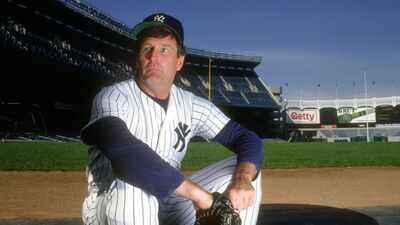
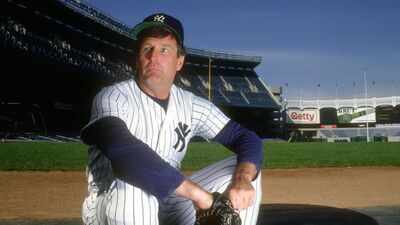
Tommy John died on August 15, 2026, at his home in Bradenton, Florida. He was 83. For most people who never watched him pitch, the name still rings a bell, not because of his 288 wins across 26 seasons, but because of a four-hour surgery that took place on September 25, 1974, and quietly rewired the future of professional baseball. A left-hander from Terre Haute, Indiana, John agreed to something no pitcher before him had ever tried. Half a century later, more than 2,600 major leaguers have followed in his footsteps.
Tommy John, who became known as the “Bionic Man”
In July 1974, John was pitching for the Los Angeles Dodgers and having what might have been the best season of his career. Then, during a start against the Montreal Expos, something gave way in his left elbow. The ulnar collateral ligament, a small band of tissue that most people had never heard of at the time, had torn completely. Team physician Dr. Frank Jobe delivered the verdict plainly: the arm was done.But Jobe had an idea. The UCL reconstruction procedure had been performed on wrists and hands before, though never on a pitcher’s elbow. He told John he wanted to try it. He also told him, honestly, that he gave it roughly 100-to-1 odds of working. Most doctors would have walked away from those numbers. John did not.On September 25, 1974, Jobe drilled holes into the humerus and ulna bones of John’s left arm, then threaded a tendon taken from his right forearm through them in a figure-eight pattern. The surgery lasted four hours. When John came around, his left hand was shriveled and he had lost sensation in several fingers due to damage to the ulnar nerve. Jobe had to go back in for a second procedure just to reroute that nerve. For four months, his arm was in a cast.He missed the entire 1975 season. He spent it relearning how to throw, working with Dodgers pitcher Mike Marshall, who had a doctorate in kinesiology, to build a different grip and recondition the arm from scratch. By 1976, John was back in the rotation. His first post-surgery start, against Atlanta, resulted in a loss. It also made history. No pitcher had ever taken the mound following UCL reconstructive surgery before.That revolutionary surgery is now named after the pitcher, who became known as the “Bionic Man” after the seemed impossible return from what everyone thought a career-ending injury.
14 more years, 164 more wins, and one name that stuck
What followed was one of sport’s most remarkable second acts. Tommy John did not just return; he was better. He pitched until 1989, retiring with 288 career wins, a 3.34 ERA, 2,245 strikeouts, and four All-Star selections. He played for six franchises, including two separate stints with the New York Yankees, and only Nolan Ryan pitched more seasons among modern-era players. John won 164 of his 288 games after the surgery that was supposed to end his career.The procedure, officially known as ulnar collateral ligament reconstruction, quickly became known by a simpler name. Tommy John surgery. Jobe, for his part, later explained that he had been relieved to let it carry the patient’s name rather than his own. The logic was straightforward: if it failed, he did not want to be permanently linked to the failure. It did not fail.The list of pitchers who have had the surgery since reads like a hall of fame waiting room. Shohei Ohtani had it. Justin Verlander had it and came back to win the AL Cy Young Award in 2022. Jacob deGrom, Gerrit Cole, and Bryce Harper among them. Cole, in fact, missed the entire 2025 season recovering from the procedure and returned to the Yankees mound this year. After a win on August 8, Cole spoke with striking clarity about what the man had meant.“The surgery itself is saving us, but the player had to step up to the table and do it,” Cole said. “Having gone through the process, I can imagine that he was just as diligent, if not more diligent, to the rehab process, and really writing the book for all of us, to a certain extent.”That phrase, “writing the book”, is apt. Before John agreed to climb onto that operating table in 1974, there was no book. There was no roadmap, no protocol, no precedent. What there was, was a pitcher who did not want to go home.
Tommy John: A legacy without a Cy Young, but with something bigger
The curious footnote in Tommy John’s career is that he never won a Cy Young Award. He came close, finishing second in 1977 and 1979, but the honour never arrived. In the years since his retirement, his Hall of Fame case has drawn quiet but persistent debate. The numbers are serious: 288 wins, 26 seasons, a career ERA of 3.34. But the voters have passed, repeatedly, and John’s place in Cooperstown remains unfilled.Yankees manager Aaron Boone addressed it plainly after news of John’s passing broke on Sunday. “I hope people remember how outstanding his career was, and not just being named for the injury that, obviously, we know very well now,” Boone said. “A great career, and obviously a lasting legacy.”Dodgers president and CEO Stan Kasten put it this way: “His courageous role in becoming the first to have surgery that would go on to bear his name can’t be overstated. His impact both on and off the field has been felt by ballplayers of all ages and will be for generations to come.”John is survived by his wife and three children, Tommy, Travis and Tamara. He spent his final weeks in hospice care at his Bradenton home. On August 8, the Yankees shared a letter he had written to fans. He thanked the organization, the Steinbrenner family, teammates, and the people who had followed him for 26 years. It closed with: “I will never forget you.”That might be the sharpest irony of Tommy John’s life. He worried no one would remember a pitcher without a Cy Young. Instead, his name is now said inside every major league clubhouse, every sports medicine clinic, every college dugout. More than 2,600 big leaguers have had the surgery. Some of the richest contracts in baseball history were signed by men whose careers were kept alive by what Tommy John agreed to risk on a September afternoon in 1974.