







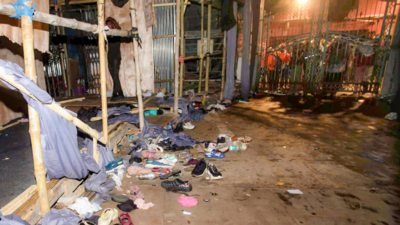
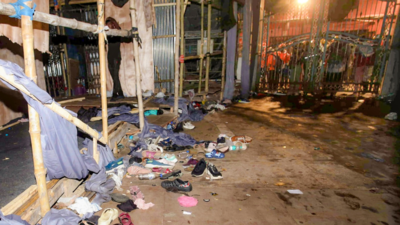
KOLKATA: A sudden and unexpectedly sharp spell of shower, that turned into a torrential downpour and lasted nearly an hour on Saturday evening, spelt disaster for revellers at the Chorbagan puja pandal. It started with a drizzle but soon turned heavy, forcing visitors to rush inside the pandal for shelter. But as the crowd in and around the pandal grew, most waiting for the rain to lose intensity, the shower turned heavy.Even though sporadic rain had been predicted by the Met office till Saturday, it was expected to be restricted to drizzles. “It was triggered by the retreating wedge or retreating monsoon that causes sporadic rain. Even though monsoon has started retreating and it is expected to be completely dry from Sunday, Kolkata received two sharp spells on Saturday. While the one during the afternoon was relatively light, the evening spell turned out to be consistent and lasted for a significant period of time,” said H R Biswas, deputy director general of meteorology.Also read: 19 killed in Kolkata stampede; CM Suvendu announces jobs, Rs 25 lakh for kinThe rain turned the ground soggy making foothold difficult which contributed to the stampede, said a weather official. “The rain was not heavy but retained intensity for more than 45 minutes,” said the official. Had it lessened quickly, the disaster may not have happened, he added.It also turned out to be a dampener on a day when lakhs had been out on the streets. While puja revellers were left worried about further such spells, the Met office said the dry weather from Sunday will continue at leas till Oct 21, which is Dashami.“Chances of moderate or heavy rain are virtually nil over the next four days. They will not recur,” said Biswas.In meteorology, a retreating wedge refers to the weakening and clearing phase of a cold air damming (CAD) event. A “wedge” is a shallow, dense layer of cold air trapped against a mountain range (most famously the eastern side of the Appalachian Mountains in the US).When this air mass “retreats”, it means the weather system that caused the trap is moving away, allowing the cold, stubborn layer to erode and normal regional temperatures to return.