









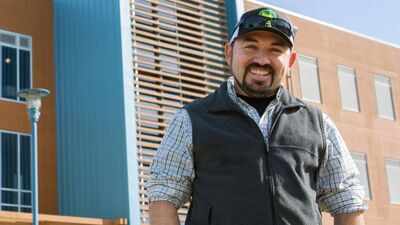
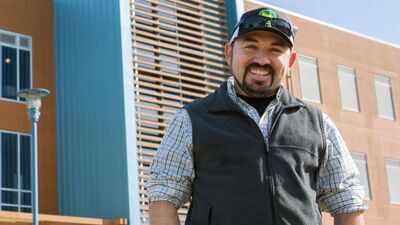
Juan Perez did not set out to become a farmer when he enrolled at California State University, Monterey Bay. Yet a series of summer internships helped him discover a career that brought together his interest in science, his family’s farming experience and a desire to build something of his own. What began with a single leased acre has grown into J&P Organics, a family-run organic farm in California’s Salinas Valley. Today, the business grows fresh produce on 10 acres and supplies weekly farm boxes to more than 500 local customers.
A student turned 1 acre land into a California family farm
Perez’s journey into farming began with uncertainty about his future. His father, Pablo, had spent decades working on farms, and Juan had occasionally worked alongside him. However, his father encouraged him either to work with him or pursue higher education and find another career.As the first member of his family to attend university, Juan chose to study at California State University, Monterey Bay. He selected the university partly because it was only a 20-minute drive from his parents’ home in Castroville, allowing him to live on campus while returning home on weekends.Finding the right subject took time. He initially considered liberal studies, business administration and computer science, but none felt like a suitable fit. A science course eventually caught his attention, particularly the opportunity to conduct research outdoors and work on practical projects.According to Juan Perez’s alumni profile published by California State University, the turning point came when a professor encouraged him to apply for a summer internship at an organic farm. At first, the paid opportunity appealed mainly because he needed money for books, clothes and food. He had little idea that it would influence his career so profoundly. Perez launched J&P Organics with his father a year before walking at his university commencement in 2007. He later completed his capstone project in 2009 and earned a bachelor’s degree in environmental science, technology and policy. The idea was straightforward. Juan had gained knowledge of organic farming, while Pablo brought decades of experience in agriculture. Together, they could combine those strengths and create a family business.His father initially had reservations because he was unfamiliar with organic growing methods. Juan explained that the approach avoided pesticides and chemical treatments, and Pablo agreed to give it a try.Their first step was modest. With a $5,000 loan from the California Coastal Rural Development Corporation, the father and son leased 1 acre of land. They gradually added a second and third acre, eventually expanding to six acres before an opportunity arose to purchase a 10-acre farm in Salinas.According to California State University’s account of Perez’s journey, the same organisation helped them buy the property in 2013, turning their growing operation into a more permanent family enterprise.
Three internships helped him discover his future
The first internship introduced Perez to the practical side of organic agriculture. He researched fertilisers, seeds and pest control, while also creating a small information library that other organic growers could use. The work suited him, and he began to see farming as more than a family connection.His professor, Bill Head, then encouraged him to complete a second summer internship at another organic farm. This experience broadened his understanding of the business, introducing him to marketing, farm-box sales and ways to encourage community support for agriculture.A third internship helped him build connections with people in the farming industry and gain confidence in his own abilities. By the end of that placement, Perez felt ready to start a business of his own.
How the farm turned into a family-run operation with 28 greenhouses
The Salinas property has developed into a working farm equipped with 28 commercial greenhouses, a packing shed, delivery vans, tractors, a private water well, fruit trees and open fields. These facilities support the daily work of growing, preparing and distributing produce.Despite its expansion, J&P Organics remains a close-knit family business. Juan and Pablo manage daily operations alongside Juan’s brother, Jose, who works as a mechanic. His mother, Florencia, helps with planting, transplanting, harvesting and packing, while his sister, Cristina, manages the taxes. Juan’s wife, Wendy, supports the business by handling calls, messages, customer questions and orders.The California State University profile notes that four families depend on the farm. Rather than employing an outside workforce, the family shares the responsibilities of running the operation.
Fresh produce connects the farm with its community
J&P Organics grows USDA-certified organic fruits, vegetables and flowers. Each week, customers receive an email explaining which produce will be included in their farm boxes. Orders are then delivered to homes or designated collection points.The farm serves more than 500 local customers, offering them a direct connection to the people who grow their food. Perez has explained in his California State University alumni profile that customers appreciate produce picked shortly before delivery. Even soil left on freshly harvested carrots can reassure buyers that their food has come straight from the ground. Customers can also visit the farm for pick-your-own days, allowing them to experience where their food comes from.
Perez believes a small farm can make a difference
The farm operates in the Salinas Valley, a region widely known for its agricultural production and favourable growing conditions. Its mild climate allows crops to be cultivated throughout the year, across winter, spring, summer and autumn.Perez believes that smaller organic farms can contribute to healthier food choices and more responsible care of the land. While the surrounding region includes much larger agricultural operations, he sees his own farm’s contribution in providing local families with fresh vegetables grown without conventional chemical pesticides.Education is another part of that commitment. As reported by California State University, Perez regularly welcomes elementary and secondary school pupils through the Monterey Bay Aquarium’s WATCH programme. He also hosts college student groups, giving them opportunities to learn about farming through direct experience.