








NEW DELHI: Govt has proposed a new credit trading mechanism under India’s Corporate Average Fuel Efficiency (CAFE) norms that would allow passenger vehicle manufacturers exceeding fuel-efficiency targets to sell surplus compliance credits to peers that fall short, creating a potential new revenue stream, while easing compliance with emission standards.A draft amendment issued by the ministry of power has introduced a formal “credit-debit passbook” for every automaker, recording annual compliance against fleet-average fuel efficiency targets.Manufacturers generating surplus credits by outperforming their prescribed CAFE targets will be allowed to bank them and trade them with other companies within the current five-year compliance block spanning FY23 to FY27.While existing rules permit pooling, they do not specify how credits are created, carried forward or exchanged. The amendment seeks to establish a transparent accounting and settlement mechanism.Under the draft, manufacturers unable to meet their targets can either buy credits from better-performing rivals on mutually agreed commercial terms or purchase compliance credits directly from the Bureau of Energy Efficiency (BEE) at a fixed rate of Rs 2,500 per gram of CO₂ per km for FY23-FY27.
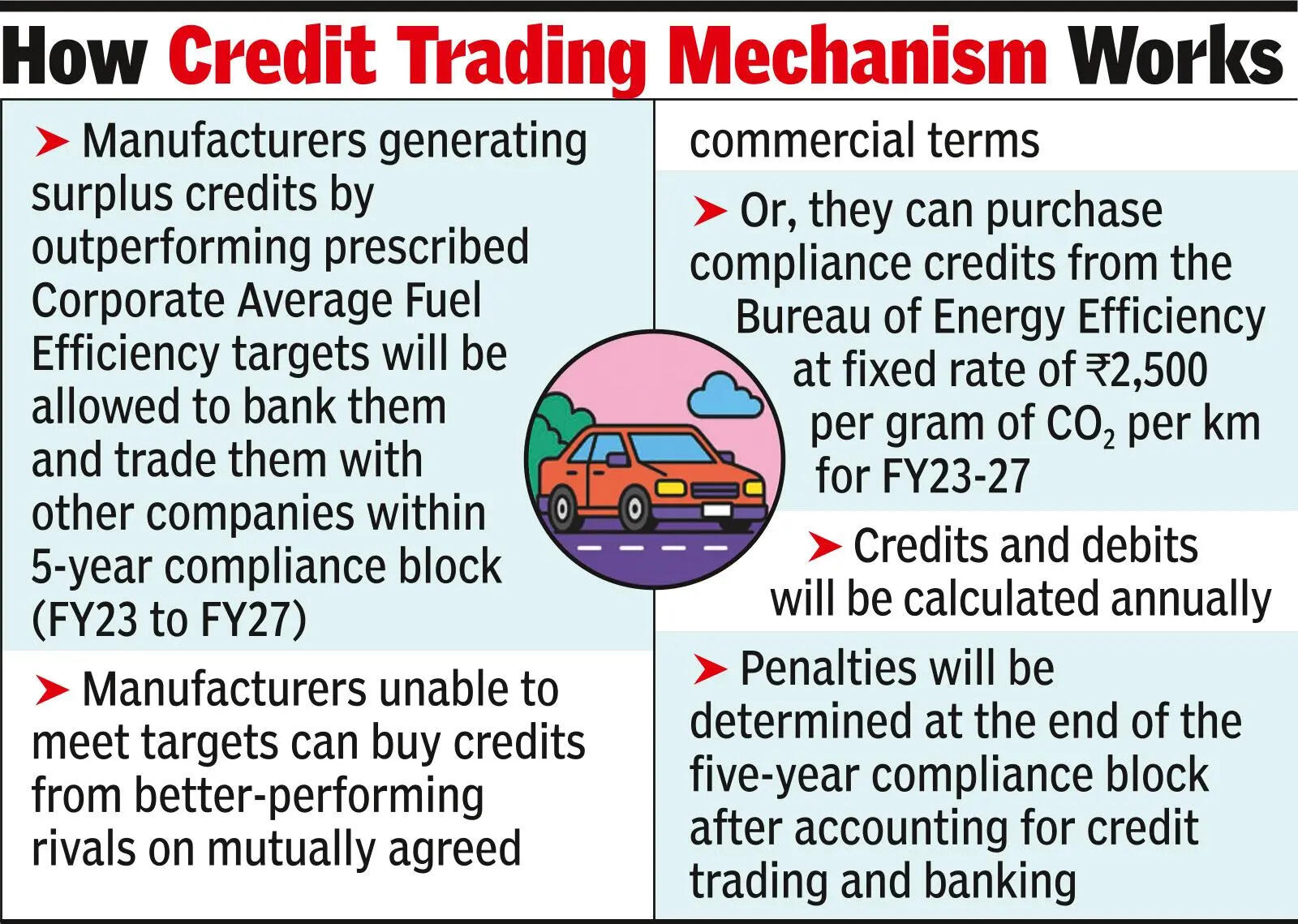
How credit trading mechanism works
The draft says this offers a compliance route at a cost lower than the statutory penalty under the Energy Conservation Act. “The idea was never to penalise auto companies but to goad them into following the norms,” said an industry insider.Credits and debits will continue to be calculated annually, but penalties will be determined only at the end of the five-year compliance block after accounting for credit trading and banking.As per the draft, any unused credits at the end of the block will lapse. Manufacturers will be allowed until Sept 30, 2027, to settle debit balances through trading or BEE buyouts before final compliance is assessed.In an explanatory note accompanying the draft, the ministry said manufacturers currently receive no incentive for exceeding CAFE targets even though those missing the norms face penalties.