

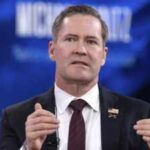




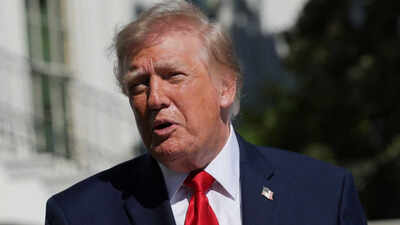
TOI Correspondent from Washington: US President Donald Trump’s campaign to assert American primacy in the western hemisphere produced fireworks on two fronts on Wednesday. First Washington gave refuge to defeated Brazilian presidential candidate Flavio Bolsonaro as he fled the country; then it expelled from the US a Cuban diplomat alleging he tried to assault an American official. The twin episodes, coming amid the US overhang on elections in Israel and Serbia, raised questions about the use of American power and influence across the world, and its international obligations.The immediate flashpoint was Brazil, Latin America’s largest country, where the announcement by the State Department on Tuesday that Flavio Bolsonaro and his family would receive US visas after his loss to incumbent President Luiz Inacio Lula da Silva in Sunday’s presidential runoff triggered an uproar. Bolsonaro was reported to have been spirited out of Brazil even as Brazilian law-enforcement was closing in on him after a Court order requiring him to surrender his passports took effect, amid investigations into alleged financial wrongdoing that he denies.Bolsonaro, a senator and the son of former president Jair Bolsonaro, lost after campaigning on a promise to secure his father’s release. The elder Bolsonaro is serving a 27-year sentence under house arrest for attempting to overturn the 2022 election result, echoing the 2020 insurrection in the US Flavio too has refused to concede defeat and alleged electoral irregularities in the just concluded election without producing evidence sufficient to substantiate his claims.For Lula’s government, the visa decision will be difficult to separate from Washington’s broader pattern of pressure on Brasília. Trump too has questioned Brazil’s electoral process, imposed tariffs on Brazilian exports and supported the Bolsonaro family’s political cause.Washington also revoked the visa of Brazil’s ambassador in August amid a dispute over diplomatic appointments and access for US officials. Brasília has characterised such measures as politically motivated interference in its domestic affairs. A Brazilian judge on Tuesday ordered a police investigation into alleged ties between a donor network co-founded by Vice President JD Vance and the Bolsonaro campaign.While the distinction between granting entry and offering political protection is important — a US visa does not confer asylum, immunity from prosecution or permanent refuge — the political signal is unmistakable. By welcoming a defeated opposition leader facing domestic legal scrutiny, Washington risks reinforcing perceptions that its support for democratic processes is conditional on whether the winners are ideologically aligned.The precedent is not without historical parallels. In 1979, President Jimmy Carter admitted the ailing Shah of Iran, Mohammad Reza Pahlavi, for medical treatment after the Islamic Revolution had driven him into exile. Iranian revolutionaries cited the decision as justification for seizing the US Embassy in Tehran, beginning a 444-day hostage crisis that transformed relations between Washington and Tehran for generations. The episode became a potent symbol of American interference and the perceived protection of a discredited ally.The point, diplomats say, is not that sheltering a foreign political figure inevitably produces disaster. Governments, including New Delhi, often admit exiles, dissidents and former allies for humanitarian, political or strategic reasons. But decisions framed in Washington or New Delhi as individual concerns can acquire a very different meaning in the country from which the individual has fled as is happening in Brazil and Bangladesh.In a separate flare-up, US Ambassador to the UN Mike Waltz and Cuban Foreign Minister Bruno Rodríguez engaged in an extraordinary slanging match during a General Assembly debate over Washington’s decades-old economic embargo against Cuba. Cuban delegates banged on their table and shouted objections as Waltz denounced Havana, holding up a photos of Cuban leaders, including the late Fidel Castro wearing Rolex watches. Rodriguez approached the podium and called the American ambassador a liar. “This is America. Back up,” Waltz retorted as the fracas intensified. Observers later pointed out that while the US hosts the United Nations, it is not an American institution and Washington does not have sovereign authority over the organisation.Still, the First Secretary of Cuba’s UN delegation Richard Tur de la Concepcion was sent packing back to Havana with accusations that during the altercation, he lunged at Waltz’s spokesman, JP Freire, and attempted to snatch an iPhone Freire was recording with. “You lay a hand on an American here in the United States,… we’re not gonna stand for it,” Waltz later said, revealing that Secretary of State Marco Rubio, who is Cuban-American, has signed paperwork to expel Conception.