










NEW DELHI: The Special Investigation Team (SIT) probe into a suspected fake-drug network in Bengaluru has raised a question that goes well beyond one pharmacy or one city: how easily can spurious or diverted medicines enter India’s legitimate healthcare system? The SIT has traced suspected spurious and mislabelled medicines to more than 90 hospitals and clinics in Bengaluru and nearby areas. At the centre of the probe is a licensed pharmacist, who investigators allege used a legitimate pharmaceutical business to build a wider distribution network.Bengaluru case exposes gaps beyond the pharmacy counterInvestigators allege that the network supplied spurious and mislabelled medicines, including counterfeit versions of high-demand Pfizer products, as well as cancer drugs and ICU injections. The medicines were reportedly sold at discounts of up to 50%, making them attractive in a market where some cancer medicines can cost tens of thousands of rupees. Investigators have also found evidence of a wider operation involving more than 15 medical representatives, with supplies allegedly reaching Maharashtra and Gujarat. The investigation began after a raid on a secret stockhouse in Tavarekere, Magadi, exposed the network.
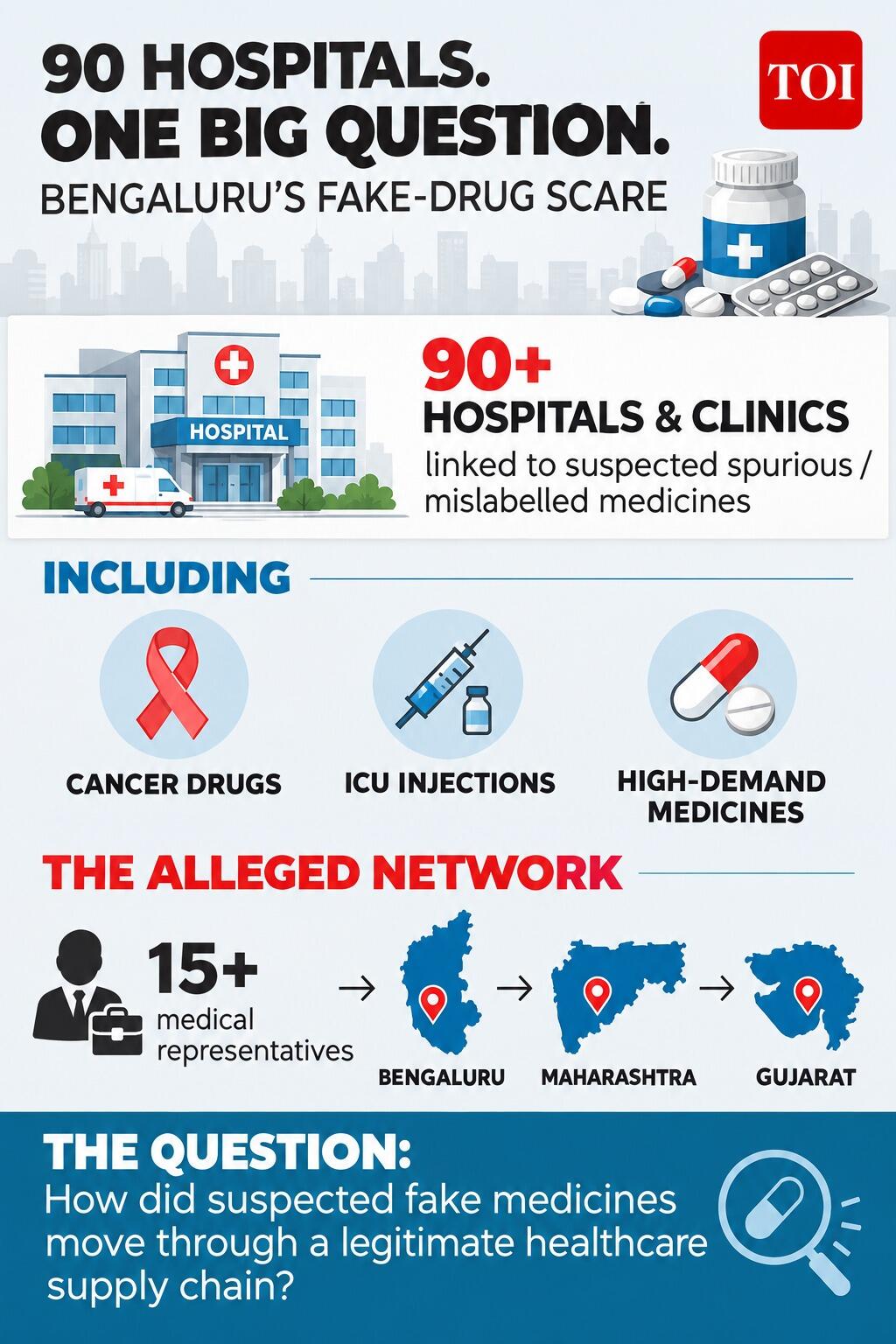
The number that stands out is 90. But the more important question is what happened after these medicines reached the hospitals and clinics. Were they administered to patients? How many vials or batches were involved? Did hospitals verify where the medicines had come from? Were batch numbers checked against manufacturer records? These are critical questions because a counterfeit medicine does not necessarily enter the system through an obviously illegal channel. By the time it reaches a hospital, it can come with invoices, packaging, a pharmacist’s licence and what appears to be a perfectly legitimate supply chain.
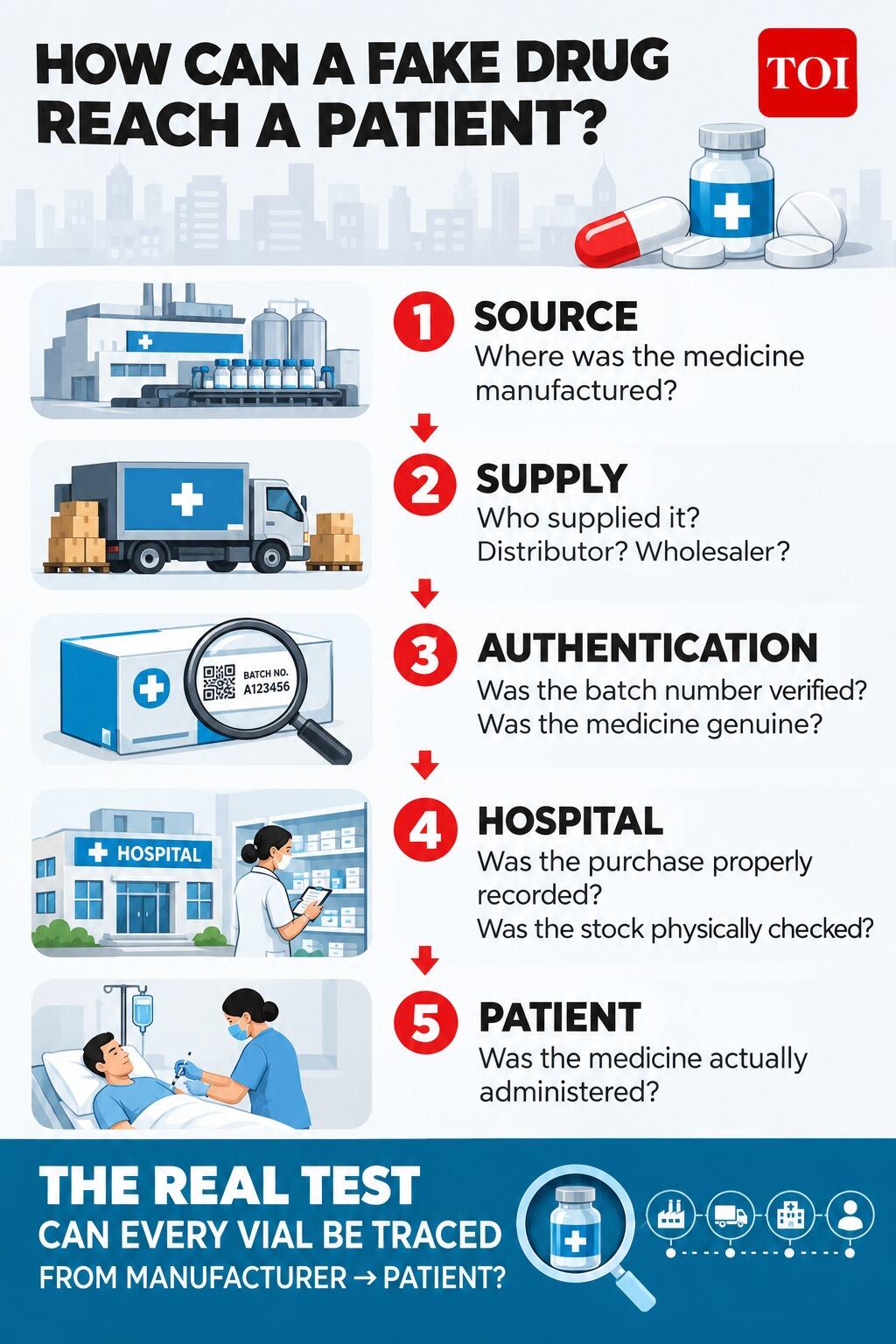
Delhi points to an interstate trailBengaluru is not the only city where cancer medicines have become part of a larger investigation. In August, Delhi Police busted a multi-state racket involving the illegal trade in cancer medicines and arrested 17 people. Investigators alleged that the network dealt in stolen and counterfeit cancer drugs and that some medicines had been diverted from government hospitals before being pushed into the black market. The investigation spread across several states, suggesting that the problem may involve organised networks rather than isolated cases of fraud at the retail level.The Delhi case makes the Bengaluru investigation more significant because both point towards vulnerabilities that can exist between the manufacturer and the patient. Medicines pass through distributors, wholesalers, pharmacies and hospital procurement systems, with multiple points at which a product can be diverted, replaced or mislabelled. If drugs meant to reach patients through government hospitals can be diverted into a black-market network, the issue is no longer just about counterfeit medicines. It is also about the loss of public money and the failure of a system intended to provide treatment to patients who may not be able to afford it otherwise.Rajasthan raises a troubling questionThe Delhi investigation has also raised questions in Rajasthan after cancer-drug vials were reportedly traced to the government supply chain and a government hospital in Bikaner. The hospital has denied any role in diversion and said its records account for the medicines it received through Rajasthan Medical Services Corporation Ltd, which supplies medicines free of cost to government hospitals. The state has since ordered scrutiny of the supply chain.Put together, the Bengaluru, Delhi and Rajasthan cases point to a problem that goes beyond the manufacture of poor-quality medicines. It is also about what happens to a drug after it leaves the factory. India has more than 10,000 pharmaceutical manufacturing units and roughly a million pharmacies, making monitoring the entire chain a formidable task. Since late 2022, regulators have conducted more than 960 risk-based inspections of pharmaceutical facilities and taken around 860 enforcement actions, according to government data.Can technology stop the next fake-drug racket?India has been moving towards greater use of digital traceability, barcode systems and risk-based inspections to identify poor-quality and spurious medicines. But technology can only work if every link in the chain uses it properly. A medicine may have a genuine-looking label and packaging, but the real test is whether its journey can be independently verified from manufacturer to distributor, hospital and, ultimately, the patient.That is why the Bengaluru investigation deserves attention beyond the city. If the SIT establishes that suspected counterfeit medicines reached 90 hospitals, investigators will need to determine not only who supplied them but also where the system failed to stop them. The same questions need to be asked in Delhi, Rajasthan, Mumbai, Hyderabad and other major healthcare markets. For a patient undergoing cancer treatment, the authenticity of a drug is not a technical detail. It is fundamental to whether the treatment they paid for, or received through a government programme, is actually the treatment they were supposed to get.