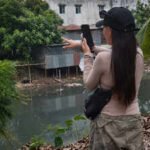







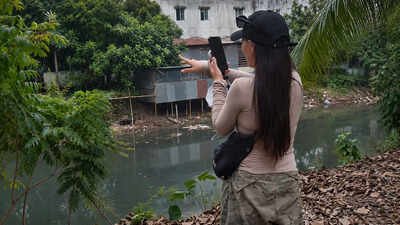
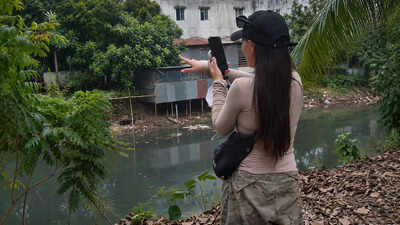
A narrow lane in Dhaka. Modest homes, roadside tea stalls, a canal and residents going about their daily lives. A woman points her camera at the surroundings and tells her online audience: “This is New Delhi.”The camera keeps moving. Tin-roofed houses are described as dirty and unhygienic. A neighbourhood in Bangladesh is presented as India’s capital, while another livestreamer filming people drinking tea makes a grotesque claim about what is in their cups.These were not scenes from Delhi. They were filmed in Uttara and Tekpara, low-income neighbourhoods of Dhaka, by Chinese nationals.For months, the cameras reportedly kept returning to the same streets, homes and markets. Residents said they were filmed for hours, sometimes inside their own homes, without fully knowing where the footage was going or how their lives were being portrayed.Then, around November 7, the cameras began disappearing.The reports have since triggered an official response from New Delhi and increased surveillance by Bangladeshi law enforcement. But the most important questions remain unanswered: Who were these livestreamers working for? Why were Dhaka neighbourhoods being presented as Delhi? And was this a commercial content operation, an organised attempt to discredit India, or something more complicated?
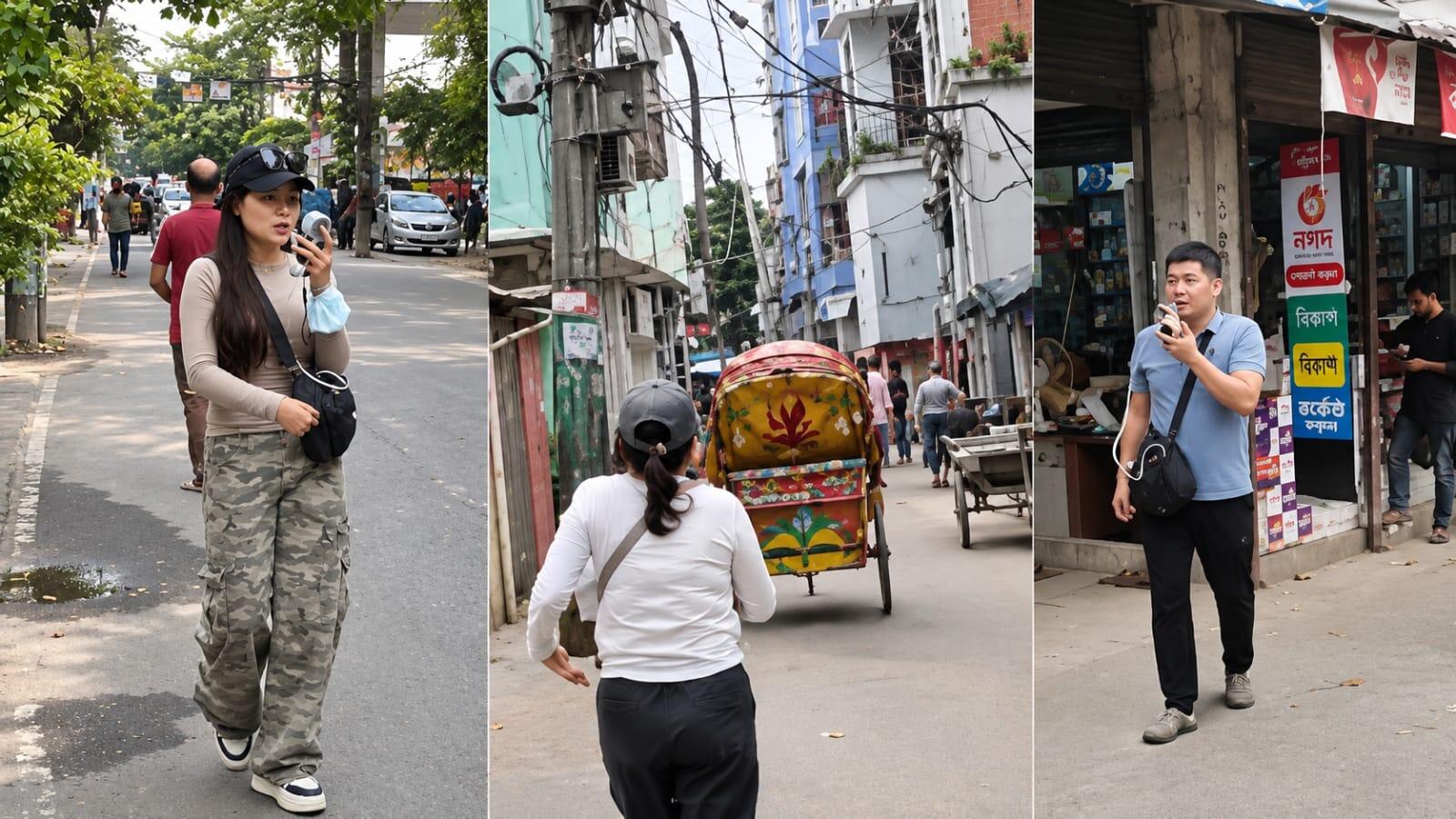
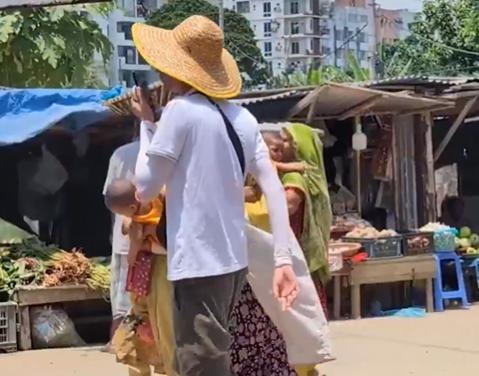
Chinese nationals films the streets of Uttara as part of the livestreaming activity reported in the area. PC credit: Prothom Alo
‘This is New Delhi’: What the livestreams showed
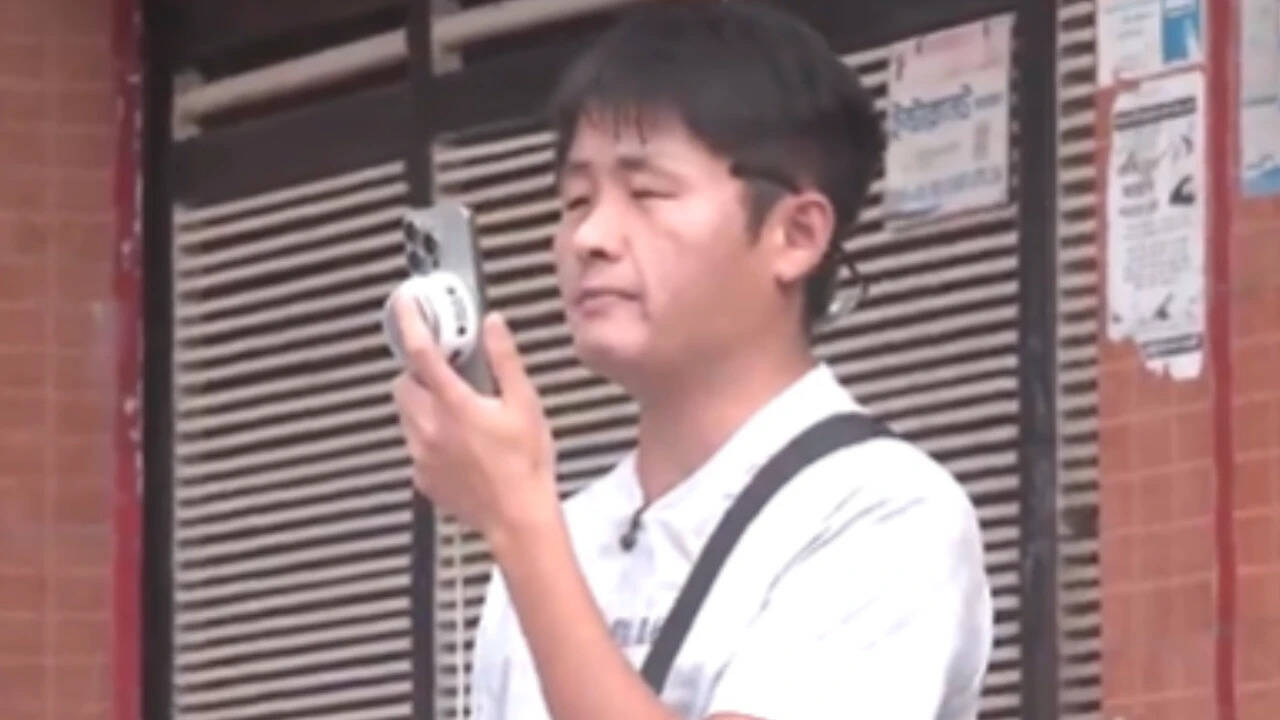
In its November 6 investigation, Bangladesh’s Prothom Alo reported that Chinese nationals had been filming in Uttara’s Sector 12 and the adjoining Tekpara area for months, often from morning until night. They were seen carrying two mobile phones, using one to livestream while apparently referring to material on the other.The newspaper said local residents estimated that more than 150 Chinese nationals were involved, although it acknowledged that no accurate count was available. Its reporters visited the neighbourhood on October 27 and November 3 and attempted to speak to 17 Chinese nationals. Most declined to answer questions.One livestreamer, identified as Mianmian and said to be from China’s Sichuan province, was filmed beside a canal in Sector 12 on November 1. While showing the surrounding neighbourhood, she told viewers: “This is New Delhi. Their homes are extremely dirty. There isn’t even a fan inside the tin-roofed houses. This place is quite underdeveloped, dirty and unhygienic, and the law-and-order situation is poor.”Another streamer, identified as Wang Wei, was reportedly filming at tea stalls in Tekpara when he told viewers: “Look, they are drinking tea. Do you know what kind of tea this is? This is cow urine tea. They drink cow urine tea.”Prothom Alo said it translated portions of the Chinese-language broadcasts using Google Translate and had the translations checked by four Bangladeshis familiar with Chinese.The issue extended beyond the misrepresentation of locations. Residents complained that cameras were repeatedly pointed at their homes and private lives, sometimes without permission.
Bangladesh police stepped up surveillance in Uttara after reports about Chinese nationals filming in the neighbourhood. Credit: Bangla Vision
“Sometimes they enter our homes and start filming. We are not always properly dressed inside our houses. Imagine how it feels when someone suddenly walks into your home and starts recording,” resident Rozina Khatun told the Bangladeshi media outlet.Another resident, Papia Begum, said some streamers even entered bathrooms while filming. She said objections often led them to apologise and leave, but they returned later.
A trail that predates the controversy
The November revelations were not the first reports of Chinese nationals filming in the area. A May 23 investigation reported that Chinese vloggers had been filming in Tekpara for hours at a time, sometimes using iPhones fitted with cooling fans.Videos from the neighbourhoods have also appeared on Chinese platforms such as Bilibili and Youku. Several reportedly carry titles using disparaging terms such as “poor”, “dirty” and “slum”, while focusing on low-income residents and their living conditions.In May, Bangladeshi media outlets reported on videos in which creators appeared to portray themselves as benefactors helping impoverished residents. One resident alleged that a vlogger had grabbed a young Bangladeshi man’s collar in a video, apparently to “discipline” him.
When disgust becomes currency: How viral outrage shapes perceptions of India
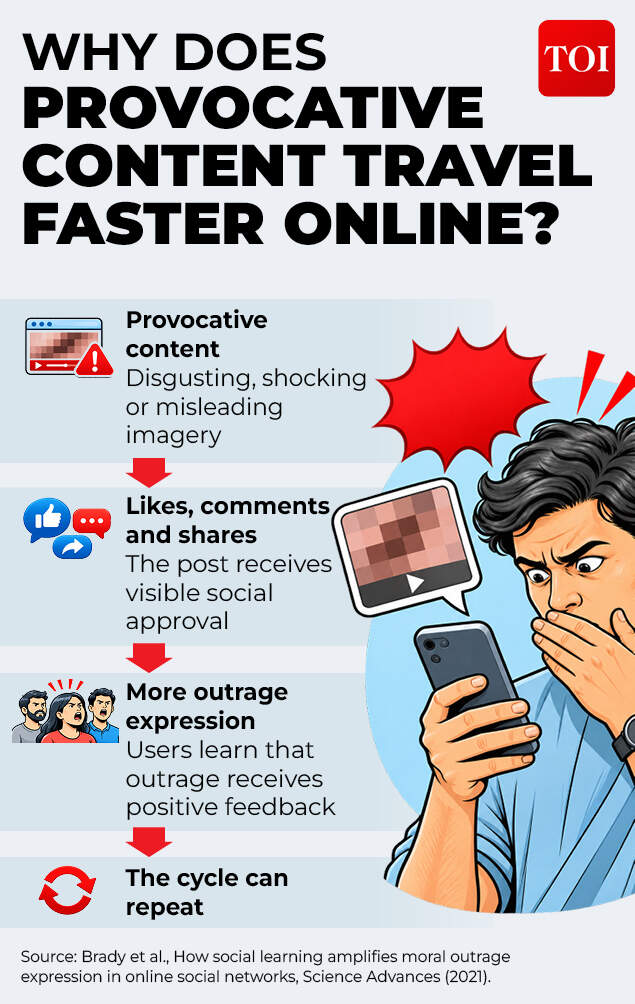
The repeated circulation of videos portraying India through poverty, dirt and deprivation can also be understood through the idea of an epistemic project — the process through which selected images, labels and narratives shape how audiences understand a country. When viewers repeatedly encounter footage described as “dirty”, “backward” or “unliveable”, these portrayals can gradually become familiar reference points, influencing perceptions beyond the individual videos.Disgust, shock and anger can also make viewers stop scrolling, react to content and share it. Repeated exposure to such selective imagery can also reinforce stereotypes about an entire country.
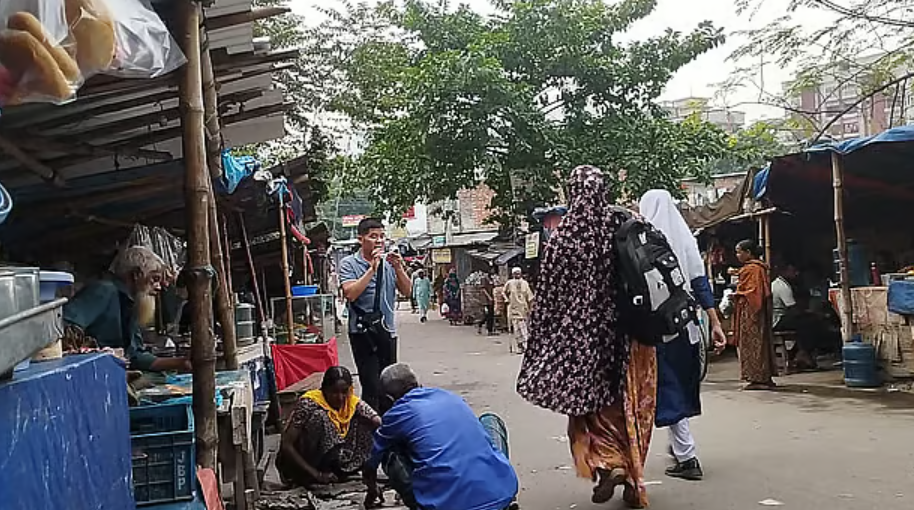
A Chinese national films in Tekpara, adjacent to Uttara’s Sector 12. Credit: Prothom Alo
A March 2026 study in the Journal of Personality and Social Psychology, involving five experiments and 1,051 participants, found that people tended to overestimate the emotional intensity of reactions in their social-media feeds. Such perceptions were associated with a greater willingness to share content.The commercial incentive is clear. JNU professor Srikanth Kondapalli told ANI that some Chinese creators seek online recognition and validation. “They want to establish a higher profile on Weibo, WeChat and other social networking platforms. Their social standing and prestige increase with the number of subscribers, likes and validation they receive for their videos,” he said.
The commercial angle and unanswered questions
There is also a commercial explanation offered by at least one person involved. When Prothom Alo approached a Chinese national identified as Fangyou, a local guide helped translate the questions. Fangyou said the livestreams on WeChat were part of product-promotion activities. He declined to explain why the group had selected that particular neighbourhood or why the broadcasts continued for such long hours.
How Dhaka was presented as New Delhi
Ritu Akhter, a Bangladeshi woman who said she had worked as a guide for the Chinese nationals for several months, told the newspaper she earned between 700 and 800 taka a day. She said other local women were also doing similar work.Some shopkeepers were reportedly paid around 500 taka to allow filming in their pharmacies, where Indian consumer products such as shampoo, soap and Kesh King hair oil were used as backdrops for promotional livestreams.These accounts point to a possible commercial component, but leave key questions unanswered: which products were being promoted, who owned the accounts, who paid the creators and local facilitators, and why some broadcasts allegedly labelled Dhaka as Delhi. No publicly established evidence has identified a commissioning organisation or a funding trail.
India objects; Bangladesh steps up surveillance
India’s ministry of external affairs raised the matter on November 10. MEA spokesperson Randhir Jaiswal said, “We have seen media reports in this regard. Such efforts to present a distorted picture of any country are unfortunate.”Referring to reports of foreign elements being used to portray Dhaka as Delhi, he added: “Peddling of false narratives only undermines the credibility of those who are undertaking such actions and those who are behind them. And I would urge that authorities concerned must take action against such a report.”
MEA spokesperson Randhir Jaiswal said efforts to present a distorted picture of a country were unfortunate.
Bangladeshi authorities subsequently stepped up monitoring. Mohammad Khalid Mansur, officer-in-charge of Uttara West Police Station, told Prothom Alo that the activities of the Chinese nationals had declined after law enforcement intervention. Police and intelligence personnel were monitoring their movements, he said.According to the newspaper, some Chinese nationals were asked to produce their passports and visas and explain why they were undertaking the filming while visiting on tourist visas. They were also told to leave after their permitted stay expired.By November 11, the newspaper’s correspondent had not seen Chinese nationals livestreaming in the areas visited. Resident Imam ul Islam, a rickshaw puller, said: “They would make videos here day and night. They filmed us and the passengers too. I haven’t seen them for some time.”
The China contrast: Censorship and ‘positive energy’
The controversy also invites scrutiny of the information environment in which the footage was reportedly being circulated. China’s domestic internet is not an unrestricted marketplace of images and opinions. Its authorities have established rules that direct platforms to regulate content and promote officially approved narratives.In September 2025, China’s Cyberspace Administration (CAC) launched a campaign targeting posts it accused of exaggerating personal hardships, spreading pessimism and promoting “world-weariness”. Major platforms, including Weibo, Kuaishou and Xiaohongshu, were directed to remove such content. Critics viewed the measures as an attempt to curb narratives that could undermine the government’s portrayal of economic progress.
Residents raise concerns about repeated filming in residential areas.
Freedom House’s Freedom on the Net 2024 report also documented the removal of online content depicting poverty and economic hardship, including the censorship of the film Return to Dust and its title on Sina Weibo.This provides context for examining how narratives about poverty are regulated within China while some influencers have circulated disparaging portrayals of India. However, it does not establish that the Dhaka vloggers were acting on government instructions or had official backing.This record provides context for examining the contrast between the image of China promoted through its regulated digital environment and the freedom with which some creators appear to have circulated disparaging portrayals of another country. It does not, however, establish that the vloggers in Dhaka were acting under state instructions, or that Chinese authorities approved their broadcasts.
A question of accountability
For Bangladesh, the immediate questions concern the rights of residents, the conduct of foreign visitors and whether filming or commercial activity breached visa conditions.For India, the issue is the circulation of content that allegedly attributes another country’s locations and living conditions to its capital. For China, questions remain about the platforms carrying the broadcasts and whether their location claims and commentary were subject to any scrutiny.